 Germany
Germany: Heart of Europe Where Traditions Intertwine with Innovations
Germany – modern Berlin with historical monuments fits here with Bavarian Alpine mountains and Black Forest valleys, and medieval castles perfectly blend into the contemporary industrial landscape. Germany invites you to discover its rich culture, enjoy beer traditions and experience German precise hospitality.
Basic Information about Germany
- Capital: Berlin
- Area: 357,022 km²
- Population: ~83.2 million (2024)
- Currency: Euro (EUR)
- Language: German
- Time Zone: Central European Time (CET, GMT+1), summer – CEST (GMT+2)
When is the Best Time to Travel to Germany?
Spring (March-May)
Nature awakens, and there aren’t so many tourists that they’d step on your feet yet. Temperature – like Lithuanian summer, from 8 to 17 °C. Great time for walks and adventures without crowds.
Summer (June-August)
Warm (20-25 °C), many people, but if you want Oktoberfest – better now than November. City festivals and mountain beauties await.
Autumn (September-November)
Especially beautiful time in Black Forest and wine regions. Temperature 7-18 °C, colorful nature and traditional festivals.
Winter (December-February)
Cold (-2 to +4 °C), but those Christmas markets – a real feast for eyes and stomach! Plan a visit to ski resort if you want speed and snow.
Main Cities and Regions
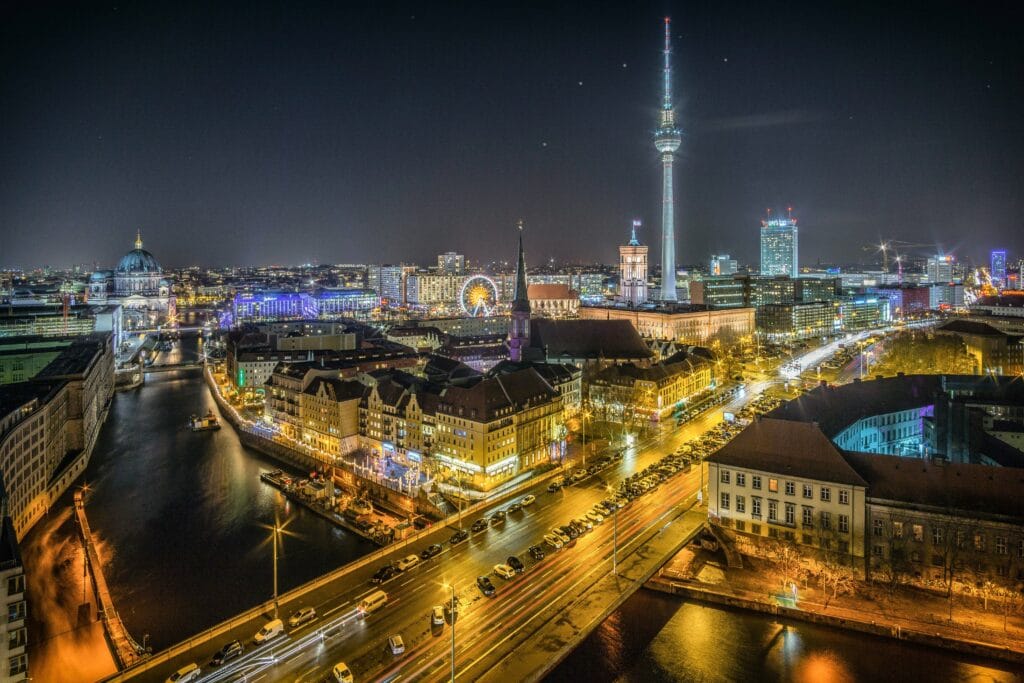
Berlin
Germany’s capital. Here history, art and techno music parties merge into one night you’ll remember (or not).
Places to Visit:
- Brandenburg Gate – not only a popular tourist photo spot, but also a deep historical symbol. Built in 1791, they saw Napoleon’s entrance, Nazi parades, were isolated by Berlin Wall and became a symbol of German reunification in 1989. The 26-meter high gate is decorated with impressive Quadriga – a chariot drawn by four horses with victory goddess.
- Reichstag – German parliament building whose history reflects the country’s dramatic past. After the 1933 fire and World War II collapse, the building was restored and modernized by architect Norman Foster. The glass dome symbolizes political transparency, and the spiral walkway in it allows visitors to rise and observe parliament from above and admire the city panorama.
- East Side Gallery – 1.3 km long section of Berlin Wall turned into open art gallery. After the wall fell in 1989, 118 artists from 21 countries created murals here, including the famous “Fraternal Kiss” between Brezhnev and Honecker. This is the world’s largest open gallery and living historical monument.
- Museum Island – unique cultural complex consisting of five museums: Pergamon, Bode, Old, New and Ancient Orient. Each museum has its specialization – from ancient Egyptian and Middle Eastern artifacts to 19th-century art. Particularly impressive are the Pergamon Altar and Ishtar Gate in Pergamon Museum.
- Checkpoint Charlie – was the main checkpoint between East and West Berlin during Cold War. Today there’s a museum telling about dramatic escapes from East Berlin and tension between East and West. Although the current booth is a replica, the place remains a powerful Cold War symbol
- Potsdamer Platz – from war ruins and abandoned “death strip” between East and West Berlin became modern city center. Here are Berlin’s tallest skyscrapers, Sony Center, shopping centers and entertainment complexes. The square is also famous for Berlin Film Festival (Berlinale) and impressive architecture.
Munich
Bavaria’s capital – traditions, beer garden aromas and BMW speed magic.
Don’t Miss:
- Marienplatz – city heart with famous Glockenspiel clock in new town hall. This impressive mechanical clock shows two different performances daily: in upper part – Duke Wilhelm V’s wedding celebration, in lower part – traditional coopers’ dance (Schäfflertanz). 43 bells and 32 life-size figures create unique spectacle attracting hundreds of viewers. Performance lasts about 12 minutes
- Allianz Arena – one of the world’s most modern football stadiums, accommodating 75,000 spectators. Its distinctive feature – 2,874 inflated ETFE plastic pillows that can be illuminated in various colors. When Bayern Munich plays, stadium glows red, and during German national team matches – white. Stadium architecture creates impression that building “breathes”.
- BMW Museum – called “BMW bowl” for its bowl shape, presents not only automobile and motorcycle evolution but also brand-shaping innovations. Museum displays historical models, concept cars and technological innovations. Adjacent BMW Welt showcases latest models and allows trying interactive exhibitions.
- English Garden – huge 375-hectare green area in city center. Park has several beer gardens, Japanese tea house, artificial streams and even surfers’ zone on Eisbach River. Here you can see locals practicing surfing sport in city center – unique sight in Europe.
- Oktoberfest Celebration – world’s largest folk festival attracting about 6 million visitors. Besides traditional beer tents accommodating up to 10,000 people, there are numerous attractions, parades with traditional costumes (dirndl and lederhosen), traditional Bavarian music plays. Festival territory houses 14 large and 21 small tents.
- Residenz Palace – largest city palace in Germany, developed since 1385. It displays ten courtyards and impressive variety of architectural styles from Renaissance to Classicism. Particularly valuable is Antiquarium – longest Renaissance-style room north of Alps, and palace theater Cuvilliés – Rococo architecture masterpiece. Palace treasury (Schatzkammer) keeps coronation regalia and unique jewelry collections.
Nuremberg and Nürburgring
Motorsport and history combination where cars get baptized, drivers test limits, and spectators get more adrenaline than double espresso.
Places to Visit:
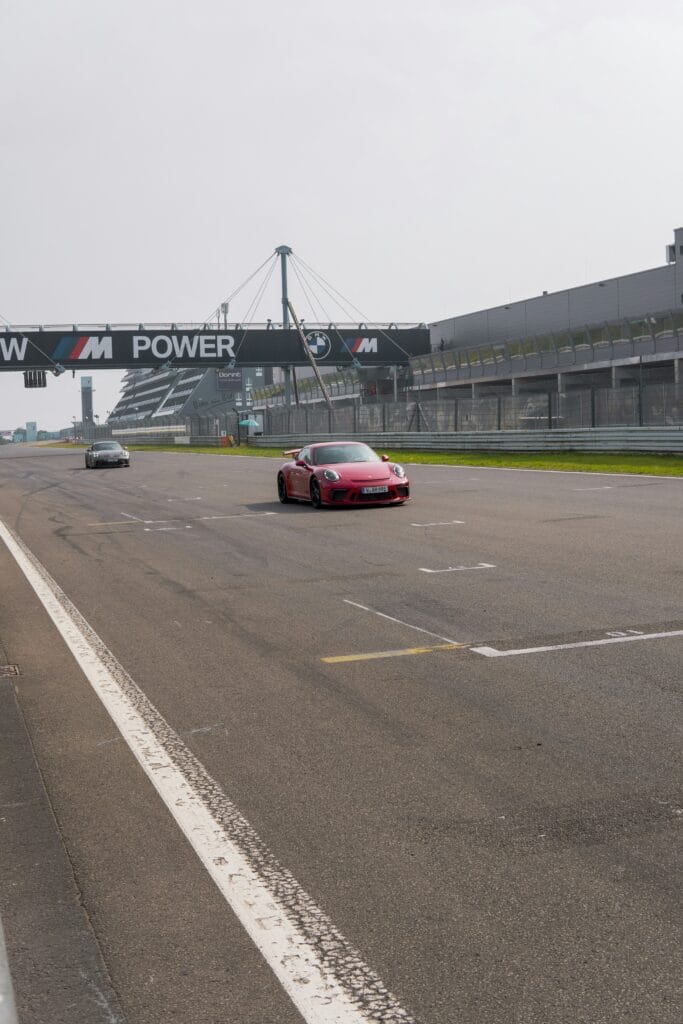
- Nürburgring – legendary racing track and one of the world’s most famous. This track is famous for complex turns and dangerous sections, therefore considered true test for both cars and drivers.
- Nordschleife – Nürburgring track, 20.8 km long and 73 turns, which racers nicknamed “Green Hell”, is one of the world’s longest, stretching more than 20 kilometers through Eifel mountains. This – not only racing place, but also open to all enthusiasts wanting to experience driving thrill. Unique track feature – it’s open to public. For fee anyone can test their car on this legendary track, though it requires special skills and caution.
- BMW Experience Center – near track operates driving school where you can try latest BMW models. Who knows, maybe after that you’ll want to bring one home?
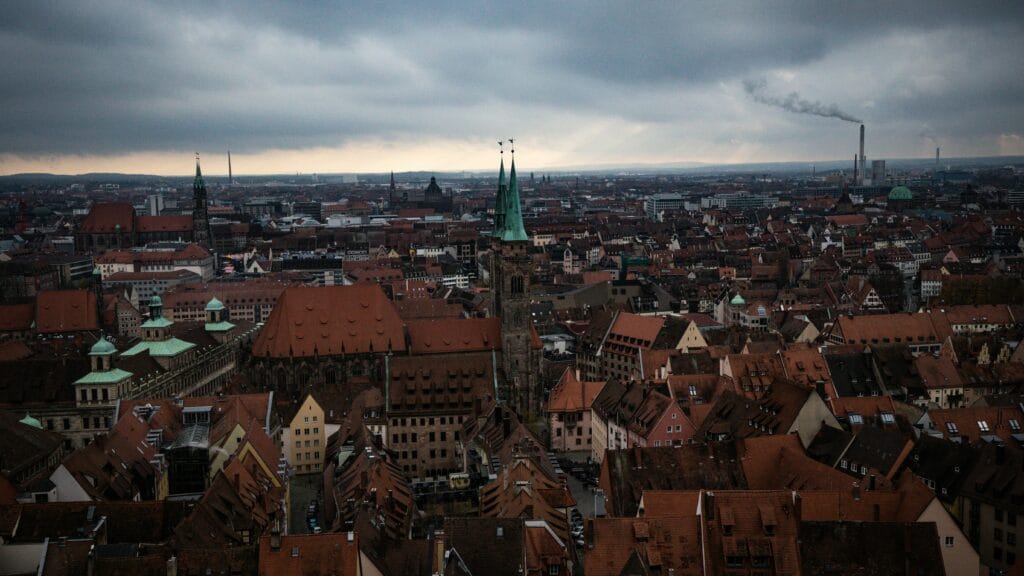
- Nuremberg Old Town – medieval town with impressive castle, market square and unique Christmas market (Christkindlesmarkt). City also known for tragic history – here took place infamous Nazi rallies and later Nuremberg Trials. Nuremberg Castle on hill offers panoramic city views.
- Nuremberg Castle – majestic medieval fortress on hill, one of most important emperor’s castles in Holy Roman Empire. From its walls opens impressive old town panorama. Castle complex includes several museums and Gothic chapel.
German Cuisine: Traditional Flavors
- Bratwurst: inseparable part of German cuisine. Each region prides itself on unique recipe: Nuremberg bratwursts are small and spicy, Thuringia – longer and sharp, and Bavarian – large and mild flavored. Traditionally served with mustard, sauerkraut and mashed potatoes or in roll as snack.
- Schnitzel: especially “Wiener Schnitzel”, is thinly beaten veal cutlet, rolled in flour, egg and breadcrumbs. Fried in butter until golden color. Served with lemon and potato salad or mashed potatoes. Although original recipe is with veal, often made from pork (then called “Schnitzel Wiener Art”).
- Sauerkraut: fermented cabbage that’s not only tasty side dish but also great probiotic source. Made by finely shredding cabbage and fermenting it with salt. Often served with sausages, cutlets or as hot dish garnish. Every housewife has her own recipe with different spices.
- Bretzel: traditional bakery product, especially popular in Bavaria. Its distinctive shape and dark brown, shiny crust obtained by dipping in sodium hydroxide solution before baking. Top sprinkled with coarse salt crystals. Often eaten as snack with beer.
- Spätzle: soft, homemade pasta from egg dough, especially popular in southern Germany. They can be served as side dish or as separate dish, often with cheese (Käsespätzle) and fried onions. Every housewife prides herself on her Spätzle making technique.
- Schwarzwälder Kirschtorte: chocolate sponge cake with cherries, whipped cream and cherry brandy. Cake consists of several layers, decorated with chocolate shavings and cherries. Traditionally made in Black Forest region, but popular throughout country.
- Apfelstrudel: thin, crispy puff pastry with apple, raisin and cinnamon filling. Although originating from Austria, became inseparable part of German cuisine. Traditionally served warm with vanilla sauce and whipped cream. Often eaten as dessert after lunch or with afternoon coffee.
Travel Itinerary Ideas
Weekend Trip:
- Day 1: Berlin – historical monuments and museums
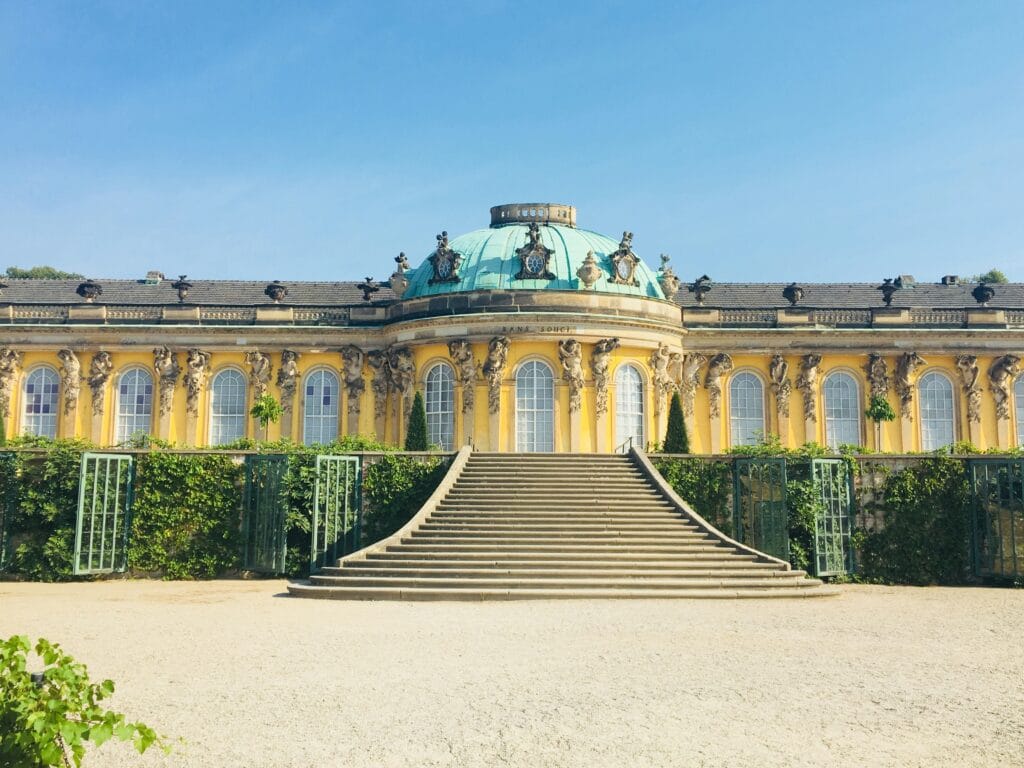
- Day 2: Potsdam and Sans Souci Palace
Week Trip:
- Days 1-2: Berlin
- Day 3: Nürburgring and surroundings
- Day 4: Rhine Valley and castles
- Day 5: Munich
- Days 6-7: Bavarian Alps
German Nature
- Black Forest – one of Germany’s most famous regions, famous for dense coniferous forests and traditional villages. Here are famous resorts like Baden-Baden where visitors enjoy thermal waters and SPA procedures. Region also known for cuckoo clock making tradition, hiking trails and winter sports opportunities. Famous Feldberg mountain is highest in region.
- Bavarian Alps – offer best skiing opportunities in Germany. Garmisch-Partenkirchen, Olympic town, is main regional resort with Zugspitze mountain (2962 m) – Germany’s highest point. In summer mountains full of hikers and mountain bikers. Region abundant with traditional Bavarian villages with authentic architecture and culture.
- Rhine Valley – UNESCO World Heritage Site. Valley adorned with more than 40 medieval castles, impressive vineyard terraces and legendary Lorelei rock. River valley features charming towns with well-preserved medieval architecture. Here famous Rhine wines are made, and Rhine river cruises allow seeing all this beauty from water.
- Rügen Island – Germany’s largest island, famous for white sandy beaches and chalk cliffs. Resorts like Binz or Sellin preserve elegant resort architecture representing “Bäderarchitektur” buildings. In Jasmund National Park you can see impressive Königsstuhl chalk cliffs. Island perfect for bicycle tourism and water sports.
- Berchtesgaden National Park – in Bavarian Alps distinguished by dramatic mountain landscapes and crystal-clear Königssee lake. Park symbol – Watzmann mountain (2713 m), third highest in Germany. Here you can find rare Alpine plant and animal species. Special park object – St. Bartholomew’s Church on Königssee lake peninsula, accessible only by electric boats.
Practical Tips
- Public Transport: well-developed Deutsche Bahn system
- Language: many speak English, especially in cities
- Payment: often only cash accepted, have euros
- WiFi: not available everywhere, worth having mobile internet
- Water: safe to drink from tap
- Transportation: excellent autobahn system, but follow speed limits
Main Events in Germany
- Oktoberfest: September-October – largest beer festival. Although called “October celebration”, starts mid-September and lasts 16-18 days. Festival in Munich features only 6 traditional Munich breweries. Celebration starts with traditional parade and mayor tapping first barrel, saying “O’zapft is!” (It’s tapped!). Besides beer, festival abundant with traditional food, national costumes (dirndl and lederhosen), attractions and music.
- Berlin Film Festival: February. One of world’s most prestigious film festivals. Main award – Golden Bear. Festival distinguished by being very open to public – everyone can buy tickets, not just film professionals. About 400 films shown annually, and festival visited by more than 500,000 viewers.
- Christmas Markets: November-December. Take place throughout Germany. Each city has its unique market, but most famous are Nuremberg’s Christkindlesmarkt and Dresden’s Striezelmarkt. Here you can find traditional handicrafts, Christmas decorations, mulled wine (Glühwein) and baked treats. Markets start before Advent and last until Christmas.
- 24h Nürburgring: May-June. 24-hour Nürburgring race is one of oldest and most prestigious endurance races in world. Race features professional racers and amateurs driving legendary Nordschleife track. Event attracts hundreds of thousands of spectators who camp around track with tents for whole weekend.
- Unity Day: October 3 – commemorates 1990 reunification of East and West Germany. Celebration annually takes place in different cities where concerts, parades and official events are organized. Berlin especially celebrates this day at Brandenburg Gate where huge city celebration takes place with concerts and fireworks.
Germany – country where each region has its unique character and history. Place where you can experience highest-class motorsport at Nürburgring, immerse in medieval atmosphere in Rhine Valley or enjoy parties and modern art galleries in Berlin. Visit, because otherwise renting a BMW on autobahn you won’t show what you’re capable of.
If you’re looking for more places worth traveling year-round, check out this article!