 Belgium
Belgium: Heart of Europe Where History Meets Modernity
Belgium – that place where medieval castles and squares look up at the sky through the shadows of modern EU skyscrapers. Here chocolate is so good that even your diet promises fade, and beer – a true encyclopedia of flavors. UNESCO-protected cities like Bruges or Ghent look like they’re from a postcard, but at the same time Belgium invites you to contemporary art exhibitions or vibrant festivals. It’s a country where history and modernity join hands, and you – are invited to discover all this goodness and much more.
Basic Information
- Capital: Brussels
- Area: 30,689 km²
- Population: ~11.5 million (2024)
- Currency: Euro (EUR)
- Languages: Dutch (Flemish), French, German
- Time Zone: CET (GMT+1), summer – CEST (GMT+2)
When Is the Best Time to Travel?
Summer (June–August)
- Warmest time of year (20–25°C)
- Plenty of music festivals (Tomorrowland, Rock Werchter)
- Long days and street cafes
- Tourist peak, higher prices
Autumn (September–November)
- Pleasant weather (10–15°C)
- Fewer tourists
- Beer festivals
- Great time for cultural events
Winter (December–February)
- Charming Christmas markets
- Temperature 0–7°C
- Chocolate museum season
- Cozy evenings in traditional beer houses
Spring (March–May)
- Blooming parks season
- 10–18°C temperature
- Street festivals
- Best time for city tours
Main Cities and Regions
Brussels
Places to Visit:
- “Grand Place” – Brussels’ historic center, famous for its 15th-century Gothic town hall and ornate guild houses. UNESCO included this square in the World Heritage list due to its exceptional architectural value.
- “Atomium” – one of the brightest examples of modern architecture in Brussels. This 102-meter-high structure was built for the 1958 World’s Fair and depicts an iron crystal lattice, magnified 165 billion times.
- “Manneken Pis” – a bronze statue-fountain of a little boy that has become one of Brussels’ symbols. Although the statue is small, it has numerous legends and traditions, including a collection of costumes for special occasions.
- European Quarter with EU institutions – the center of modern politics, housing the main European Union institutions – the European Parliament, European Commission, and Council of the European Union.
- Royal Palace and parks – the official residence of Belgian monarchs, surrounded by impressive parks. Although the king no longer lives here, the palace is used for official events and is open to visitors in summer.
- Chocolate and beer museums – Brussels is famous for its culinary traditions, especially chocolate and beer. The city’s museums not only tell about the production history of these products but also offer tastings and educational programs.
Bruges
Don’t Miss:
- Medieval market square with Belfry tower – the 83-meter-high bell tower was built in the 13th century and became the city’s pride and landmark. From the top of the tower unfolds an impressive city panorama.
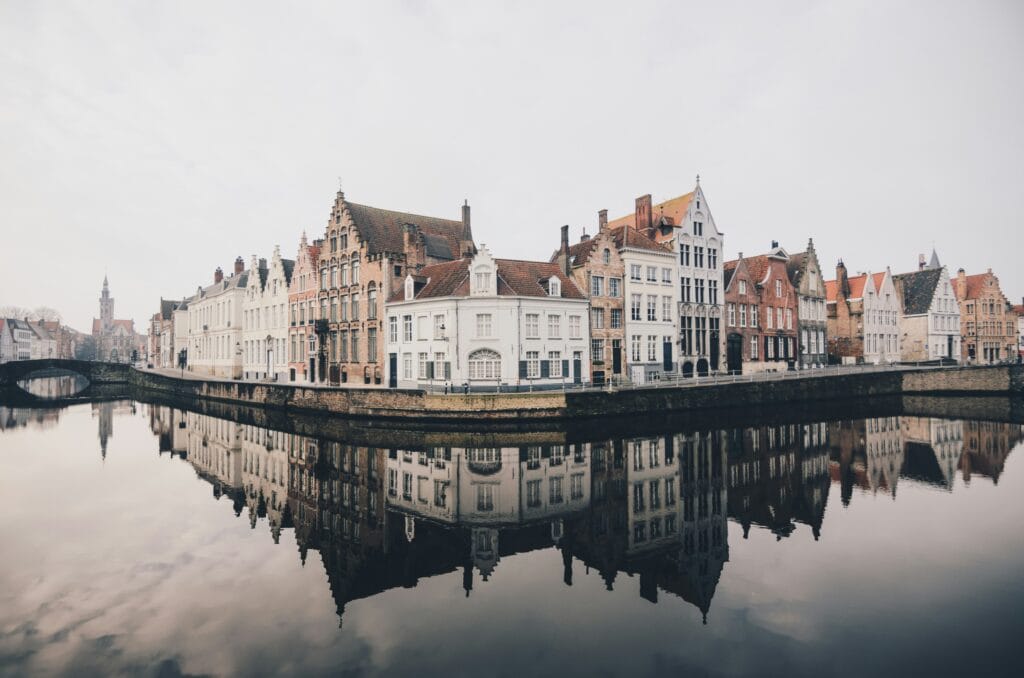
- Romantic canal network – Bruges is often called the “Venice of the North” due to its romantic canal network. These historic waterways were once important for trade, and now have become a popular tourist attraction, offering unique views of medieval architecture.
- “Groeninge” Museum – one of Belgium’s most important art museums, famous for its collection of Flemish primitives. Works by Jan van Eyck, Hans Memling, and other famous Flemish artists are exhibited here.
- Begijnhof monastery complex – a beguine (religious lay women) town-monastery founded in the 13th century. The UNESCO-protected complex stands out with its peaceful atmosphere, white houses, and green inner courtyard garden.
- Lace Centre (lace center) – demonstrates Bruges’ lace art traditions. Here you can see both historical and contemporary lace examples, watch lace-making demonstrations.
- Beer museum – tells about Belgium’s deep beer-making traditions. Visitors can learn about beer production history, process, and, of course, taste traditional Belgian beer.
Antwerp
Places to Visit:
- Diamond Quarter – a world-class diamond trading center, where about 80% of the world’s rough diamond trade takes place. This historic district around the central station is famous for numerous diamond shops, workshops, and exchanges.
- Rubens House Museum – the former home-studio of famous Flemish painter Peter Paul Rubens. In this 17th-century building-museum, you can see the artist’s works, his living quarters and studio, as well as an impressive Italian Renaissance-style garden.
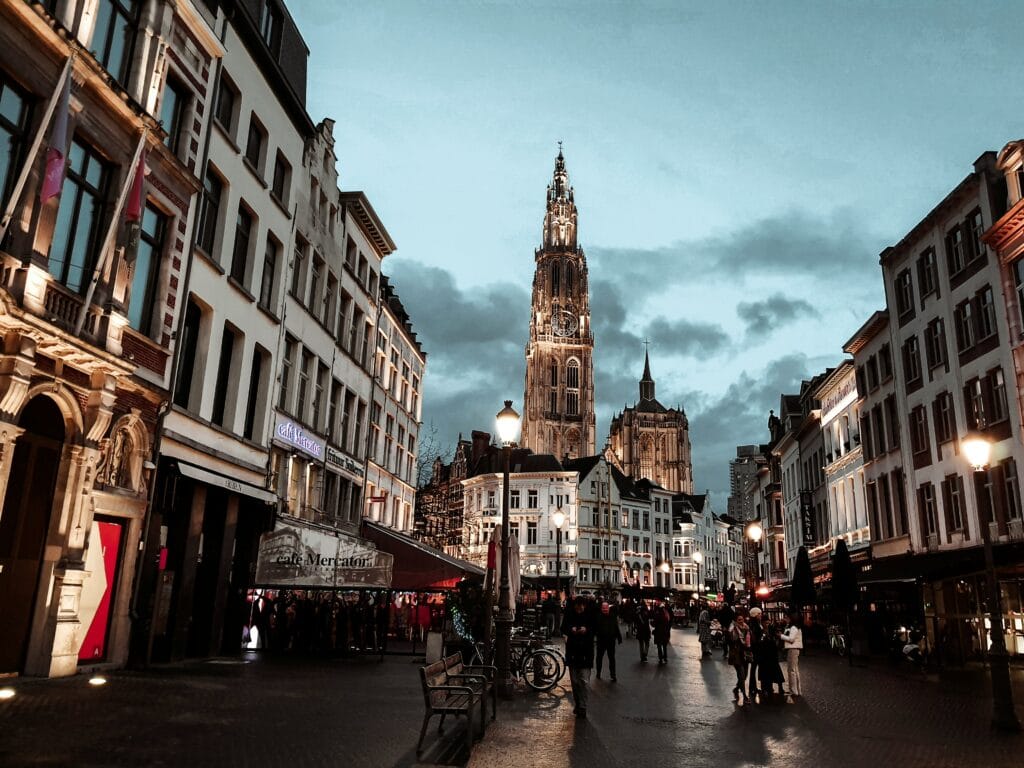
- Onze-Lieve-Vrouwekathedraal – the largest Gothic church in Belgium. Its 123-meter-high tower dominates the city panorama. The cathedral houses several famous Rubens paintings.
- MAS Museum – a contemporary museum located in an impressive 60-meter-high building. It tells the story of Antwerp as a port city and its connections with the world. From the building’s rooftop terrace unfolds a panoramic view of the city.
- Fashion Quarter – with the famous Nationalestraat street is the center of Antwerp’s fashion industry. Here are boutiques of famous Belgian designers, fashion schools, and numerous stylish shops.
- Port District – the second largest port in Europe after Rotterdam. Historic port buildings, contemporary architecture, and industrial atmosphere create a unique cityscape. Here you can also find many restaurants and cultural spaces.
Ghent
Main Attractions:
- Gravensteen Castle – an impressive 12th-century medieval fortress in the city center. This “Castle of the Counts” was the residence of the Counts of Flanders and a symbol of power. Now the castle houses a museum where you can see a collection of medieval weapons and a torture chamber.
- Sint-Baafs Cathedral – a Gothic architectural masterpiece, famous for the “Ghent Altarpiece” – the polyptych “The Adoration of the Mystic Lamb” (1432) painted by the van Eyck brothers. It’s one of the most important works of Flemish primitive art.
- Graslei historic quarter – a quay and one of Ghent’s most beautiful districts. Here are medieval guild houses with impressive facades reflecting the city’s prosperity as an important trading center.
- SMAK Museum of Contemporary Art – one of Belgium’s most important contemporary art museums. It’s famous for bold exhibitions and a constantly updated contemporary art collection.
- University District – historic buildings, student life, and academic atmosphere give the district special vitality and cultural character.
- Werregarenstraat – also called “Graffiti Street” or “Graffiti Alley”, is a place where graffiti is legal. This constantly changing open-air street art gallery reflects Ghent’s spirit as a contemporary art center.
What Does Belgium Offer Gourmands?
Traditional Dishes:
- Moules-frites: Belgium’s unofficial national dish. Fresh mussels are prepared in various ways, but the most popular is in white wine with onions, celery, and parsley. They’re served with crispy Belgian fries and mayonnaise. Belgians invented the double frying method for fries, which ensures special crispiness. Traditionally, mussels are eaten by hand, and empty shells are used as tongs for other mussels.
- Waffles (Brussels and Liège waffles): Belgian waffles are divided into two main types. Brussels waffles are light, rectangular, and crispy, with deep grooves, served with powdered sugar, fresh fruits, or chocolate. Liège waffles are denser, smaller, with caramelized sugar in the dough, which creates a crispy coating when baked. They’re made from yeast dough and eaten without additional toppings.
- Carbonnade flamande (Flemish beef stew): is a dark beer stew with beef, onions, and spices. Meat is slowly stewed in dark Belgian beer, with bread slices spread with mustard – this gives the sauce thickness and special flavor. The dish is traditionally served with potatoes or homemade pasta.
- Waterzooi: a thick, creamy soup. The original version is made with fish, but now often prepared with chicken too. The soup consists of vegetables, cream, and egg yolks, which give it a velvety texture. Served with fresh bread to soak up the sauce.
- Stoemp: an improved version of mashed potatoes. Potatoes are mashed with various seasonal vegetables – leeks, carrots, spinach, or Brussels sprouts. The dish is often seasoned with grated nutmeg and cream. Traditionally served with sausages or meatballs.
- Vol-au-vent: a crispy puff pastry pie with creamy chicken and mushroom filling. The name means “blown by wind” due to the light dough texture. The filling is made from chicken, mushrooms, carrots, and parsley, mixed with béchamel sauce. Served hot with potatoes or rice.
Belgian Nature
- Ardennes Region – Belgium’s natural pearl – a hilly area in the southeastern part, characterized by dense forests, deep valleys, and rocky outcrops. Here you can find numerous hiking trails, cave systems, and waterfalls. The region is rich in wildlife, including wild boars, deer, and rare birds. The Ardennes also houses Signal de Botrange – Belgium’s highest point (694 m).
- Hautes Fagnes (High Fens) – a unique nature reserve located in the east of the country. It’s the largest peat bog territory in Belgium, where rare plants and mosses grow. In winter, this area becomes a popular skiing and snowshoeing center. Wooden walkways are installed here, allowing visitors to safely explore the peat bog ecosystem.
- Belgian Coast – although small (67 km), it features wide sandy beaches and dunes. The De Panne dune reserve is the largest coastal nature sanctuary, where you can see unique flora and fauna. Zwin Nature Park near the Netherlands border is an important bird migration stop.
- Hallerbos Forest, also called the “Blue Forest” – becomes famous in spring for its carpets of wild hyacinths. In April-May, the entire forest floor turns blue-violet, creating a fairy-tale view.
- Sonian Forest, located near Brussels – a UNESCO World Heritage site. This ancient beech forest covers 4,421 hectares and is an important biodiversity center. Some trees here are more than 200 years old, and the forest ecosystem is home to numerous rare species, including black woodpeckers and various orchid species.
Travel Itinerary Ideas
Weekend Trip:
- Day 1: Brussels – city center and EU institutions
- Day 2: Bruges – medieval atmosphere
Week-long Trip:
- Days 1-2: Brussels
- Day 3: Leuven and Waterloo
- Days 4-5: Antwerp
- Days 6-7: Bruges and Ghent
Practical Tips
- Transport: excellent railway network
- Languages: English can be spoken in big cities
- Payments: cards accepted everywhere
- Tips: included in the bill
- Store hours: often closed on Sundays
- Weather conditions: frequent rains, worth having an umbrella
Main Events
- Binche Carnival (February) – a UNESCO intangible heritage object, celebrated since the 14th century. The carnival’s climax – the “Gilles” performance on Shrove Tuesday. Gilles are traditional carnival characters wearing bright costumes with hats decorated with ostrich feathers and wooden clogs. They dance through the streets and throw oranges at spectators – this is considered a sign of good luck.
- Ghent Festival (July) – Europe’s largest street festival, lasting 10 days. The entire city turns into a huge stage with more than 3000 performances – from street theater to classical music concerts, from jazz to rock. The festival attracts about 2 million visitors, and all events are free. Each city square has its own atmosphere and music style.
- Tomorrowland Music Festival (July) – has become one of the world’s largest electronic music festivals. It stands out with fantastic stage decorations and pyrotechnic shows. The festival takes place in the town of Boom and attracts 400,000 visitors from around the world. Tickets are usually sold out within minutes of sale start.
- Brussels Flower Carpet (August) – a unique tradition when the Grand Place square is covered with a giant flower carpet made of begonias. Every two years a new design is created, using about 600,000 flower petals. The carpet covers 77 x 24 meters and remains only for four days. In the evenings, light and music shows take place.
- Christmas Markets (December) – in Belgium are special – every major city has its own unique market. Brussels’ “Plaisirs d’Hiver” (Winter Pleasures) lasts five weeks with 200 stalls, a giant wheel, and ice rink. Bruges’ market takes place in a medieval setting, and Liège’s market is famous for its Walloon traditions.
- Beer Weekend in Brussels (September) – the most important beer festival in the country, taking place in the historic Grand Place square. More than 60 brewers present over 400 types of beer. The festival begins with a traditional beer blessing ceremony and a parade of historic brewers’ guilds. Visitors can taste rare and unique Belgian beers, including Trappist and lambic style beers.
Belgium – a country where history, culture, and gastronomy simply lurk around every corner. Here medieval city cobblestones (the ones you keep tripping on) lead to contemporary art galleries, and Trappist monasteries greet you with beer that tasting is almost a spiritual experience. In restaurant kitchens, traditions meet culinary innovations, and every bite is a tiny Belgium history lesson. All this merges into an unforgettable atmosphere, for which this country is deservedly called the heart of Europe.