 Norway
Norway: Land of Fjords, Where the Northern Lights Dance Above Mountains
Norway is a land of contrasts, where modern technology harmoniously blends with wild nature, and Viking heritage intertwines with contemporary Scandinavian culture. From dramatic fjords to Arctic tundra, from fishing villages to modern cities – Norway amazes with its diversity. The Northern Lights dance above mountain peaks, the midnight sun never sets in summer, and ancient wooden houses preserve centuries of stories.
Basic Information About Norway
- Capital: Oslo
- Area: 385,207 km²
- Population: ~5.5 million (2024)
- Currency: Norwegian Krone (NOK)
- Language: Norwegian (bokmål and nynorsk)
- Time Zone: CET (GMT+1) / CEST (GMT+2)
When is the Best Time to Travel to Norway?
Spring (March-May)
Temperature ranges from 0°C to 15°C. This is a great time to observe nature’s rebirth when snow melts and the fjord cruise season begins. In spring, you can still engage in winter sports in the mountains while enjoying lengthening days.
Summer (June-August)
Pleasantly warm (15-25°C), longest days and midnight sun in the north. Ideal time for hiking, fjord cruises, and city exploration. Most popular tourist season, therefore prices are highest.
Autumn (September-November)
Cooling weather (5-15°C) and wonderful autumn colors. Fewer tourists, Northern Lights begin to appear. Great time for cultural trips and city visits.
Winter (December-February)
Cold weather (from -15°C to 5°C), short days, but enchanting Northern Lights show. Ideal time for winter sports, dog sledding safaris, and Arctic experiences.
Main Cities and Regions
Oslo
Capital of modern architecture and culture.
Places to Visit:
- Opera House – The Norwegian National Opera and Ballet, opened in 2008, is a masterpiece of modern architecture created by the architectural firm “Snøhetta.” The building looks like an iceberg emerging from the fjord, with a characteristic sloping roof covered with white Italian marble and glass. The unique building design allows visitors to climb onto the roof and enjoy panoramic views of Oslo Fjord and the city. Inside, the theater’s acoustics and technical capabilities meet the highest global standards.
- Vigeland Sculpture Park – The Vigeland sculpture ensemble in Frogner Park is the world’s largest sculpture park created by a single artist. Gustav Vigeland created 212 bronze and granite sculptures depicting human life’s journey. The park’s central axis leads from the main gate bridge to the monolithic column, around which sculptures are arranged depicting the human life cycle. The most famous sculptures are “Angry Boy” and “Wheel of Life.”
- Viking Ship Museum – The museum located on the Bygdøy peninsula houses three of the world’s best-preserved Viking ships: “Oseberg,” “Gokstad,” and “Tune.” These 9th-century ships were used as burial ships for Norwegian kings and nobles. The museum also exhibits unique Viking Age artifacts: carts, sleds, tools, textiles, and jewelry, allowing better understanding of Viking culture and daily life.
- Munch Museum – The new Munch Museum opened in 2021 is a modern architectural building in the Lambda district, dedicated to Norway’s most famous artist Edvard Munch’s work. The 13-story building exhibits over 26,000 of the artist’s works, including his most famous work “The Scream.” The museum offers dynamic exhibitions, educational programs, and a panoramic restaurant with views of Oslo Fjord.
- Holmenkollen Ski Museum and Jump – Not just a sports facility, but an Oslo symbol since 1892. The current ski jump, renovated in 2010, is an example of modern architecture with an impressive observation platform at the top. The museum allows you to familiarize yourself with 4,000 years of skiing history, review Norway’s winter sports achievements, and feel like a real skier in virtual reality.
- Akershus Fortress – Built in the 13th century, the fortress is one of Norway’s most important historical monuments. It withstood numerous sieges and was never conquered. Today the fortress houses two museums: the Norwegian Resistance Museum and the Norwegian Armed Forces Museum. From the fortress opens a great view of Oslo Fjord and harbor. In summer, concerts and other cultural events take place here.
Bergen
Gateway to the fjords and Hanseatic trading city.
Places to Visit:
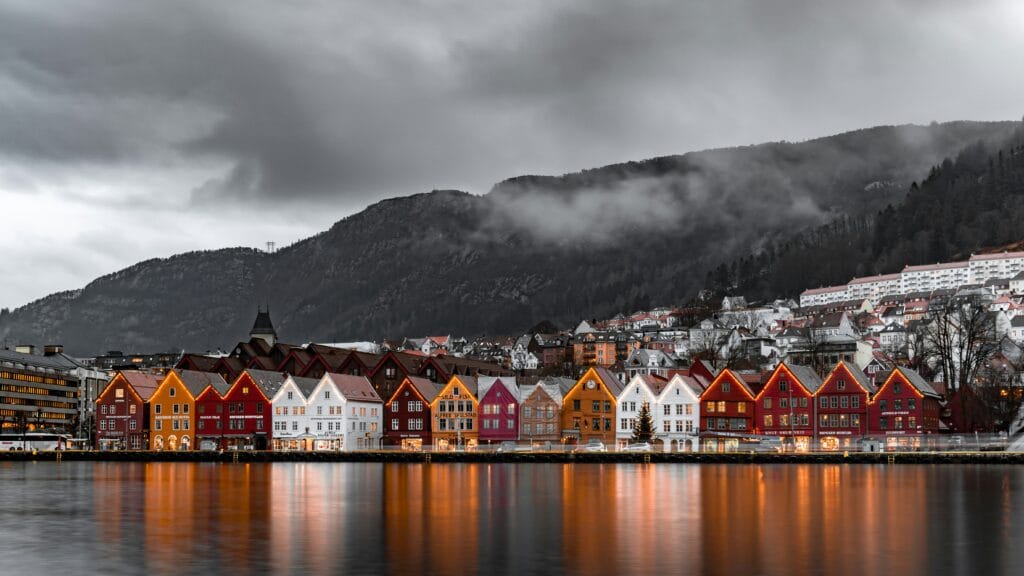
- Bryggen – UNESCO World Heritage listed Bryggen is Bergen’s historic wharf with colorful wooden structures recalling Hanseatic League times. These 14th-16th century warehouse rows were a trading center through which dried fish and other goods passed. Narrow alleys between buildings lead to small workshops, galleries, and traditional restaurants. Although some buildings were destroyed by fires, they were rebuilt following traditional methods and preserving authentic medieval architectural spirit.
- Fløyen Mountain – One of seven mountains surrounding Bergen, accessible by the historic funicular “Fløibanen.” From the 320-meter summit opens a breathtaking panorama of Bergen, fjords, and surrounding islands. The mountain has walking trails, children’s playgrounds, a restaurant, and bike trails. This is a popular spot for both tourists and locals, especially at sunset.
- Fish Market – Bergen’s Fish Market (“Fisketorget”) is not just a marketplace but a living city cultural heritage, operating since the 13th century. Here you can taste the freshest seafood: salmon, crabs, lobsters, shrimp, and traditional Norwegian fish dishes. The market vendors offer not only fish but also local farmers’ products. Many stalls have small kitchens where fish is prepared on the spot.
- Bergen Museum – “Bymuseet i Bergen” introduces visitors to the city’s rich history from Viking times to modern Bergen. The museum exhibits archaeological finds, Hanseatic trade documents, city artworks, and daily life artifacts. Particularly interesting is the exhibition about the city’s development as an important trading center and about the great fires that shaped the city’s architecture.
- Troldhaugen – This is composer Edvard Grieg’s house-museum, where he lived and created from 1885 to 1907. The villa, designed by his cousin architect, stands on a hill with a view of Lake Nordås. The complex includes the original composer’s cottage where he created music, the modern concert hall “Troldsalen” building, and Grieg and his wife Nina’s grave in the garden. During summer season, chamber music concerts take place here, and in the museum you can hear Grieg’s music recordings and learn about his life and work.
Trondheim
Norway’s historic capital and technology center.
Places to Visit:
- Nidaros Cathedral – Built between 1070-1300, the cathedral is the most impressive example of Norwegian Gothic architecture and the country’s most important cathedral. It was built over the grave of St. Olav, Norway’s patron saint. The cathedral’s western facade is adorned with numerous sculptures and considered one of the most beautiful in Northern Europe. In the Middle Ages, Norwegian kings were crowned here, and this tradition continues today – royal blessing ceremonies take place here. Inside the cathedral are preserved original stained glass windows and medieval artworks.
- Bakklandet – A charming old Trondheim district on the eastern bank of the Nidelva River, famous for traditional wooden houses painted in bright colors. 19th-century workers’ houses have today become cozy cafes, small shops, and craftsmen’s workshops. The district features narrow cobblestone streets and is especially popular among cyclists – the world’s first bicycle lift “Trampe” is installed here. This is a great place to feel authentic Trondheim atmosphere.
- Kristiansten Fortress – Built 1681-1684, Kristiansten Fortress dominates the city panorama and offers an impressive view of Trondheim and the fjord. The fortress played an important role in 1718 defending the city from Swedish invasion. Today the fortress houses a museum telling about its military history, and during summer various cultural events take place here. This is a popular place to watch sunsets and city panorama.
- Rockheim – Interactive national popular music museum, opened in 2010. Modern exhibitions using latest technologies present Norwegian popular music development from the 1950s to the present day. Visitors can not only learn about music history but also try musical instruments themselves, record songs, or create their own mixes. The building facade at night becomes a giant light show screen.
- NTNU Science Museum – The Norwegian University of Science and Technology (NTNU) museum is Norway’s largest museum of its kind. It encompasses natural science, archaeology, and cultural history exhibitions. The museum presents scientific discoveries, Trondheim region’s nature and history from the Ice Age to the present day. Particularly interesting are interactive exhibitions, demonstrations, and the botanical garden. The museum also conducts important scientific research and organizes educational programs for students.
Norwegian Cuisine
Norwegian cuisine is famous for fresh seafood and traditional winter dishes.
Traditional Dishes:
- Lutefisk: Traditional dried cod dish
- Rakfisk: Fermented trout
- Pinnekjøtt: Salted lamb ribs
- Krumkaker: Crispy waffles with filling
- Brunost: Brown cheese from goat’s milk
- Kjøttkaker: Norwegian meatballs
- Lefse: Soft potato flatbread
Travel Itinerary Ideas
Weekend Trip:
- Day 1: Oslo city center attractions
- Day 2: Museums and fjord cruise
Week-long Trip:
- Days 1-2: Oslo
- Days 3-4: Bergen and Hardangerfjord
- Day 5: Flåm Railway
- Days 6-7: Geirangerfjord
Norway’s Nature
- Geirangerfjord – UNESCO heritage and one of the most beautiful fjords
- Preikestolen – Impressive rock platform above Lysefjord
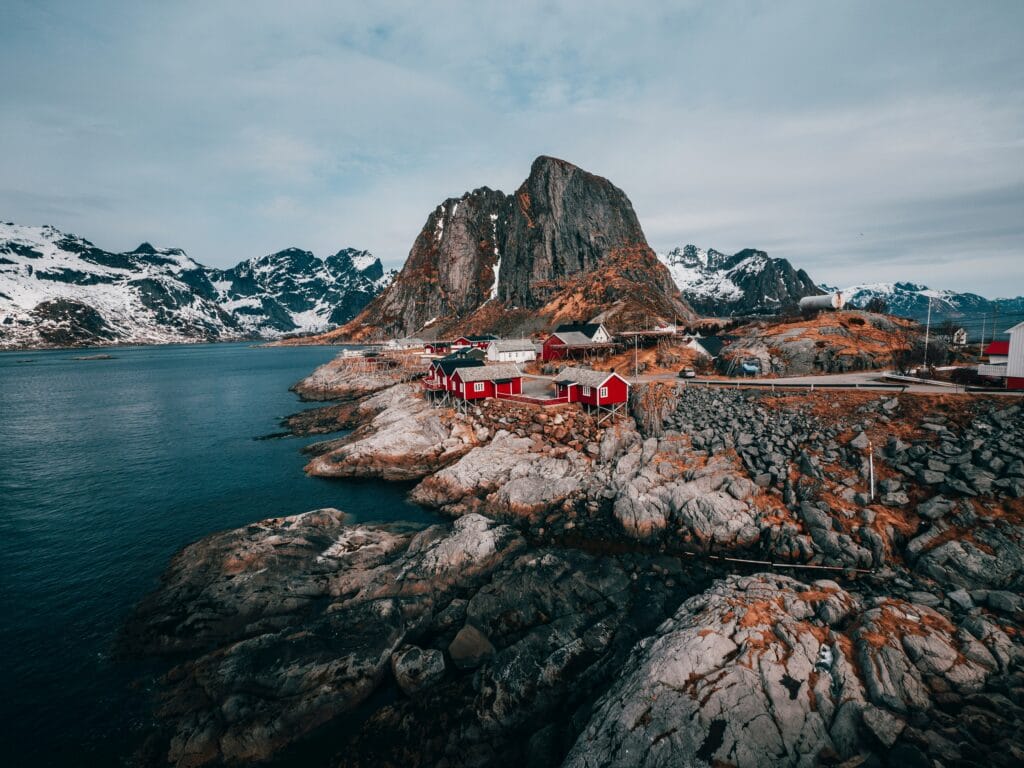
- Lofoten Islands – Fishing villages and dramatic mountains
- Jotunheimen National Park – Norway’s highest mountains
- Svalbard Archipelago – Arctic nature and polar bears
Practical Tips
- Public Transport: Efficient but expensive
- Language: Norwegian, but English widely used
- Payment: Card payment accepted almost everywhere
- Dress Code: “There’s no bad weather, only inappropriate clothing”
- Allemannsretten: Everyone’s right to roam freely in nature
- Prices: One of Europe’s more expensive countries
- Grocery Stores: Often close early
Main Events in Norway
- National Day (May 17): Biggest national celebration
- Bergen International Festival: May-June
- Viking Festivals: During summer in various cities
- Nordlysfestivalen: Northern Lights festival in Tromsø
- Oslo Jazz Festival: August
Norway is a country where nature’s grandeur meets modern society’s achievements. Whether you’re looking for adventures in fjord country, want to experience the magic of midnight sun, or simply enjoy the Scandinavian way of life – you’ll find everything here. From dramatically beautiful fjords to modern cities, from Viking heritage to contemporary culture – Norway enchants with its contrasts and unique Nordic spirit.