 Brazil
Brazil: Land of the Amazon Jungle and Samba Rhythm
Brazil is a country where the Amazon jungle whispers its secrets, while city skyscrapers reach for the sun like ambitious footballers in a World Cup final. Here life boils with full force – some dance samba in the streets, others kick the ball until the last drop of sweat, while others simply enjoy a caipirinha cocktail lazily swinging in a hammock.
Whether you want to immerse yourself in the embrace of wild nature or feel the rhythm of Rio de Janeiro’s carnival – Brazil will welcome you with open arms (and, likely, with a loud “Bem-vindo!”). Here every corner has its own story, its own colors and, of course, its own rhythm. So if you dream of a tropical paradise where life sounds like the best samba hit – go ahead, Brazil is waiting for you!
Basic Information About Brazil
- Capital: Brasília
- Area: 8,515,770 km²
- Population: ~214 million (2024)
- Currency: Brazilian Real (BRL)
- Language: Portuguese
- Time Zones: Different time zones (from UTC-2 to UTC-5)
- Government: Federal presidential republic
When is the Best Time to Travel to Brazil?
Summer (December-February)
The hottest and most humid season. Great time to visit the famous Rio carnival (February). Temperature reaches 30-40°C, frequent short tropical rains. This is high season, so prices are higher and tourist sites are more crowded.
Autumn (March-May)
Pleasant transitional season with warm days and cooler evenings. Temperature ranges between 20-30°C. Great time to visit the Amazon region as there’s less rain than summer. Prices start to drop and tourist flows decrease.
Winter (June-August)
Dry season. Temperature pleasantly warm (15-25°C), less humidity. Ideal time to travel to the Pantanal region to observe wildlife. The north remains warm while the south can be cool.
Spring (September-November)
Warming weather, precipitation starts to increase. Temperature 20-30°C. Great time to visit beaches before high season begins. Nature is green and prices remain attractive.
Main Cities
Rio de Janeiro
A city where mountains meet the ocean and samba rhythms sound in the streets. Rio is not just a city, it’s a way of life.
Places to Visit:
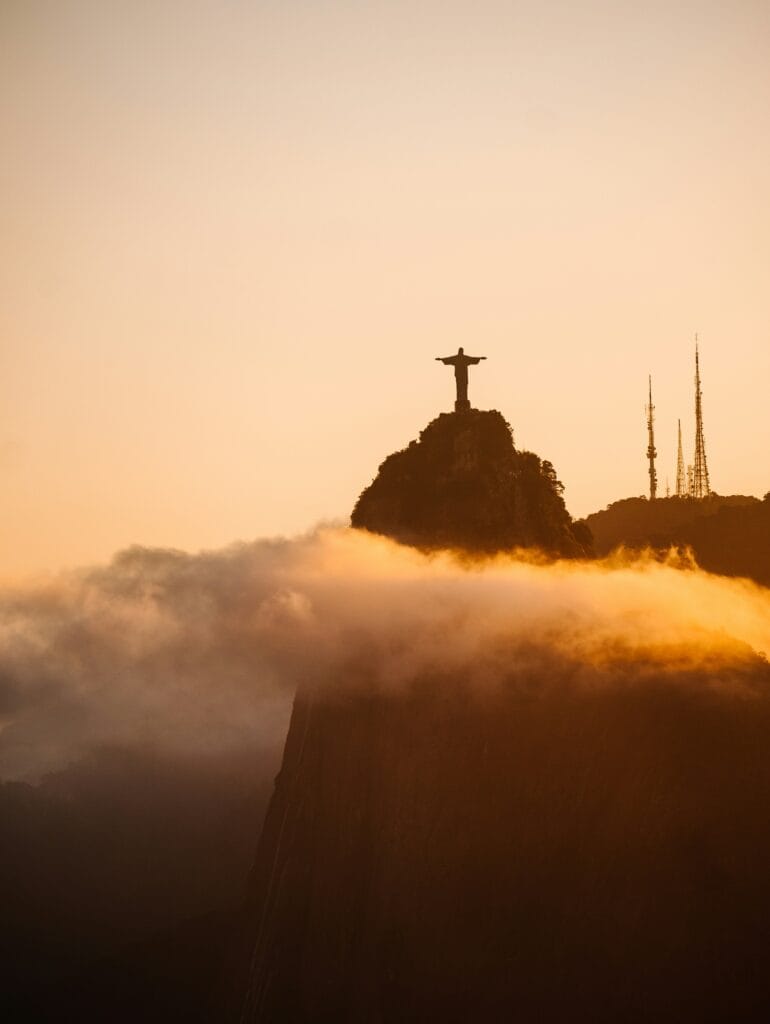
- Christ the Redeemer Statue – one of the most famous Art Deco monuments in the world and one of the New Seven Wonders of the World. This impressive 30-meter-high statue stands on the 710-meter-high Corcovado mountain and is a UNESCO World Heritage Site. From here opens a breathtaking panorama of Rio de Janeiro, allowing you to admire both the city center and the Atlantic Ocean.
- Copacabana Beach – a 4 km long beach known for its iconic mosaic promenade created by Brazilian architect Roberto Burle Marx. Active life thrives here – from sunbathing to street musicians, beach football matches and carnival parades.
- Ipanema Beach – more elegant and fashionable than Copacabana, famous for golden sand, impressive sunsets and luxurious bars and restaurants. It was made famous by the song “The Girl from Ipanema,” and the nearby Arpoador promontory is one of the best places to watch the sunset.
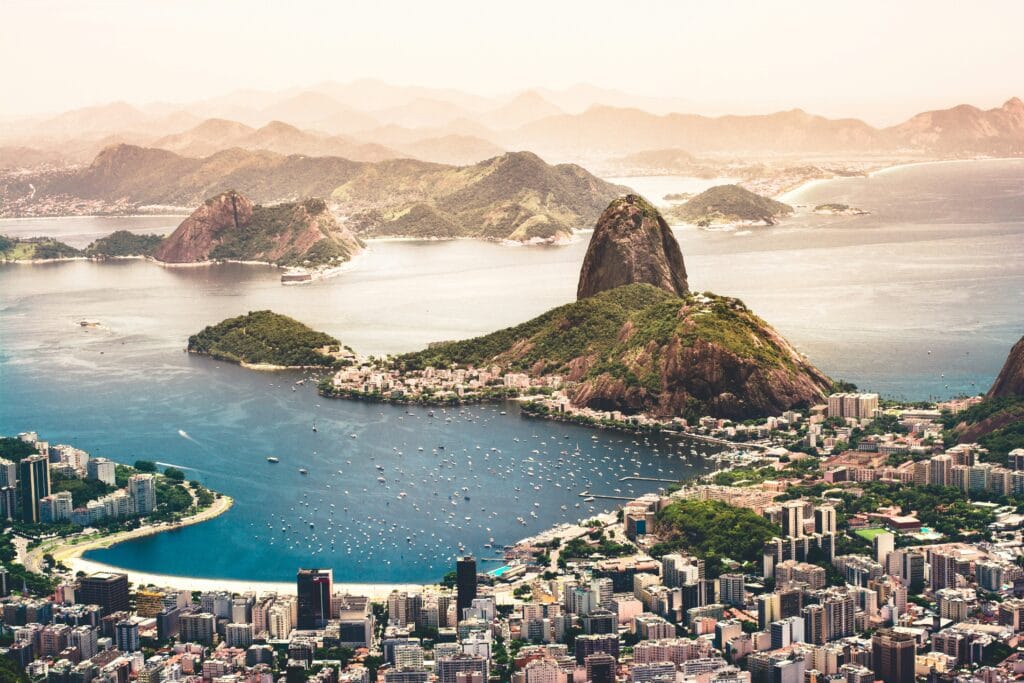
- Sugarloaf Mountain (Pão de Açúcar) – a 396-meter-high granite peak that can be reached by glass cable car. From the summit opens unparalleled views of Guanabara Bay, Christ the Redeemer statue, beaches and city skyline, especially impressive at sunset.
- Maracanã Stadium – a football stadium holding more than 78,000 spectators. Historic football matches took place here, including the 1950 and 2014 World Cup finals. A visit to this stadium is a great opportunity to feel Brazilian football passion.
- Selarón Steps – colorful mosaic stairs created by Chilean artist Jorge Selarón. They connect the Lapa and Santa Teresa neighborhoods and are decorated with thousands of tiles from various countries around the world, becoming the city’s art symbol and tourist attraction.
- Santa Teresa District – a bohemian part of the city, charming with narrow cobblestone roads, historic mansions and a vibrant artist community. Here you can visit local art centers, galleries and cozy cafes and enjoy authentic Brazilian culture.
- Lapa Arches (Arcos da Lapa) – an 18th-century aqueduct that later became a tram bridge connecting the city center with the Santa Teresa district. The streets around it are famous for nightlife, samba clubs and live music.
- Tijuca National Park – one of the world’s largest urban tropical forests, covering about 39 km². Here you can walk trails leading to beautiful waterfalls, caves and viewpoints, and also see various exotic animal and plant species.
- Ilha Grande – the largest island near Rio de Janeiro, famous for its wild nature, crystal-clear waters and jungle-covered hills. There are no cars here, so you can enjoy a peaceful nature refuge and explore wonderful beaches such as Lopes Mendes.
São Paulo
South America’s largest city, a financial and cultural center famous for its gastronomy and art scene.
Places to Visit:
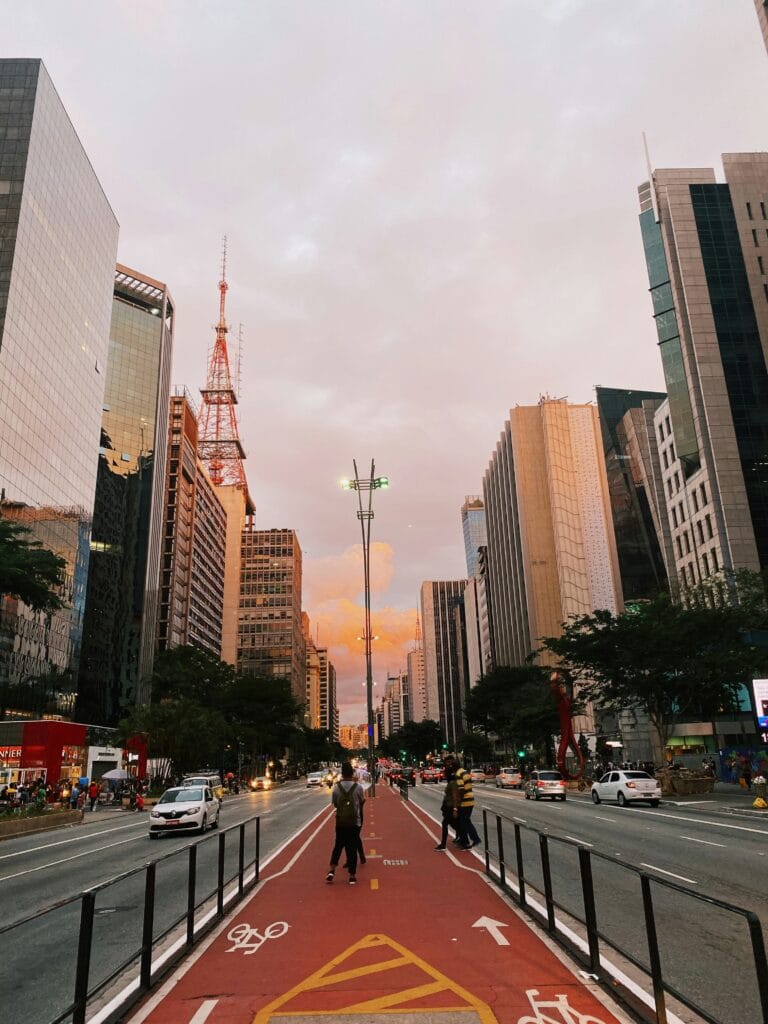
- Paulista Avenue – one of São Paulo’s most famous and vibrant streets, reflecting the city’s business, cultural and entertainment spirit. This wide, modern street is surrounded by skyscrapers, banks, shopping centers, museums and restaurants. On Sundays it’s closed to traffic, becoming a pedestrian zone where locals and tourists enjoy concerts, street artist performances and markets.
- MASP (São Paulo Museum of Art) – one of the most important art museums in Brazil and all of South America. It stands out for its modernist architecture – the building is raised on red columns and appears to levitate in the air. The museum’s collection includes works by such artists as Van Gogh, Rembrandt, Renoir and Velázquez, as well as a large exhibition of Brazilian and Latin American artists’ works.
- Ibirapuera Park – São Paulo’s largest park, often compared to New York’s Central Park. It perfectly combines green spaces, lakes, bike paths and modern buildings designed by famous Brazilian architect Oscar Niemeyer. Several important museums are located in the park: Museum of Modern Art (MAM), Afro-Brazilian Museum and Oca Art Pavilion. It’s a great place for both sports and peaceful rest in nature.
- Municipal Market (Mercado Municipal) – a historic covered market operating since 1933, famous for its beautiful stained glass windows and a wide range of fresh products – from exotic fruits to spices and seafood. Be sure to try the famous mortadella sandwich here!
- Liberdade District – the heart of the largest Japanese community outside Japan. The streets are decorated with traditional red gates and lanterns, and you can find authentic Japanese restaurants, shops with Asian goods and cultural centers here. Every Sunday there’s a market selling Japanese crafts and food.
- Pinacoteca do Estado – one of Brazil’s oldest art museums, founded in 1905. The museum specializes in Brazilian art from the 19th and 20th centuries, with a particularly impressive collection of paintings, sculptures and drawings reflecting the country’s cultural development.
- São Paulo Cathedral (Catedral da Sé) – one of the world’s largest Neo-Gothic churches, built in the early 20th century. The cathedral can hold up to 8,000 people and impresses with its architecture, stained glass windows and huge organ.
- Vila Madalena – a bohemian district famous for street art, graffiti and murals decorating building walls. Here you’ll find many art galleries, design shops, cozy bars and restaurants. This is a great place to feel São Paulo’s creative vibe.
Salvador
Bahia state’s capital, a city rich in African heritage, colonial architecture and vibrant culture.
Must-See:
- Pelourinho – the historic center of Salvador, a UNESCO World Heritage Site, famous for its colorful colonial buildings, narrow cobblestone streets and rich Afro-Brazilian culture. This is where slaves were once sold, and today it’s a vibrant district full of museums, galleries, churches and live music.
- Elevador Lacerda – a historic public elevator connecting Salvador’s Lower City (Cidade Baixa) with the Upper City (Cidade Alta). Built in 1873, it’s one of the oldest and busiest public elevators in the world, carrying thousands of people daily.
- São Francisco Church – a Baroque masterpiece, one of the most ornately decorated churches in Brazil. The interior is covered with gold and features extremely detailed wood carvings. This church is a testament to Brazil’s colonial wealth.
- Barra Lighthouse and Beach – Salvador’s most famous beach near the historic lighthouse (Farol da Barra), built in 1698. The lighthouse now houses a nautical museum, and the beach is a popular place for walking and sunset watching.
- Mercado Modelo – a historic market where you can buy handicrafts, souvenirs, musical instruments and taste Bahian cuisine. This market occupies the old customs building and is one of the best places to immerse yourself in Salvador’s culture and traditions.
What Does Brazil Offer Food Lovers?
Traditional Dishes:
- Feijoada – Brazil’s national dish, a rich stew of black beans with various types of pork (ribs, sausage, ears, tail). Traditionally served on Saturdays with rice, farofa (toasted cassava flour), orange slices, and collard greens. This hearty dish has African roots and reflects Brazil’s multicultural culinary heritage.
- Moqueca – a traditional seafood stew from Bahia, cooked with fish or shrimp, coconut milk, palm oil (dendê), tomatoes, onions and bell peppers. Moqueca is served in a clay pot and eaten with white rice and pirão (fish broth thickened with cassava flour).
- Pão de Queijo – small cheese bread rolls made from cassava flour and cheese. These fluffy, elastic buns are popular throughout Brazil and are often eaten for breakfast or as a snack.
- Acarajé – a Bahian street food dish with African roots. It’s a deep-fried ball of black-eyed pea dough filled with vatapá (shrimp paste with coconut milk), caruru (okra stew), dried shrimp and hot sauce.
- Churrasco – Brazilian barbecue, where various types of meat (beef, pork, chicken, sausages) are grilled on skewers over open fire. Churrasco is usually served in rodízio style, where waiters bring skewers directly to your table and cut off as much as you want.
- Brigadeiro – a popular Brazilian sweet made from condensed milk, butter, cocoa powder and chocolate sprinkles. These small chocolate balls are a must-have at birthdays and celebrations.
- Caipirinha – Brazil’s national cocktail made from cachaça (sugarcane liquor), lime, sugar and ice. It’s a refreshing drink perfect for hot tropical days.
- Açaí Bowl – frozen açaí berry pulp served with granola, bananas, honey and other fruits. Açaí is rich in antioxidants and is popular as a healthy breakfast or post-workout meal.
Nature and National Parks
- Amazon Rainforest – the world’s largest tropical rainforest, covering about 60% of Brazil’s territory. This is home to unparalleled biodiversity – millions of plant, animal and insect species. You can take boat trips, visit indigenous communities and observe wildlife in its natural habitat.
- Pantanal – the world’s largest tropical wetland, a paradise for wildlife observation. Here you can see jaguars, caimans, capybaras, giant anteaters and more than 650 bird species. The best time to visit is during the dry season (June-October).
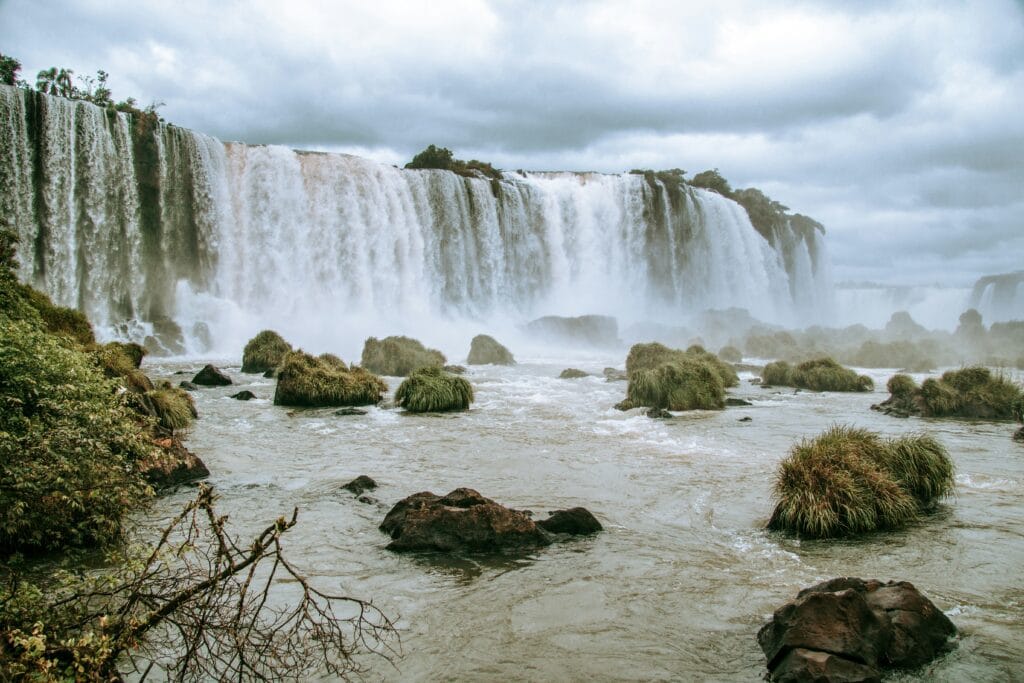
- Iguazu Falls – one of the world’s largest and most impressive waterfall systems on the border with Argentina. 275 separate waterfalls stretch over 2.7 km, creating a breathtaking spectacle. The Brazilian side offers the best panoramic views.
- Fernando de Noronha – a volcanic archipelago and UNESCO World Heritage Site, famous for crystal-clear waters, incredible beaches and rich marine life. This is one of the best diving and snorkeling destinations in Brazil.
- Lençóis Maranhenses National Park – a unique landscape of white sand dunes and blue lagoons, looking like a desert by the ocean. During the rainy season (January-June), fresh water fills the spaces between dunes, creating surreal scenery.
- Chapada Diamantina National Park – a mountainous region in Bahia state, famous for waterfalls, caves, high plateaus and diverse flora. Popular among hikers and adventure seekers.
- Bonito – a paradise for ecotourism lovers, famous for crystal-clear rivers where you can snorkel and see fish, caves with stalactites and stalagmites, and waterfalls.
- Jericoacoara – a picturesque village on Brazil’s northeastern coast, surrounded by sand dunes and lagoons. This is a popular place for windsurfing, kitesurfing and watching spectacular sunsets.
- Cachoeira Santa Bárbara – one of Brazil’s brightest blue waterfalls near Cavalcante town, often compared to natural wonders.
- Alter do Chão – the Amazon region’s “Caribbean,” where white sand beaches merge with freshwater lagoons.
Practical Tips for Travelers
- Safety: if you want to ensure your safety during travel, always keep valuable items in the hotel safe and avoid carrying expensive gadgets or jewelry that might attract pickpockets’ attention. Choose only official taxi services or reliable platforms like Uber to avoid possible scams. In big cities, especially in the evening, be extra vigilant – choose well-lit and busy streets, and keep purses or backpacks in front. It’s also useful to write down local police and nearest embassy contacts in advance so you can quickly seek help if needed.
- Health: before traveling, inquire about mandatory and recommended vaccinations – for example, when traveling to certain countries, yellow fever vaccination may be required, while hepatitis A vaccines and malaria prophylaxis are recommended when traveling to tropical areas, especially the Amazon region. To avoid health problems, drink only bottled water, as tap water in some areas may be unsafe. Also avoid ice cubes in drinks, especially those sold by street vendors. Don’t forget to use sun protection to avoid burns, and get insect repellent, as in certain areas mosquitoes can spread diseases such as dengue fever or malaria.
- Transportation: if you plan to travel within the country, for domestic flights you can choose airlines like GOL, LATAM or Azul, which offer routes between major cities and more remote regions. In big cities, it’s convenient to use the metro system as it’s fast, efficient and helps avoid street traffic. When traveling between cities, intercity buses are often used – it’s an economical and comfortable choice. Within city limits, you can use local buses, but before boarding it’s worth checking routes and payment systems in advance, as in some countries buses don’t accept bank cards and tickets must be purchased in advance.
- Finances: to avoid inconvenience, always have some cash for smaller expenses, as cards aren’t accepted everywhere, especially at markets, local cafes or small shops. In big cities, credit cards are widely used, but before traveling it’s recommended to inform your bank so your account won’t be blocked due to suspicious foreign payments. In restaurants, it’s customary to leave tips amounting to about 10–15% of the bill.
Communication Peculiarities
- If you like warm and sincere communication, you’ll feel at home in Brazil. People here are very friendly, open and inclined to communicate like old acquaintances, even if you just met. Don’t be surprised if during conversation someone touches your shoulder or even hugs you – physical contact is completely natural here, and greetings are often accompanied by a kiss on the cheek (or even two!).
- Punctuality? Well, let’s say time flows a bit slower here. If you agreed to meet at 6 PM, it might mean 6:15, and sometimes even 6:30. So it’s better to prepare for flexibility and accept everything with the typical Brazilian relaxation.
- The language barrier can become a bit of a challenge, especially if you travel beyond major cities – fewer people speak English here, so it’s worth learning a few basic Portuguese phrases. Locals will definitely appreciate your efforts.
- Olá! – Hello!
- Obrigado! / Obrigada! – Thank you! (Man says “Obrigado”, woman – “Obrigada”)
- Por favor. – Please.
- Desculpe. – Sorry.
- Você fala inglês? – Do you speak English?
- Quanto custa? – How much does it cost?
- Onde é o banheiro? – Where is the bathroom?
- Eu gostaria de… – I would like…
- A conta, por favor. – The bill, please.
- Preciso de ajuda. – I need help.
Main Events
- Rio Carnival: one of the world’s most famous festivals, held annually in February or March before Lent. It involves samba schools that showcase impressive costumes, giant floats and vibrant performances at the Sambadrome. This is the heart of Brazilian culture, attracting millions of visitors from around the world.
- São Paulo Art Biennial: South America’s art event, held every two years since 1951. This biennial attracts contemporary artists from around the world and showcases various artworks – from paintings to installations and performances. The event takes place in Ibirapuera Park, where a modern exhibition space is set up.
- Festa Junina: a traditional Brazilian festival held throughout June to honor Saints John (São João), Peter (São Pedro) and Anthony (Santo Antônio). During celebrations, people wear rural clothing, dance forró, eat traditional Brazilian dishes such as pamonhas (corn dumplings) and canjica (sweet corn dessert). Events take place throughout the country but are especially popular in northeastern Brazil.
- Rock in Rio: September/October, a festival held every two years, first organized in 1985. The world’s most famous rock, pop and other genre music stars perform here. Although the festival was born in Brazil, it has spread to other countries, but the Rio de Janeiro version remains the most important.
- Parintins Folklore Festival: a unique festival held in the Amazon city of Parintins. It revolves around the “Boi-Bumbá” legend – a competition between two teams (Garantido and Caprichoso) who tell folklore stories through music, theater and colorful performances.
- New Year’s Eve – Réveillon (December 31): Rio de Janeiro’s Copacabana Beach becomes the main celebration venue where millions of people welcome the New Year with an impressive fireworks show. Traditionally, many dress in white and offer flowers to the sea goddess Yemanja.
- Salvador Carnival (February/March): if Rio de Janeiro’s carnival is elegant and organized, Salvador’s carnival is a real street party. The main role here is played by “trio elétrico” – huge trucks equipped with sound systems, on which famous musicians perform, while thousands of people dance along.
- Oktoberfest Blumenau (October): the largest German cultural festival in Brazil takes place in Blumenau city, Santa Catarina state. Here you can taste German beer, traditional dishes and enjoy folk music.
- Círio de Nazaré (October, in Belém city): a religious celebration dedicated to honoring Our Lady of Nazareth, considered one of the world’s largest Catholic processions. Millions of pilgrims gather in Belém to honor the sacred statue carried through city streets.
Brazil will make you gasp in amazement and, likely, sweat a bit from the tropical heat. Here everything – from breathtaking Amazon jungles to impressive São Paulo skyscrapers – pulses with life and contrasts. One moment you can lazily swing in a hammock in the Atlantic breeze, and the next you’re dancing samba in the street, surrounded by the bustle of colorful carnival celebrations.
Of course, like any exotic country, Brazil has its challenges – in big cities you need to be vigilant about safety, and beyond main tourist routes, transportation can become a lottery. But you know what? All this fades before the adventures you can experience here. Properly prepared and with a bit of adventurous spirit, you’ll bring back from Brazil not only impressive stories but also a desire to return.
This South American giant is much more than just football, samba and carnivals. It’s a place where different cultures intertwine, breathtaking nature and people’s warmth, creating an atmosphere you won’t forget. Whether you’re a nature explorer, culture enthusiast, or simply looking for new experiences – Brazil has something special just for you. Just don’t forget sun protection and free space in your suitcase for souvenirs!