 Croatia
Croatia: The Pearl of the Adriatic
Croatia is a true treasure, where the azure Adriatic Sea washes thousands of islands, as if someone had scattered pearls into a water chest. Here, Mediterranean culture intertwines with Central European traditions, and UNESCO-protected old towns breathe such an atmosphere that you just want to take a deep breath and not let go of even a bit.
The country amazes with contrasts: one day you can climb the mountainous Dinaric Alps, and the next you’re already sitting in a coastal town, sipping local wine and counting ships on the horizon. Want to immerse yourself in nature? Croatia’s national parks will truly amaze you with their waterfalls and the blueness of the lakes. And if you love history – here every stone has secrets and legends. In short, Croatia is a place that makes you fall in love and leave your heart on its shores.
Basic Information about Croatia
- Capital: Zagreb
- Area: 56,594 km²
- Population: ~4 million (2024)
- Currency: Euro (EUR)
- Language: Croatian
- Time Zone: CET (GMT+1), summer – CEST (GMT+2)
When is the Best Time to Travel to Croatia?
Summer (June–August)
The hottest and busiest tourist season (25-35°C). Ideal time for beaches and island hopping. Prices are highest, booking in advance is essential.
Autumn (September–November)
Pleasant weather (15-25°C), fewer tourists. Great time for cultural tourism and visiting national parks. The sea is still warm for swimming.
Winter (December–February)
Mild winters on the coast (5-15°C), skiing season in the mountains. Low prices, many cultural events.
Spring (March–May)
Nature awakening, pleasant temperatures (15-20°C). Great time for active tourism and city visits.
Main Cities and Regions
Zagreb
The country’s capital, charming with Central European architecture and culture.
Places to Visit:
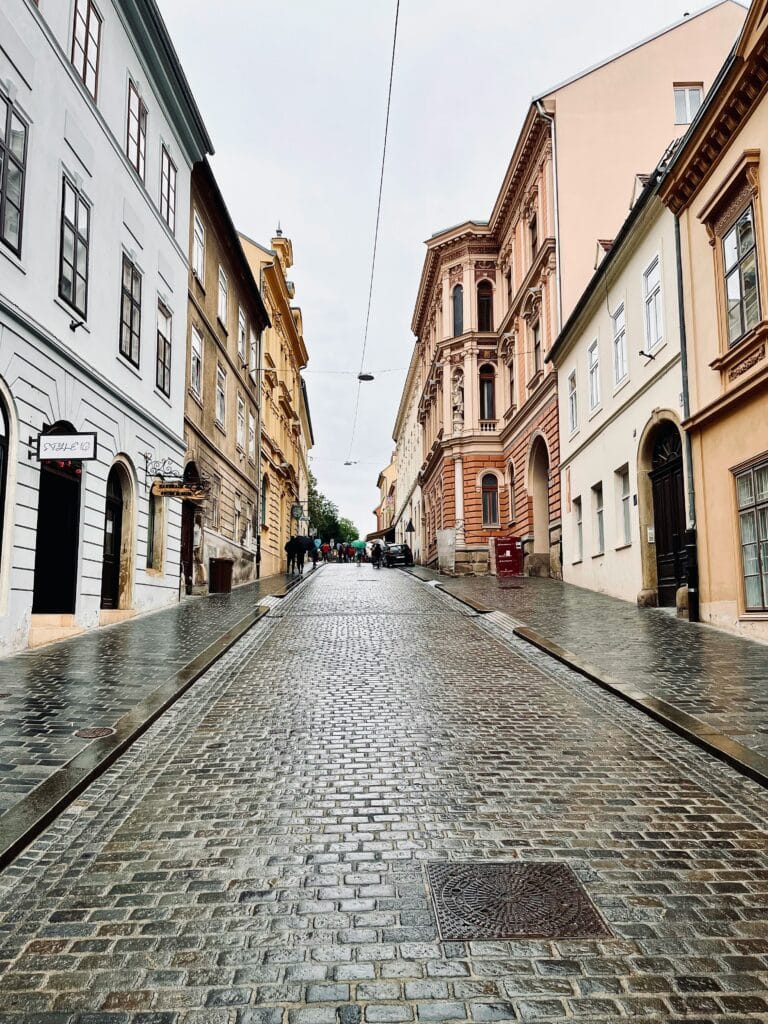
- Upper Town (Gornji Grad) – the historic heart of Zagreb, where every alley breathes the medieval spirit. The central square’s focal point is St. Mark’s Church with its unique colorful tiled roof, depicting the coats of arms of Croatia, Dalmatia, and Slavonia. The most important government buildings are also located here: the Croatian Parliament, the Presidential Palace, and the City Hall. Narrow cobbled streets, gas lamps, and historic buildings create a romantic medieval atmosphere.
- Dolac Market – Zagreb’s most colorful market, operating since 1930. The stalls under characteristic red umbrellas have become a city symbol. On the first floor under the open sky, fresh vegetables, fruits, and flowers are sold, while the lower floor houses meat, cheese, and fish pavilions. The market is a great place to taste local products and feel the true rhythm of Zagreb life.
- Mirogoj Cemetery – not just a cemetery, but a monumental architectural monument created by architect Herman Bollé in the late 19th century. Impressive neo-Renaissance arcades, domes, and green spaces create a park atmosphere. The cemetery is famous for its artistic tombstones and sculptures, and in autumn, covered with vines, it becomes especially photogenic.
- Museum Street (Ulica grada Vukovara) – distinguished by modernist architecture and cultural institutions. Here you can visit the Museum of Contemporary Art, the Mimara Museum with its rich art collection, the Arts and Crafts Museum, and other cultural institutions. The street reflects the city’s modernization and cultural life.
- Zagreb Cathedral – Croatia’s most magnificent church, whose neo-Gothic towers reach 108 meters in height. The current building, rebuilt after the 1880 earthquake, stands out with its rich interior, impressive stained glass windows, and Baroque altars. The cathedral treasury houses valuable artworks and liturgical items.
- Lotrščak Tower – a 13th-century defensive tower offering panoramic views of the city. Every day at noon, a cannon is fired from the tower – a tradition dating back to the 16th century. An observation deck is set up at the top of the tower, offering views of the Lower Town and Zagreb Cathedral.
Dubrovnik
A UNESCO-protected city, called the “Pearl of the Adriatic”.
Don’t Miss:
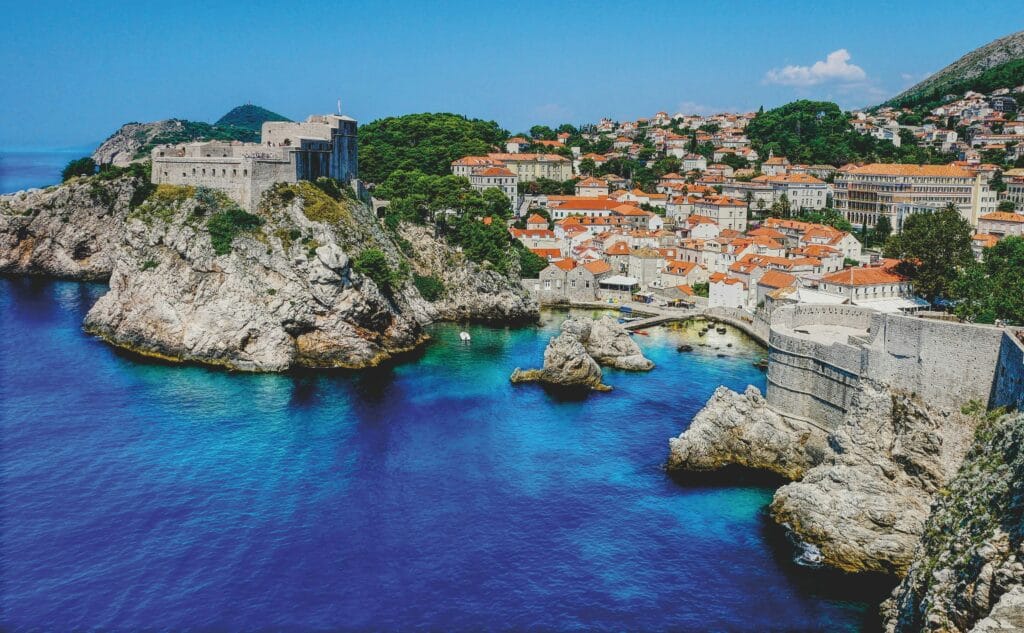
- Old Town Walls – one of the best-preserved medieval defensive systems in Europe. The 2-kilometer-long and up to 25-meter-high walls with 16 towers and 2 fortresses encircle the entire old town. Walking the walls takes about 2 hours and provides an unparalleled opportunity to see the city from above – on one side the blue of the Adriatic Sea, on the other the mosaic of terracotta roofs of the old town. The walls look especially impressive at sunset.
- Stradun – the 300-meter-long main artery of the old town, paved with shiny limestone slabs. This street connects the main city gates – Pile and Ploče. On both sides of the street stand buildings of uniform height with shops and cafes on the first floor – the result of 16th-century urban planning after the great earthquake. At the ends of the street are two historic fountains – Onofrio’s Large and Small Fountains.
- Mount Srd – rising 412 meters above the city, accessible by cable car in 4 minutes. At the top is an observation deck offering breathtaking views of the old town, Lokrum Island, and the Elaphiti archipelago. The mountain also houses the Homeland War Museum and the “Panorama” restaurant. The cable car operates from early morning to late evening, allowing you to see the city at different times of day.
- Lokrum Island – Dubrovnik’s green oasis, reachable by a 10-minute ferry from the Old Port. The island features a botanical garden with exotic plants, Benedictine monastery ruins, and the “Iron Throne” – a location where Game of Thrones was filmed. On the island’s coast is the “Dead Sea” – a small saltwater lagoon where you can swim. The island is also home to a colony of freely roaming peacocks.
- Rector’s Palace – the former residence of the Dubrovnik Republic’s governor, a fine example of Gothic and Renaissance architecture. Today the palace houses a history museum displaying old furniture, coins, coats of arms, and other artifacts of the Dubrovnik Republic. The palace courtyard is often used for classical music concerts.
- Old Port – was the main trade artery of the Dubrovnik Republic. It is guarded by St. John’s Fortress and St. Luke’s Church. Today the port has become a yacht harbor and departure point for nearby islands. In the evenings, the harbor quay becomes a popular walking area, and restaurants offer fresh fish and seafood with sea views.
Split
The second-largest city, famous for Diocletian’s Palace.
Places to Visit:
- Diocletian’s Palace – a unique architectural complex occupying almost half of Split’s old town. Built in the 4th century as the residence and fortress of Roman Emperor Diocletian, the palace features excellently preserved Roman architectural elements: columns, arches, and basements. Today about 3,000 people live in this complex, with shops, restaurants, and hotels operating. The palace basements are particularly interesting, where art exhibitions and cultural events often take place.
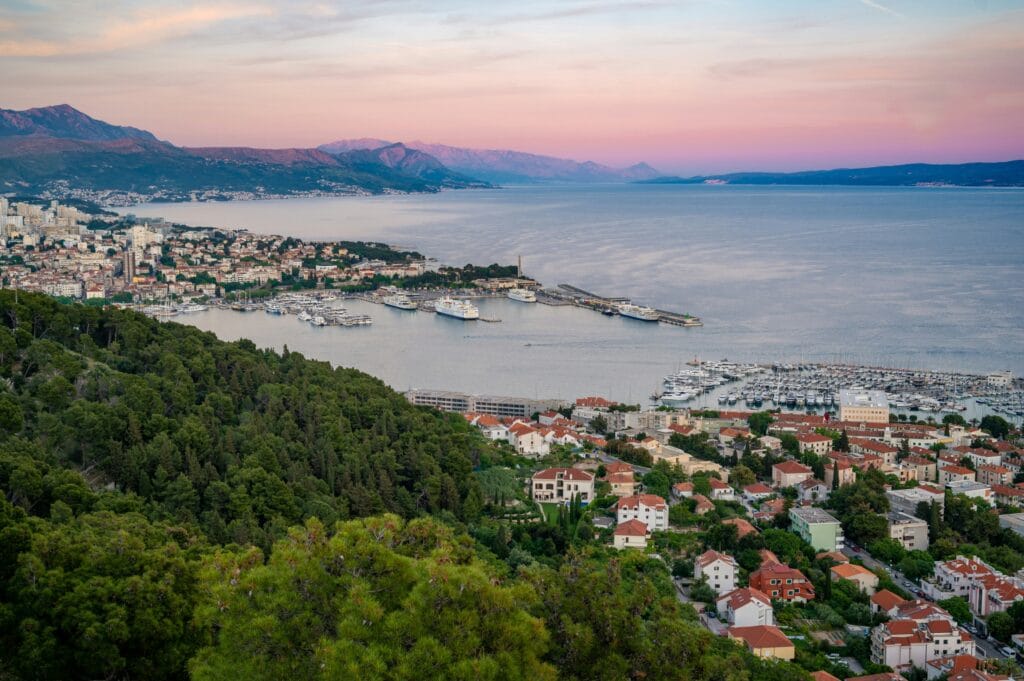
- Riva Promenade – Split’s calling card, stretching along the sea. The promenade is paved with white marble slabs and lined with palm trees. The city’s most popular cafes and restaurants are located here, and in the evenings it becomes the favorite walking spot for locals. From the Riva, views open up to the port and surrounding islands, and at sunset, crowds gather here to watch nature’s spectacle.
- Marjan Hill – Split’s green lungs, a natural peninsula in the western part of the city. The hill rises 178 meters above sea level and offers numerous activities: walking and cycling paths, beaches, tennis courts, and horseback riding trails. Ancient chapels and hermit settlements remain on the hillsides. From the top, panoramic views open up to Split, the sea, and surrounding islands.
- Cathedral of St. Domnius – the oldest cathedral in the world that has not changed its architectural structure since its construction. It was established in Emperor Diocletian’s former mausoleum. The cathedral bell tower is Split’s tallest structure, which you can climb for city panoramas. Inside, original Roman elements are preserved, including columns and fresco fragments.
- Fish Market – an authentic local market operating from early morning. Here you can see and buy the freshest Adriatic Sea delicacies. The market is not only a trading place but also an important social center where locals gather to chat and discuss news. Around the market are many restaurants offering fresh fish and seafood prepared according to traditional Dalmatian recipes.
Zadar
An ancient city with unique contemporary installations.
Main Attractions:
- Sea Organ – a unique work of architecture and music created in 2005. Under marble steps descending into the sea, 35 organ pipes are installed, creating continuous, harmonious music through wave movement. The system works using sea wave energy – water pushes air through the pipes, creating melodious sounds. Each visit becomes a unique experience, as the music depends on wave intensity and wind strength.
- Greeting to the Sun – a 22-meter-diameter solar battery installed next to the Sea Organ. The installation consists of 300 glass plates under which solar elements are mounted. During the day they collect solar energy, and at sunset they create an impressive light show. LED lights create various light patterns that, together with the Sea Organ’s music, create a magical atmosphere.
- St. Donatus Church – a distinctive circular church built in the 9th century. It is considered the best-preserved pre-Romanesque style building in Dalmatia. The church was built on a former Roman forum, with parts of Roman buildings used in its construction. Due to excellent acoustics, the church is now used as a concert hall, especially for medieval and Renaissance music festivals.
- Roman Forum – was the main city square in Roman times, begun in the 1st century BC. Today you can see original pavement slabs, column fragments, and capitals. The forum remains as an open space around which the city’s most important buildings are concentrated, including St. Donatus Church. Archaeological excavations here continue to reveal new findings.
- Kalelarga – Zadar’s main pedestrian street, crossing the old town. Although the street suffered during World War II, it preserved its historic character. Here you can find various shops, cafes, and restaurants. The street is popular among both locals and tourists, especially in the evenings when it becomes the main walking route. Interestingly, the street has maintained the same layout since Roman times.
What Does Croatia Offer Gourmets?
Traditional Dishes:
- Pašticada – one of the most famous dishes of the Dalmatia region. It’s a beef stew where the meat is marinated in wine with vegetables, garlic, and spices. The stew is cooked for long hours at low temperature until the meat becomes extremely tender. The dish is prepared with a special sauce made from dried plums, rosemary, and other spices. Traditionally served with Croatian pasta “njoki”.
- Črni rižot – an impressive black risotto dish that gets its color from squid ink. Made with fresh squid, garlic, onions, and white wine. The ink provides not only an intense black color but also a subtle sea flavor. The dish is the pride of Adriatic coast cuisine.
- Brudet – a traditional fish stew popular throughout the Croatian coast. It uses several types of fish, cooked with tomatoes, onions, and white wine sauce. Each region has its own brudet variant, different according to the fish and spices used. Most often served with polenta.
- Štrukli – a traditional Zagreb region dish – it’s a layered dough pie with cottage cheese filling. Can be served boiled or baked, sweet or savory. Baked štrukli is often poured with sour cream. This dish is included in Croatia’s cultural heritage.
- Pršut – Croatia’s answer to Italian prosciutto – it’s cured ham, especially valued in the Dalmatia and Istria regions. The ham is dried in cold, dry air conditions, often with sea salt and local herbs. The process takes at least 12 months.
- Paški sir – a distinctive sheep’s milk cheese made on Pag Island. It’s famous for its strong, sharp taste provided by the island’s aromatic herbs that the sheep feed on. The cheese is aged for at least several months and is considered one of Croatia’s best cheeses.
- Zagrebački odrezak – a pork or veal cutlet stuffed with ham and cheese. The meat is pounded, stuffed, rolled in flour, eggs, and breadcrumbs, then fried. It’s a city cuisine classic, often served with fried potatoes or vegetables.
Travel Itinerary Ideas
Weekend Trip:
- Day 1: Zagreb – old town tour
- Day 2: Plitvice Lakes National Park
Two-Week Trip:
- Days 1–2: Zagreb
- Days 3–4: Plitvice and Krka National Parks
- Days 5–7: Split and Trogir
- Days 8–10: Hvar and Korčula Islands
- Days 11–14: Dubrovnik
Croatia’s Nature
- Plitvice Lakes National Park – one of the most impressive natural wonders in Europe. 16 terraced lakes connected by cascades and waterfalls create a unique water path. The lakes stand out with their incredible turquoise color, which changes depending on the amount of minerals and sunlight. The park features an 18 km system of wooden walkways and bridges, allowing visitors to view all major sites. The largest waterfall – Veliki Slap – falls from 78 meters high.
- Kornati Archipelago – called the “heavenly crown” due to the extraordinarily beautiful arrangement of 89 islands, islets, and rocks. 75% of the park’s territory is underwater, making it a diver’s paradise with coral reefs, caves, and rich marine life. The islands are almost uninhabited, with no fresh water sources, but you can find ancient olive groves and stone huts that fishermen used for seasonal work. The most popular way to explore the archipelago is by boat.
- Krka National Park – famous for seven majestic waterfalls, the most famous being Skradinski buk, stretching 800 meters long. In the park you can see not only natural wonders but also cultural heritage: Visovac Monastery on an island, Roški waterfall with an ancient mill and hydroelectric plant. Walking trails, observation platforms, and an educational center are set up in the park. In summer, swimming is possible in specially designated zones.
- Mljet National Park – occupies the northern part of Mljet Island and is famous for two saltwater lakes – Great and Small, which are actually sea inlets. In the Great Lake is an island with a former Benedictine monastery. The park is abundant with pine forests, giving the island the name “green island”. Here you can kayak, cycle around the lakes, dive, or simply enjoy the wonderful nature.
- Paklenica National Park – a paradise for climbers and hiking enthusiasts with two impressive canyons – Velika and Mala Paklenica. The park has more than 150 km of marked trails, from easy walks to difficult alpine routes. The park’s biggest attraction is Anica kuk rock, reaching 712 meters in height. The park also offers cave visits, including the impressive Manita peć, and rare bird species observation.
Practical Tips
- Transport: well-developed bus network, summer ferry connections between islands
- Internet: widely available WiFi, good mobile coverage
- Payment: euros accepted everywhere
- Drinking Water: safe to drink straight from the tap – clean, safe, and even tasty.
- Tourist Tax: a small nuance – staying in a hotel or apartment you’ll pay a tourist tax.
- Season: accommodation for summer needs to be booked in advance
Main Events
- Dubrovnik Summer Festival: takes place July 10 – August 25. The oldest and most prestigious Croatian cultural event, running since 1950. The 45-day festival turns the entire Dubrovnik old town into an open stage. In historic spaces – fortresses, palaces, squares – classical music concerts, theater performances, and dance shows take place. Shakespeare’s plays staged at Lovrijenac Fortress look especially impressive. The festival attracts the most famous international performers and thousands of culture lovers.
- Ultra Europe Festival in Split: organized in mid-July, usually the second weekend of July (planned for July 11-13, 2025). After the main festival, additional events take place on the islands (“Destination Ultra”) July 14-16. One of the largest electronic music festivals in Europe, taking place at Split’s “Poljud” stadium. The three-day event attracts over 150,000 visitors from around the world. The festival features the world’s most famous electronic music artists and DJs. Besides the main events in Split, the festival program includes additional parties on Hvar, Brač, and Vis islands, called “Destination Ultra”.
- INmusic Festival in Zagreb: takes place at the end of June, usually around St. John’s Day (planned for June 24-26, 2025). The festival lasts three days. The largest open-air music festival in Croatia, taking place on the islands of Jarun Lake in Zagreb. The festival is famous for its ecological philosophy and diverse music program covering rock, indie, and electronic music genres. Besides music, art installations take place at the festival, camping operates, and various creative workshops are organized.
- Motovun Film Festival: organized at the end of July (planned for July 23-27, 2025). The five-day festival attracts film lovers from around the world. A unique independent film festival taking place in a medieval hilltop town in Istria. The festival focuses on low-budget and experimental films from around the world. Film screenings take place outdoors, in historic city spaces. Besides film screenings, meetings with creators, discussions, and creative workshops are organized.
- Zagreb Advent Fair: begins on the first Sunday of Advent (usually late November) and continues until January 6 (Epiphany). In 2025, the fair will run from November 30 to January 6, 2026. The ceremonial Christmas tree lighting traditionally takes place on the first Saturday of Advent at Ban Jelačić Square. It has been voted the best European Christmas market several times. In December, the entire city turns into a Christmas fairy tale with numerous light installations, concerts, and events. The main fair areas – Ban Jelačić Square, Zrinjevac Park, and Europe Square – are full of Christmas houses selling traditional dishes, mulled wine, and handicrafts. Ice rinks operate, concerts are organized, and old town alleys are decorated with thousands of lights.
Croatia is a country where everyone can find their preferred way to relax: from quietly lying on the beach to actively climbing mountains, from exploring historic cities to island hopping. Rich history, stunning nature, and welcoming people create an unforgettable travel experience!