 Cyprus

Cyprus: Aphrodite’s Island Between East and West
Cyprus is like a mythological cocktail, where every sip reminds you of Aphrodite emerging from the sea foam, and the island’s beauty makes you believe that perhaps you too have some divine blood. Here even reality looks like it’s been through a good filter – from the Troodos Mountains, where snow can fall in winter, to the beaches where the sun warms you so much that thoughts of winter evaporate faster than morning coffee.
Nicosia is a city where the medieval spirit intertwines with 21st-century coffee to go. And Limassol? A true king of contrasts – luxurious resorts next to traditional tavernas, where halloumi cheese sizzles so deliciously in the pan that you’re already planning a second portion.
And let’s not even talk about the wine! In Cyprus, it’s so good that even the gods seem to organize their parties here. The mysterious wine routes, where every turn leads to an even tastier glass of wine, are perfect for both romantics and hedonists.
The sun here almost eternally smiles in the blue sky, and every moment invites you to celebrate life. Cyprus is more than a vacation. It’s a myth you can experience yourself.
Basic Information about Cyprus
- Capital: Nicosia (divided into Greek and Turkish parts)
- Area: 9,251 km²
- Population: ~1.2 million (2024)
- Currency: Euro (EUR)
- Language: Greek and Turkish (official), English (widely used)
- Time Zone: Eastern European Time (EET, GMT+2), summer – EEST (GMT+3)
Travel Planning and Transportation
- Airports – main ones:
- Larnaca International Airport (main)
- Paphos International Airport
- Ercan Airport (in the northern part)
- Public Transport – bus network connects main cities and tourist sites:
- Intercity buses between cities
- Local buses in cities
- Tourist buses in resort regions
- Car Rental – most popular way of traveling:
- Traffic – on the left side (British legacy)
- Good road network
- International driver’s license required
- Taxi Services – available in all cities:
- Must agree on price in advance
- Meters work in cities
- Ride-sharing services are also popular
Accommodation
- Luxury Resorts – concentrated in:
- Limassol coastline
- Ayia Napa bays
- Paphos tourist zone
- Boutique Hotels – most often in:
- Restored historic buildings
- Mountain villages
- Old town zones
- Traditional Houses – popular in:
- Troodos Mountains regions
- Traditional villages
- Wine regions
- Apartments – available in:
- Coastal cities
- Tourist districts
- City centers
Useful Words and Phrases
- Kalimera – good morning
- Kalispera – good evening
- Efharisto – thank you
- Parakalo – please
- Yia sas – greeting form
- Ne/Ohi – yes/no
- Yia mas – cheers!
Safety and Health
- Health Insurance – EHIC valid for EU citizens, but additional insurance recommended
- Pharmacies – easily found, often open long hours
- Sun Protection – essential due to intense sun rays, especially in summer
- Water – tap water is safe, but many choose bottled
Beaches and Water Activities
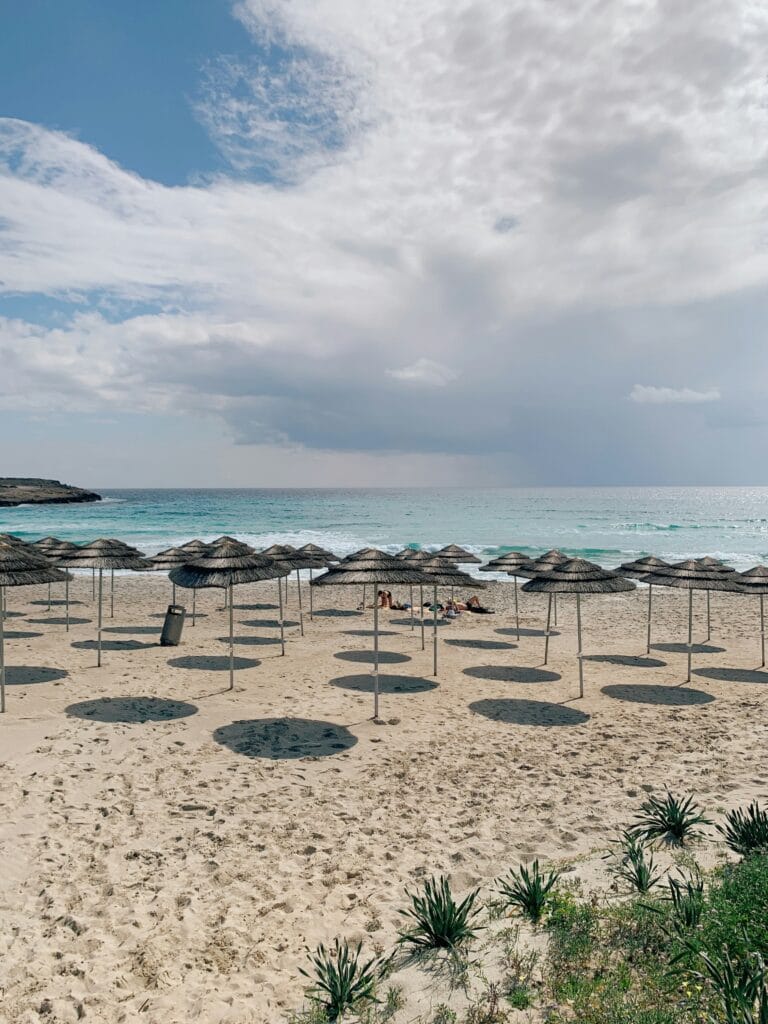
- Nissi Beach (Ayia Napa) – white sand beach with:
- Crystal lagoon
- Water sports opportunities
- Youth entertainment
- Aphrodite’s Rock (Petra tou Romiou):
- Legendary birthplace of the goddess
- Impressive sunsets
- Rock formations in the sea
- Fig Tree Bay (Protaras):
- Family-friendly beach
- Shallow water
- Good infrastructure
- Coral Bay (Paphos):
- Natural bay
- Excellent snorkeling
- Coastal tavernas
Water Sports and Activities
- Diving:
- Zenobia shipwreck (Larnaca)
- Amphora-strewn bays
- Coral reefs
- Water Sports:
- Water skiing
- Parasailing
- Surfing
- Yacht Sailing:
- Day trips
- Sunset cruises
- Private charters
Tips for Photographers
- Golden Hour:
- Aphrodite’s Rock sunsets
- Troodos Mountains panoramas in early morning
- Ancient church architecture at twilight
- Architecture:
- Nicosia old town gates
- Byzantine churches
- Venetian walls in Famagusta
- Nature:
- Akamas Peninsula landscapes
- Salt Lake flamingos
- Wine region terraces
Traditions and Customs
- Cypriot Coffee – traditional drink:
- Brewed in sand
- Served with cold water
- Important part of social life
- Wedding Traditions:
- Multi-day celebrations
- Traditional dances
- Special dishes
- Religious Holidays:
- Easter processions
- Saints’ days
- Community gatherings
What Does Cyprus Offer Gourmets? Cypriot Cuisine by Region:
- Nicosia:
- Traditional mezedes
- Fresh halloumi cheese
- Souvlaki skewers
- Troodos Mountains:
- Wild mushroom dishes
- Smoked meat products
- Local wines
- Coastal Regions:
- Fresh fish dishes
- Seafood mezedes
- Greek salad variations
When is the Best Time to Travel to Cyprus?
Spring (March-May)
Pleasant weather (20-25°C), blooming flowers and wild orchids. Great time for nature exploration and cultural trips.
Summer (June-August)
Hot (30-40°C), dry. Ideal time for beach vacations, but too hot for active tourism.
Autumn (September-November)
Pleasant weather (25-30°C), warm sea. Great time for city exploration and beaches.
Winter (December-February)
Mild weather on the coast (15-20°C), snow in Troodos Mountains. Suitable for cultural tourism and skiing.
Main Cities and Regions
Nicosia
The last divided European capital, where two cultures meet.
Places to Visit:
- Venetian Walls – a defensive system created by the Venetian Republic in the 16th century, where eleven impressive bastions in a ring form surround the entire old town territory, with the best-preserved Famagusta Gate witnessing original architecture, and today the bastions house modern parks, art galleries and cultural centers, offering visitors a walk along the 5-kilometer historic defensive walls path, exploring preserved original tunnels and underground chambers, while in the evenings the illuminated walls reveal the old town’s special atmosphere and historical spirit.
- Ledra Street – a historic city artery and modern shopping center, having become the main crossing point between northern and southern Nicosia, where impressive 19th-century neoclassical buildings with ornate facades and traditional bakeries offering authentic Cypriot sweets are located, while modern shops harmoniously blend with old craftsmen’s workshops, street musicians and artists’ performances create a lively cultural atmosphere, and historic buildings with ornate balconies and arches witness the city’s rich past.
- Cyprus Museum – the main treasury of the island’s history and culture, displaying a chronological 9,000-year development of civilization from Neolithic to present day, presenting a unique ceramics collection, Bronze Age jewelry and weapons, Roman period sculptures and mosaics, and Byzantine religious artifacts, offering an interactive archaeological excavations exhibition and regularly updated thematic displays, including an extensive numismatics collection with rare coin examples from various historical periods.
- St. John’s Cathedral – an architectural masterpiece, whose interior features an 18th-century fresco cycle depicting saints’ lives and a rare Byzantine icon collection from the 13th to 19th centuries, distinguished by the combination of late Baroque architectural elements with local traditions, decorated with an impressive carved wooden iconostasis and preserving valuable ancient manuscripts and liturgical items, while the restored bell tower with original bells and excellent acoustics allows the cathedral to host top-level concerts.
- Büyük Han – the largest and best-preserved Ottoman-era caravanserai in Cyprus, built in the 16th century with 68 rooms on two floors and a traditional mosque with minaret in the central courtyard, where after careful restoration the original arches and columns now serve as a cultural center with contemporary artists’ workshops, traditional coffee ceremonies, regular folklore evenings and concerts, craftsmen’s demonstrations, and night cultural events during summer season.
- Selimiye Mosque – a unique architectural monument combining Gothic architecture with Arabic elements, distinguished by two 49-meter-high minarets and preserved Christian symbols and fresco fragments from earlier times, decorated with original stained glass and rose windows, and calligraphy examples in the interior, having a peaceful inner courtyard with a historic fountain, while visitors are offered the opportunity to climb the minaret and enjoy panoramic city views.
- North Nicosia Market – an authentic Ottoman-era trading center with traditional pavilions, where local farmers offer fresh vegetables and fruits, traditional Cypriot cheeses and meat products, while craftsmen demonstrate their handmade ceramics and textiles, spice shops offer unique local blends, traditional tea houses serve Cypriot snacks, and visitors can watch demonstrations of old crafts and traditional dish preparation processes.
- Nicosia Municipal Arts Centre – a contemporary art space presenting a permanent Cyprus modern art exhibition and international shows, running an active artist residency program, organizing children’s and adults’ art workshops, offering spaces for video art and installations, regularly hosting artist presentations and collaborating with foreign galleries on international projects, becoming an important experimental art platform on the island.
Limassol
Modern resort with historical heritage.
Places to Visit:
- Limassol Castle – an impressive fortress built in the 13th century, where in 1191 England’s King Richard the Lionheart married Princess Berengaria of Navarre, now functioning as a Medieval Museum with a rich collection of weapons, armor and military equipment, offering visitors not only a historical exhibition but also the opportunity to climb the tower, from which breathtaking views open up to Limassol port and the Mediterranean Sea, while the castle regularly hosts medieval festivals, knight tournaments and educational programs for children.
- New Port and Promenade – a modernly equipped 5-kilometer coastal zone, where new generation architecture harmoniously blends with traditional elements, a cycling and pedestrian path system is installed, impressive fountains and sculptures, numerous modern restaurants, bars and cafes specializing in seafood operate, convenient swimming areas with changing cabins and showers are arranged, while in the evenings the promenade becomes a popular walking spot with street musicians and artists.
- Amathus Archaeological Site – one of the most important archaeological complexes in Cyprus, where you can see well-preserved ancient city ruins from the 8th century BC to the 7th century AD, including the impressive Temple of Aphrodite with original architectural elements, a magnificent acropolis with defensive walls, an excellently preserved Roman-era bath complex with mosaics and frescoes, agora remains with columns, an ancient port and aqueduct system, while visitors can also visit the modern visitor center, where the most valuable archaeological finds are displayed and comprehensive information about the city’s history is provided.
- Kolossi Castle – a fortified residence built by the Knights Hospitaller Order in the 14th century, whose 21-meter-high tower was used as a military post and sugar cane processing center, preserving original frescoes, medieval architectural elements and underground storage facilities, where the famous Commandaria wine was once kept, and now the castle complex houses a museum presenting the knights’ order history and medieval Cyprus daily life.
- Limassol Marina – a luxurious modern yacht harbor with apartments on the water, where high-class restaurants, designer shops and art galleries are located, offering yacht rental services, organizing leisure cruises and water sports activities, while cultural events, open-air concerts and modern art exhibitions are regularly held in the complex territory.
- Cyprus Wine Museum – a unique museum located in an ancient wine cellar, where visitors can learn about 5,500 years of wine-making history on the island, see ancient wine-making tools and vessels, participate in professional wine tastings, learn about the peculiarities of traditional Cypriot wine production and modern trends, while the museum shop offers wines from local producers.
- Dasoudi Beach and Park – a 1-kilometer beach with Blue Flag, surrounded by eucalyptus and pine forest, where sports fields, children’s playgrounds and gym equipment are installed, a water sports center operates offering various water activities, while in the adjacent park walking and cycling paths are laid, picnic areas and outdoor cafes are arranged.
- Ancient Kourion Theatre – an impressive Greco-Roman amphitheater built in the 2nd century BC on a sea cliff, restored preserving authentic architecture and excellent acoustics, seating 3,500 spectators, during summer season hosting classical music concerts, theater performances and traditional Cypriot shows, while from the theater opens an incomparable view of the Mediterranean Sea and coastline.
- Limassol Municipal Zoo – a modern zoo on the city outskirts, housing more than 300 animals from various corners of the world, with spacious enclosures and natural environment imitations installed, an educational center operating with interactive programs for children, while animal feeding demonstrations and specialists’ lectures on animal protection and conservation are regularly organized.
Paphos
UNESCO World Heritage city with rich history.
Places to Visit:
- Tombs of the Kings – an impressive Hellenistic and Roman period necropolis, carved in solid rock in the 1st-3rd century BC, consisting of monumental underground tomb-palaces with Doric columns, atriums and peristyles, preserving authentic fresco fragments and architectural elements, receiving its name not because of buried kings but due to the monumentality and luxurious decor of the tombs, while today visitors can explore more than 100 preserved tomb complexes and admire ancient masters’ work.
- Paphos Archaeological Park – a gigantic archaeological complex, where the famous House of Dionysus floor mosaics stand out, depicting Greek mythology scenes and considered some of the best-preserved examples of ancient world mosaics, also here you can visit the excellently preserved Odeon – an ancient theater still used for summer concerts, Asclepius temple ruins with healing complex, impressive Saranta Kolones castle with forty columns and agora remains, while a modern visitor center operates in the park territory, displaying the most valuable archaeological finds and providing comprehensive information about each object.
- Paphos Harbor – a charming historic harbor with the 13th-century Paphos Castle-fortress, which was used as a defensive fortification, prison and salt warehouse, now having become a vibrant tourist district with numerous traditional fish tavernas, modern restaurants and bars, a cruise ship terminal offering various sea excursions and entertainment, while in the evenings the harbor promenade becomes a popular walking spot with street artists and musicians.
- St. Paul’s Pillar – a historic site where, according to legend, the Apostle Paul was flogged before converting the Roman proconsul to Christianity, now a Byzantine church stands here with impressive frescoes, mosaics and icons, while in the adjacent archaeological complex you can see early Christianity catacombs and fragments of the original column.
- Petra tou Romiou – the legendary birthplace of Aphrodite with impressive cliff boulders protruding from the sea, having become one of Cyprus’s most photographed natural objects, where a modern rest area with restaurants, observation platforms and beach is arranged, while at sunset gathering tourists can enjoy an incomparable view and mystical atmosphere.
- Chrysopolitissa Basilica – a huge early Christianity period basilica, on whose territory you can see architectural layers of different historical periods, including Byzantine mosaics, Gothic St. Paul’s Church and preserved Roman-era columns, while the ecumenical center operating in the complex organizes regular concerts and religious ceremonies.
- Paphos Archaeological Museum – a modern museum displaying the most valuable archaeological finds from the region from Neolithic to Ottoman Empire times, including rare sculptures, ceramics, jewelry and daily life artifacts, offering interactive exhibitions and educational programs, while museum specialists continuously conduct new archaeological research in the region.
- Tsada Golf Club – a prestigious golf club located on a hill with breathtaking views of Paphos Bay and surroundings, offering a professional 18-hole golf course designed by Donald Steel, modern training facilities, a golf school for beginners and a luxurious club restaurant with traditional Cypriot cuisine.
Larnaca
Cyprus’s oldest inhabited city.
Places to Visit:
- Church of St. Lazarus – one of the most impressive examples of Byzantine architecture in Cyprus, built in the 9th century over the alleged tomb of St. Lazarus, distinguished by a unique blend of architectural styles, where Byzantine vaults intertwine with later Baroque elements, inside preserving valuable St. Lazarus relics, an impressive gilded iconostasis with 17th-18th century icons, an underground crypt with the saint’s sarcophagus, while the church bell tower and courtyard create a calm, contemplative atmosphere, attracting both pilgrims and architecture lovers.
- Larnaca Salt Lake – a unique nature and culture complex consisting of four interconnected salt lakes, during winter season becoming home to thousands of pink flamingos and other migratory birds, by the lake stands one of the holiest Muslim shrines outside Mecca – Hala Sultan Tekke mosque, surrounded by palm and citrus groves, historically the lake was an important salt extraction site from Roman times until the 20th century, while today educational trails with information stands about the area’s nature and history are installed.
- Finikoudes Beach – a 2.5-kilometer sand beach in the city center, surrounded by an impressive palm tree avenue, awarded the European Blue Flag for cleanliness and infrastructure, along which stretches a lively promenade with numerous traditional tavernas, modern cafes and restaurants, convenient rest areas, children’s playgrounds, sports facilities and cycling paths are installed, while in the evenings the promenade becomes a popular walking spot with street musicians and artists.
- Larnaca Fort – a fortress built by the Ottomans in the 16th century, which was later used as a prison during the British rule period, now houses a medieval museum with a weapons collection, archaeological finds and historical photographs, from the fort’s roof opens a panoramic view of the port and old town, while summer evenings host cultural events and concerts in the fort’s courtyard.
- Pierides Archaeological Museum – a private museum located in an 18th-century manor, displaying one of Cyprus’s most valuable archaeological collections, covering 9,000 years of the island’s history, where you can see rare ceramic works, ancient sculpture, jewelry and daily life artifacts, while the museum garden with traditional plants and fountains creates an authentic historical atmosphere.
- Kamares Aqueduct – an impressive 18th-century Ottoman structure used to supply water to Larnaca, distinguished by romantic arch architecture and historical importance to the city’s development, now a park with walking paths, lighting and information stands telling about the structure’s history and ancient water supply systems is arranged around the aqueduct.
- Kiti-Katakopolis – a Neolithic archaeological complex where you can see ancient city remains, including residential house foundations, temples and cemeteries, dated to 7000 BC, the territory features a modern visitor center with interactive exhibitions and archaeological finds, revealing Cyprus’s earliest settlement history.
- Mackenzie Beach – a popular beach with golden sand and shallow coastline, ideally suitable for families with children, surrounded by modern bars, restaurants and nightclubs, offering various water sports activities, including diving, water skiing and sailing, while at sunset it becomes a favorite spot for a romantic walk along the sea.
Troodos Mountains
Nature and culture reserve.
Places to Visit:
- Kykkos Monastery – founded in the 11th century and considered the richest and most famous Orthodox shrine in Cyprus, famous for the miraculous icon of the Virgin Mary, which, according to legend, was painted by the Apostle Luke and gifted to the monastery by the Byzantine Emperor, here operates a rich Byzantine museum with a valuable collection of religious artifacts, manuscripts and icons, the monastery’s architectural ensemble distinguished by gold mosaics, frescoes and carved woodwork, while from the monastery terrace opens breathtaking views of the Troodos Mountains and valleys.
- UNESCO Protected Churches – ten Byzantine churches listed on the UNESCO World Heritage list are located in the Troodos region, among which stands out Asinou Church with exceptionally well-preserved 12th-century frescoes depicting biblical scenes and saints’ lives, Agios Nikolaos tis Stegis Church, whose walls and vaults are covered with unique 11th-17th century frescoes, and Panagia tou Araka Church – considered one of the best examples of Byzantine and post-classical art with 12th-century frescoes that amaze with their color brightness and composition complexity.
- Mount Olympus – Cyprus’s highest point (1,952 m), offering a unique opportunity to enjoy skiing slopes in winter and numerous educational and tourist trails with different difficulty levels in summer, at the mountain’s base a modern ski center with all necessary equipment and instructor services is located, here you can find rare local plant and animal species, while from the summit opens a panoramic view of the entire island and the Mediterranean Sea.
- Troodos National Park – Cyprus’s largest national park, encompassing a unique mountain ecosystem with endemic plant and animal species, offering numerous educational trails, cycling routes and rest areas, in the park you can visit waterfall cascades, geological formations and ancient copper mining sites, while specially equipped camping sites and picnic areas allow visitors to enjoy nature year-round.
- Kalopanayiotis Village – a traditional mountain village famous for healing sulfur springs and SPA centers, preserving authentic architecture with stone houses and narrow streets, here you can visit UNESCO-protected Agios Ioannis Lampadistis monastery with unique frescoes, taste traditional Cypriot mountain dishes and enjoy peaceful rest in nature.
- Kakopetria – a charming mountain town preserving traditional architecture with wooden balconies and tiled roofs, famous for its apple orchards and spring water mills, offering visitors an authentic experience in traditional tavernas and guest houses, while in the old town you can find craftsmen’s workshops producing traditional wooden and ceramic works.
- Pedoulas Botanical Garden – a unique highland botanical garden where rare local plant species and medicinal herbs are grown, here you can learn about traditional Cyprus phytotherapy and participate in educational programs about plant applications in medicine, while on panoramic terraces rest areas with views of surrounding hills and valleys are arranged.
- Foini Pottery Center – a traditional pottery craft center where famous “Foini” ceramics have been produced for centuries, visitors can watch masters work with traditional potter’s wheels, participate in pottery workshops and purchase authentic works, while the museum operating at the center presents pottery craft history and traditions.
Wine Regions
- Omodos:
- Traditional wine village
- Ancient wineries
- Local grape varieties tastings
- Kolossi:
- Famous Commandaria wine
- Medieval castle
- Vineyard terraces
- Vouni Panayia:
- Mountain vineyards
- Family wineries
- Panoramic views
Practical Tips for Travelers
- Traffic – on the left side (British legacy)
- Electrical outlets – British type (adapter needed)
- Siesta – many shops close 13:00-16:00
- Water – better to choose bottled
- Tips – customary to leave 10%
- WiFi – widely available in public places
- Political sensitivity – avoid discussions about island division
Events and Festivals
- Wine Festival (September, Limassol):
- Free wine tastings
- Traditional music and dances
- Local food
- Kataklysmos (June):
- Water festival
- Sports competitions
- Folk music concerts
- Aphrodite Festival (September, Paphos):
- Opera under the open sky
- Classical music concerts
- Cultural events
Itinerary Ideas
Weekend Trip:
- Day 1: Larnaca and Nicosia
- Day 2: Paphos and Aphrodite’s Rock
Week Trip:
- Days 1-2: Larnaca and Nicosia
- Days 3-4: Limassol and wine regions
- Day 5: Troodos Mountains
- Days 6-7: Paphos and surroundings
Cyprus is an island where past and present merge into one unique experience. Here you can find everything: from ancient Greek temples to modern entertainment, from traditional mountain villages to luxurious resorts, from authentic tavernas to gourmet restaurants. The island’s hospitality, rich history, stunning nature and excellent climate make it an ideal place for both cultural tourism and beach relaxation. It’s a place where everyone can find their corner under the Mediterranean sun.