 Georgia
Georgia: Land of Mountains, Wine and Hospitality
Georgia is a country where the Caucasus Mountains romantically whisper to the Black Sea, and ancient traditions walk hand in hand with the rhythm of modern life. Here, toasts are not just words but true poetic competitions, wine has been flowing since the days when dinosaurs were probably looking for snacks, and hospitality is not mere politeness but a whole art of living. If you think you’ll eat all the khachapuri or visit all the churches in one day – dream on, because every region here has its own culinary secrets and treasure troves of stories.
Some Facts About Georgia
- Capital: Tbilisi (largest city and cultural center)
- Area: 69,700 km²
- Population: Approximately 3.7 million (2024)
- Currency: Georgian Lari (GEL)
- Language: Georgian (unique alphabet with 33 letters)
When Should You Pack Your Bags and Travel to Georgia?
Spring (March-May)
Cherry trees bloom in Tbilisi, the weather is gentle and friendly – +15-25°C. Such climate simply invites you to hike in the mountains or take a slow walk through the old town streets. There are almost no tourists yet, so you can feel like you’ve discovered a hidden gem. And the prices? Lower than in summer, so both your wallet rejoices and your stomach, because there will be enough khachapuri for souvenirs too.
Summer (June-August)
In cities, the temperature rises to +35°C, so in Tbilisi you’ll definitely feel like you’re in a frying pan. But just escape to the mountains, where a pleasant +20-25°C refreshes you, and life is beautiful again. Wine regions are so green at this time that even your eyes sing, and mountain resorts beckon with adventures. Besides, summer here is the season of festivals and events, so you definitely won’t be bored. Khachapuri, wine, mountains and dancing until dawn.
Autumn (September-November)
Autumn in Georgia is a true grape paradise! Kakheti is bustling with harvest season, and every corner smells of freshly pressed wine. The weather is simply perfect – +15-25°C, and colorful mountains spread around like a living postcard. Fewer tourists, so you can peacefully enjoy both nature and local hospitality. By the way, if you’re lucky, you might even be invited to a traditional harvest celebration – truly an unforgettable experience.
Winter (December-February)
Winter in Georgia is a real gift for skiing fans! Gudauri and Bakuriani invite you to enjoy snowy slopes, and the mountains shine with white luxury. Meanwhile, winter in Tbilisi is mild, with +5-10°C, so if you don’t want cold down to your bones, you can peacefully explore the city. It’s also a great opportunity to try hot khinkali or a glass of wine after a day in the mountains – such a combination definitely warms better than any radiator. Skis, snow, and then a khachapuri party? Sounds like a perfect winter!
Georgian Cities and Places to Visit
Tbilisi
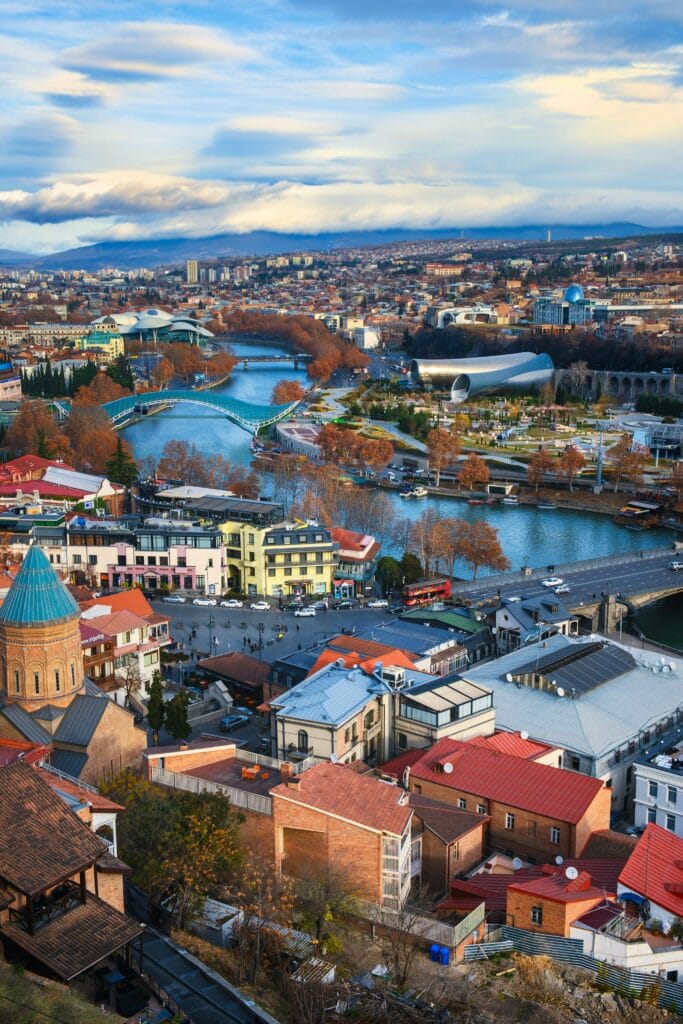
- Old Town – UNESCO-protected historic district with narrow streets, the 6th-7th century Sioni Cathedral, the oldest Anchiskhati Basilica, the unique Gabriadze Puppet Theater and bohemian Shardeni Street, where wooden balconies adorn traditional “Karachog” style houses, and the best time to explore is early morning or at sunset when there are fewer tourists.
- Narikala – 4th-century fortress on a hill offering panoramic views of the city, accessible by cable car from Rike Park, with ancient walls, towers, the Church of St. Nicholas, remains of Persian baths and wine storage, especially impressive at night when specially illuminated, from here you can descend on foot through the old town to the sulfur baths district.
- Abanotubani – legendary bath quarter, where in the 5th century King Vakhtang Gorgasali discovered hot springs and founded the city, famous for five working sulfur baths, the impressive Persian-style Orbeliani Bath and traditional “kisa” and “sabun-masa” procedures, for which it’s recommended to book in advance.
- Samepo Theater Square – 19th-century cultural center with the Zacharia Paliashvili Opera and Ballet Theater built in 1851, Rustaveli National Theater, the legendary “Lagidze Waters” café and neo-baroque buildings, where on summer evenings “Tbilisi Open Air” festival concerts take place under the open sky.
- Rustaveli Avenue – 3.5 km long main city artery, named after the 12th-century poet, which houses the Georgian National Museum, historic parliament building, Soviet modernist Rustaveli metro station, cultural café “Prospero’s Books” and Freedom Square with St. George’s Column, especially impressive in the evenings when the buildings are illuminated.
- Sameba Cathedral – impressive Holy Trinity Cathedral, built 1995-2004, is the largest religious sanctuary in the Caucasus and the third largest Orthodox cathedral in the world, rising on Elia Hill with a golden dome visible from anywhere in the city, decorated inside with frescoes and icons, and the complex houses a monastery, seminary and residence for the patriarch.
- Mtatsminda Park – historic amusement park located on Holy Mountain (727 m altitude), accessible by funicular since 1905, offering more than 20 attractions, Ferris wheel, carousel, roller coasters, restaurant complex with traditional Georgian cuisine and impressive panoramic views of all Tbilisi and the Caucasus Mountains.
- Open Air Ethnography Museum – huge 52-hectare museum in the Kura River valley, exhibiting more than 70 authentic traditional houses and buildings from all regions of Georgia, demonstrating crafts, hosting folklore performances, traditional dish cooking lessons and wine tastings, operating a traditional Georgian bakery.
- Frida Kahlo Café-Museum – unique space combining modern Georgian cuisine with an art gallery, located in a historic house with authentic fresco fragments, offering fusion between traditional Georgian dishes and modern culinary art, interesting interior with Frida Kahlo-inspired art installation and regularly changing exhibitions.
- “Fabrika” – former sewing factory transformed into a modern multifunctional cultural center with a hotel, workspaces, galleries, design shops, restaurants and bars, becoming a center of creative community, where concerts, exhibitions, film screenings and other cultural events constantly take place.
- Deserter Bazaar – largest and oldest market in Tbilisi, operating since the 19th century, where you can find everything from fresh fruits, vegetables, spices, traditional cheeses, churchkhela (traditional sweet), to homemade wine, chacha (grape brandy) and handmade souvenirs, famous for its authentic atmosphere and colorful local traders.
- Funicular to Mtatsminda Hill – historic funicular, opened in 1905, one of the oldest in the world, the journey takes about 10 minutes, along the way is the intermediate Pantheon station, where famous Georgian writers and public figures are buried, and at the top station – a panoramic restaurant with classic Georgian cuisine.
- Tbilisi Sea – artificial water reservoir created in 1953 (8.2 km²), becoming a popular recreation spot with beaches, water sports centers, yacht club and restaurants on the shore, where you can sail boats, engage in water skiing or simply enjoy the sun and peace away from the city bustle.
- Georgian National Gallery – located on historic Rustaveli Avenue, preserves the largest collection of Georgian art from medieval to contemporary, especially famous for Niko Pirosmani’s collection, regularly hosts international exhibitions, has an educational center and modern restoration laboratory.
- Wine Cellars – historic 17th-19th century wine cellars under the old town, where traditionally wine was kept in qvevri (clay amphorae), now adapted for tours and tastings, offering acquaintance with the 8000-year Georgian winemaking tradition, UNESCO intangible heritage site, where you can taste unique local wine varieties and learn traditional winemaking methods.
Batumi
- Batumi Boulevard – 7 km long promenade along the Black Sea with bike paths, dancing fountains, Alphabet Tower, iconic “Ali and Nino” sculpture, modern art installations, green parks, children’s playgrounds, beaches, historic buildings, cozy cafés and restaurants, and in the evenings street musicians perform and traditional Georgian dances take place.
- Botanical Garden – garden established in 1912 covering 111 hectares with 9 different floristic zones, where more than 5000 species of plants grow, including rare bamboo plantations, Japanese Garden, rhododendron alley, magnolia collection, New Zealand plant section and Mexican zone with cacti, offering breathtaking views of the Black Sea from the slopes of Mtirala Mountain.
- Piazza Square – impressive Italian-style square in the city center, decorated with mosaics, stained glass and frescoes, surrounded by neoclassical architecture buildings housing luxury hotels, restaurants with traditional Georgian cuisine, wine bars and cafés, and on summer evenings classical music concerts, jazz festivals and cultural events take place under the open sky.
- Gondola Lift – 2.6 km long cable car connecting Batumi center with Anuria Hill (250 m above sea level), offering breathtaking views of the city, Black Sea and Adjara Mountains, at the top there’s an observation deck with restaurant, and at sunset an unforgettable panorama opens with the city and sea painted in gold.
- Gonio Fortress – impressive Roman Empire era (2nd-3rd century) fortress 15 km from Batumi, occupying 4.5 hectares with 18 towers and Roman baths, archaeological finds, mosaics and frescoes, legend says that the apostle Matthew is buried here, and the fortress was an important defensive point of Roman, Byzantine and Ottoman empires, now operates a museum with guide services and historical reconstructions.
- Ardagani Lake – modern city symbol with impressive 41 m dancing musical fountain, which in the evenings demonstrates light, music and water shows, around the lake there’s a 2 km walking path, amphitheater under the open sky, bike paths, cafés and restaurants, and on weekends concerts and cultural events take place.
- Chacha Tower – unique 25 m high technological tower-fountain, designed as a giant chronometer, several times a year during special events traditional Georgian brandy (chacha) flows from it, the tower facade is covered with glass and specially illuminated at night, inside there’s an information exhibition about chacha production history.
- Neptune Statue – historic city symbol built in 1925 on the seafront, recreating the classic Neptune with trident composition, surrounded by fountain and recreation area, popular spot for photos and meetings, especially beautiful at sunset when the fountain is specially illuminated.
- Technology Museum – modern interactive museum, offering more than 100 scientific exhibits and experiments in physics, chemistry, biology, has 3D cinema, planetarium, Tesla show, robotics laboratory and educational center for children, regularly hosts science festivals and workshops.
- Batumi Aquarium – one of the largest aquariums in the region, presenting Black Sea and world ocean fauna, has 12 thematic zones with more than 100 species of fish and marine animals, offers interactive educational programs, underwater tunnels and opportunity to touch some marine animals in a special pool.
- Europe Square – historic city square with impressive astronomical sculpture showing different world cities’ time zones, surrounded by 19th-century architecture buildings, here is the astronomy museum, traditional cafés and wine bars, city festivals and festivals regularly take place.
- Orta Jame Mosque – 19th-century Ottoman architecture monument, distinguished by blue dome and two minarets, decorated with traditional Arabic calligraphy details and geometric patterns, inside preserved original wood carvings and stained glass, operates as active Muslim community prayer house.
- Chacha Market – colorful traditional market in the city center, where you can find fresh local products, spices, traditional Georgian sweets, homemade wine, chacha, souvenirs and handicrafts, famous for authentic atmosphere and opportunity to taste traditional Adjarian dishes and bargain for prices.
- Dolphinarium – modern complex with 975-seat amphitheater, where daily dolphin shows take place, dolphin therapy programs offered, opportunity to swim with dolphins, educational center about marine animals and ecology, and special evening shows with lighting effects during summer season.
Kutaisi
- Bagrati Cathedral – 11th-century UNESCO World Heritage site, rising on Ukimerioni Hill, famous for impressive Georgian architecture with cross-shaped plan and 16-wall dome, restored in 2012 preserving authentic fresco fragments, mosaics and ornaments, offering breathtaking Kutaisi panorama and Rioni River valley, and in the evenings specially illuminated becomes a mystical city landmark.
- Gelati Monastery – UNESCO-protected 12th-century monastery complex, founded by King David IV the Builder, famous for unique Byzantine mosaic fragments, frescoes and icons, the complex operates three churches (Holy Virgin Mary, St. George and St. Nicholas), academy (in the Middle Ages called “second Jerusalem”), royal chapel with Georgian rulers’ tombs and 9th-19th century manuscript library.
- Green Market – colorful traditional market in the city center, famous for Imereti region products: local cheeses, spice mixtures, fresh vegetables, fruits, traditional sweets (churchkhela, tklapi), homemade wine and unique Imereti saffron spice, here you can taste traditional Imereti region dishes and buy handmade ceramics and souvenirs.
- Prometheus Cave – one of the most impressive karst caves in Europe with 1.8 km route adapted for visitors, impressively illuminated halls, stalactites and stalagmites, underground rivers and lakes, here is installed modern LED lighting system, boats allow traveling on underground river, and in summer operates cooling system, helping maintain constant +14°C temperature.
- Sataplia Reserve – unique nature reserve, where you can see real dinosaur footprints (70 million years old), impressive stalactite and stalagmite cave, walk on glass observation platform above canyons, visit dinosaur museum with interactive exhibitions and admire Colchis forests from bird’s flight.
- Kutaisi Botanical Garden – garden established in 1912 covering 111 hectares with more than 700 species of plants, distinguished by Japanese gardens, rose gardens, bamboo alleys, Mediterranean plant collection, rare plant greenhouse and impressive view of Rioni River valley, here operates research center and educational programs are organized.
- Okros Chidi – historic “Golden Bridge” over Rioni River, built in the 19th century, connecting old and new city parts, distinguished by neo-Gothic architecture and metal ornaments, popular spot for walks and photography, especially beautiful at sunset when specially illuminated.
- Kutaisi History Museum – rich museum with more than 150,000 exhibits, covering period from Bronze Age to present, here preserved unique gold items from Vani archaeological excavations, Byzantine icons, medieval manuscripts, traditional costumes and ethnographic collections.
- David the Builder Square – central city square with impressive fountain, sculptures and modernist architecture, surrounded by restaurants, cafés and shops, on weekends cultural events, concerts and traditional fairs take place here, and in the evenings becomes popular meeting place.
- Motsameta Monastery – 13th-century monastery, dramatically rising on 100 m high cliff above Rioni River, famous for relics of two martyr brother saints, impressive frescoes and panoramic views of river valley, around monastery preserved defensive walls and towers.
- Vani Kvabebi – unique 6th-8th century complex of monasteries carved in rocks with preserved frescoes, cells and chapels, was important spiritual and cultural center, offering impressive views of Rioni valley and opportunity to see authentic medieval architecture.
- Geguti Palace – 12th-century King George III residence ruins, occupying 2000 sq.m. area, distinguished by unique architectural plan, mosaic fragments and ornaments, here archaeological research and restoration work are conducted, you can see royal palace life reconstructions.
- Colchis Fountain – impressive modernist sculpture-fountain in the city center, depicting the legend of ancient Colchis kingdom about the golden fleece, created in 1980, became one of the city symbols, around the fountain there’s recreation area with benches and lighting, popular meeting and photography spot.
What Does Georgia Offer Gourmets?
- Khachapuri – one of Georgia’s most famous dishes with different regional variations:
- Adjarian: boat-shaped baked bread with cheese, butter and raw egg in the middle, eaten by mixing all ingredients while hot
- Imeretian: traditional round-shaped, filled with special Imereti region cheese
- Megrelian: double cheese version – cheese both inside and on top
- Penovani: puff pastry version
- Achma: layered with cheese, resembling lasagna. Best paired with Georgian wine or matsoni (fermented milk drink).
- Khinkali – Georgian dumplings with special eating technique:
- Traditionally made with beef and pork
- Popular variations: with lamb, mushrooms, potatoes or cheese
- Eaten by hand, holding by the “top knot”
- First carefully bite the edge and drink the broth
- The “top knot” is left uneaten on the plate
- Traditionally counted how many you eat (men often compete)
- Served with black pepper and various sauces
- Mtsvadi – traditional Georgian kebabs:
- Marinated in special spice mixture with wine
- Grilled on grapevine branches, giving special aroma
- Most popular made from pork, lamb or veal
- Served with pomegranate sauce (narsharab)
- Traditionally garnished with fresh vegetables and herbs
- Often served with tkemali (plum sauce) or adjika
- Lobio – stewed beans in traditional clay pot:
- Made with specific Georgian spice mixture
- Served in hot clay pot
- Popular variations: red or white beans
- Seasoned with onions, garlic, coriander
- Often served with cilantro and mchadi (corn bread)
- Popular fasting and vegetarian dish
- Churchkhela – traditional Georgian sweet:
- Made from thickened grape juice (badagi) and nuts
- Traditionally uses walnuts, but can also be with hazelnuts
- Process takes several days: nuts are soaked, dried, soaked again
- Has long shelf life, traditionally was warriors’ food
- Different colors depend on grape variety
- Very nutritious, rich in vitamins and minerals
- Popular souvenir for tourists
- Seasonal differences: in autumn fresh and softer, in winter – harder
Places to Visit for Nature Lovers
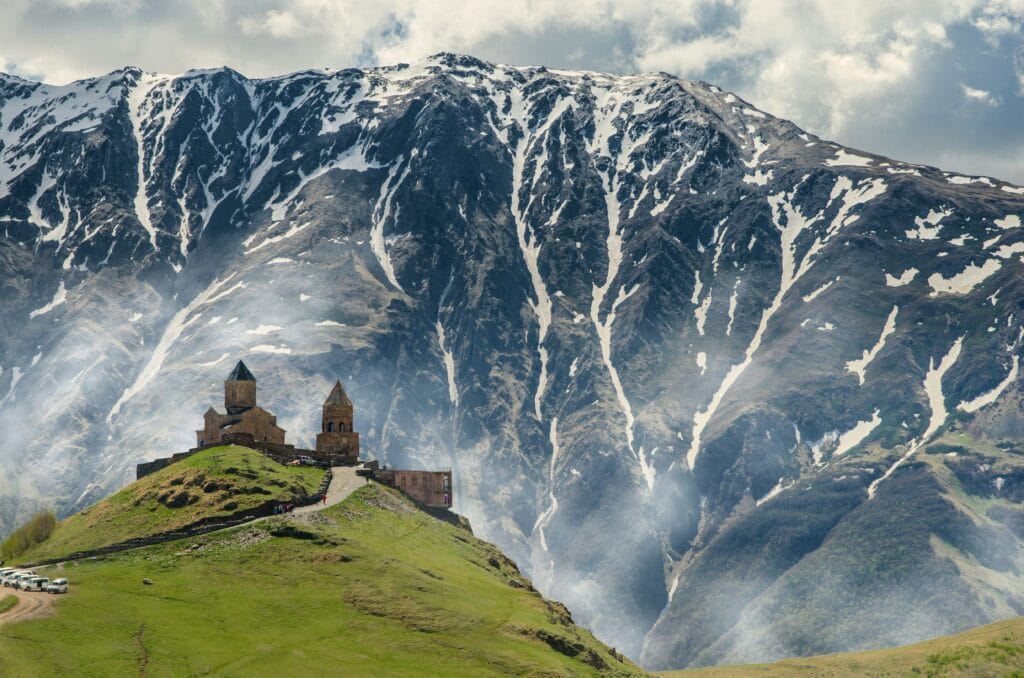
- Kazbegi (Stepantsminda) – legendary mountain region 157 km from Tbilisi with iconic 14th-century Gergeti Trinity Church (2170 m altitude) against backdrop of Mount Kazbek (5047 m), where you can choose from many hiking trails (from 3 hours to several days), engage in mountaineering, mountain biking, visit historic Dariali Gorge, traditional mountain communities, and best seasons to visit are June-September, when there’s less snow and you can reach even Gergeti Glacier or Kazbek base camp.
- Svaneti – UNESCO-protected highland region with unique defensive tower network built in 7th-13th centuries, where in the main town Mestia operates ski resort, Svan History Museum, and in Ushguli village (2200 m), highest permanently inhabited settlement in Europe, preserved authentic Svan culture, cuisine and traditions, offering impressive hikes to Koruldi Lakes, Chalaadi Glacier and Mount Tetnuldi, and the region is famous for its unique microclimate, traditional crafts and special cuisine.
- Borjomi – famous mineral water resort with 61,000 ha national park, historic Romanov summer palaces, free mineral water springs, ecological trails (Plateau, Green monastery, Mineral water), modern SPA centers offering healing procedures, narrow-gauge railway to mountains, winter sports opportunities in Bakuriani resort, and in the park you can find rare plant and animal species, enjoy mountain streams and waterfalls, and explore historic sites.
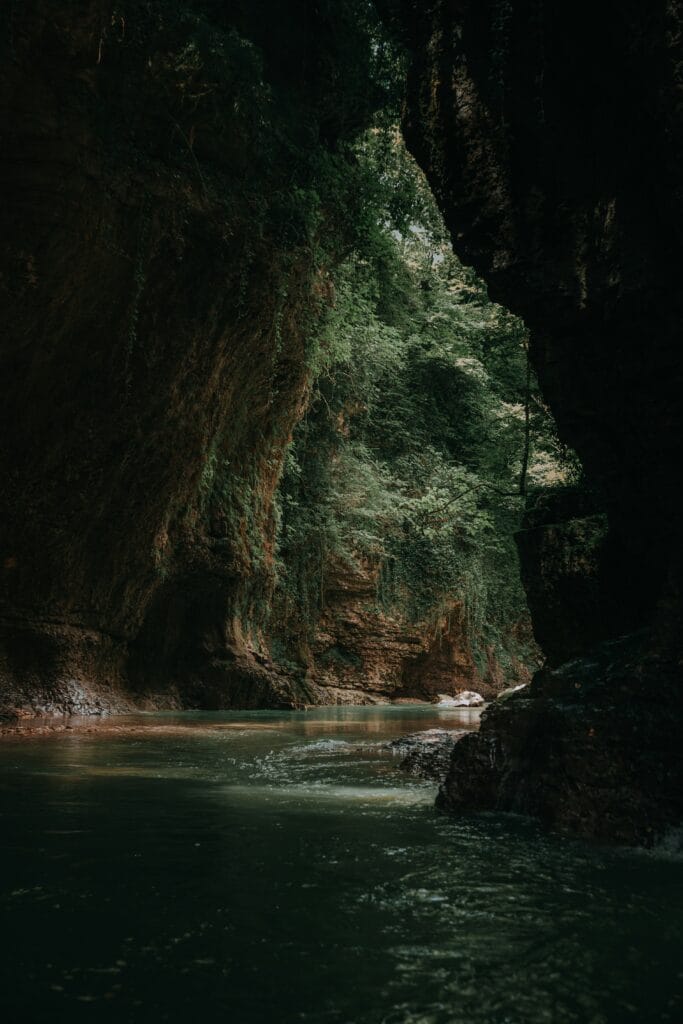
- Martvili Canyon – impressive 2.4 km long natural wonder in Samegrelo region with turquoise water, offering 30 min. boat ride, swimming in natural pools, waterfall viewing from special observation platforms, nearby Okatse Canyon with 740 m long suspended walkway, cool microclimate on hot days, traditional Samegrelo region restaurants, ancient monasteries and opportunity to try local cuisine and learn about regional culture, best visiting time – April-October.
- Vardzia – unique 13th-century cave monastery city in southern Georgia, having 13 levels and more than 600 rooms, including churches, wine cellars, libraries and living quarters, carved in volcanic Erusheti Mountain rocks, where you can visit preserved frescoes, underground tunnels, traditional bakery, and the complex is especially impressive in spring, when wild tulips and almond trees bloom around.
- Tusheti National Park – one of Georgia’s most remote and authentic regions, accessible only in summer via Abano Pass (2950 m), famous for dramatic mountain landscapes, ancient stone towers, traditional communities, unique architecture, local cuisine and opportunity to see rare animals like Caucasian tur, bears and eagles, offering many hiking trails and horseback riding opportunities.
- Lagodekhi Reserve – oldest protected nature reserve in Georgia, located at foot of Greater Caucasus Mountains, where you can find unique biodiversity, including old-growth forests, Black Lake waterfall (largest in Georgia), more than 150 bird species, rare animals, and visitors are offered hiking routes of various difficulty, campsites and nature observation programs.
- Tobavarchkhili Lakes – beautiful lake system on Javakheti Plateau, consisting of three volcanic lakes, surrounded by volcanic mountains and alpine meadows, where many rare bird species nest, you can observe flamingos during migration, enjoy thermal springs, and in winter engage in winter sports, the region is also famous for Armenian community cultural heritage.
- Kvira Rock and Waterfall – impressive natural monument in Racha region with 75-meter high waterfall and unique rock formation resembling gates, where you can enjoy hiking, swimming in natural pools, picnics by waterfalls, and in autumn observe amazing color transformations in deciduous forests.
- Kinchkha Waterfall – one of the highest waterfalls in Georgia (105 m), located in Imereti region, accessible via impressive pedestrian bridge, offering breathtaking views from specially arranged observation platforms, opportunity to swim in natural pools and enjoy picnics in specially designated areas, especially impressive in spring during snow melt.
- Georgian Military Highway – legendary military road connecting Georgia with Russia, offering some of the most impressive mountain views in the world, where you can visit Ananuri Fortress, Green Valley, Cross Pass (2395 m), gurgling waterfalls and traditional mountain communities, the road is especially popular among motorcyclists and cyclists.
- Katskhi Pillar – 40-meter high natural stone pillar with monastery on top, called “Georgia’s Meteora,” where monks still live, and visitors can view the complex from below, enjoy impressive views and visit nearby traditional wineries.
- Vashlovani National Park – unique semi-desert reserve in eastern Georgia, distinguished by dramatic “badlands” type landscapes, pistachio forests, rare animal species (including Caucasian leopards), where you can engage in safari, bird watching, explore ancient shepherd trails and enjoy starry desert sky at night.
- Prometheus Cave – one of the largest cave complexes in Europe, famous for impressive stalactite and stalagmite formations, underground rivers and lakes, colorful LED lighting, where you can sail boats on underground waters, enjoy music and light shows and visit nearby Sataplia Reserve with dinosaur footprints.
Weekend Trip Around Georgia (2-3 days)
Tbilisi and Surroundings:
- Day 1: Tbilisi Old Town:
- Morning: Start with a walk through historic Old Town, visiting Sioni Cathedral and Anchiskhati Basilica
- Midday: Funicular ride to Narikala Fortress, offering panoramic city view
- Afternoon: Abanotubani district – legendary bath quarter with sulfur baths (must try traditional procedures)
- Evening: Dinner on Shardeni Street, where you can taste traditional Georgian dishes
- Day 2: Mtskheta:
- Morning: Trip to Mtskheta (ancient capital, 20 km from Tbilisi)
- Midday: Visit Svetitskhoveli Cathedral
- Afternoon: Visit Jvari Monastery, rising on a hill
- Evening: Return to Tbilisi, dinner in traditional restaurant with Georgian wine
- Day 3: Kakheti:
- Full day dedicated to wine region
- Wine tastings in traditional wineries
- Learning traditional winemaking methods with qvevri (clay amphorae)
- Tasting Georgian cuisine dishes
Week-long Trip Around Georgia:
- Days 1-2: Tbilisi
-
Day 1:
- Morning: Old Town and Narikala Fortress
- Afternoon: Abanotubani district and sulfur baths
- Evening: Dinner in Old Town
-
Day 2:
- Morning: Sameba Cathedral
- Midday: Rustaveli Avenue and National Museum
- Afternoon: Mtatsminda Park
- Evening: Deserter Bazaar and local cuisine
-
- Days 3-4: Kakheti:
-
Day 3:
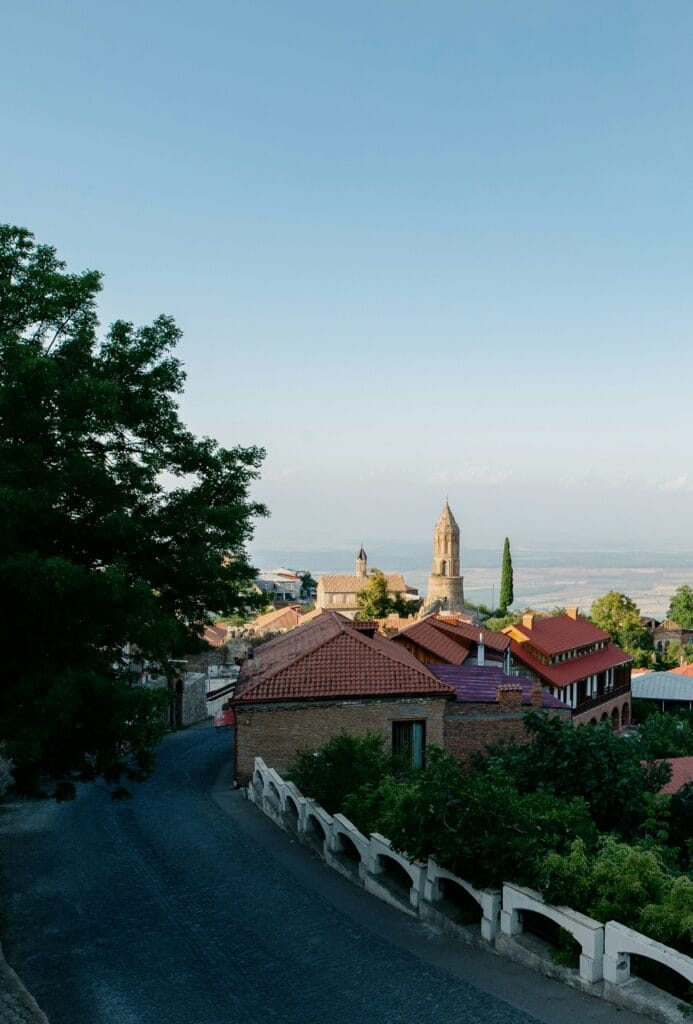
- Morning: Trip to Sighnaghi (city of love)
- Midday: Visit Bodbe Monastery
- Afternoon: Wine tasting in traditional winery
- Evening: Overnight in Sighnaghi
-
Day 4:
- Morning: Georgian bread baking lesson
- Midday: Visit local winemakers
- Afternoon: Traditional Georgian cooking lesson
- Evening: Return to Tbilisi
-
- Day 5: Kazbegi:
- Morning: Trip along Georgian Military Highway
- Midday: Visit Ananuri Fortress complex
- Afternoon: Hike to Gergeti Trinity Church
- Evening: Overnight in Stepantsminda (Kazbegi)
- Days 6-7: Batumi:
-
Day 6:
- Morning: Trip to Batumi
- Midday: Batumi Boulevard and Botanical Garden
- Afternoon: Gondola lift with city panorama
- Evening: Dinner in Piazza Square
-
Day 7:
- Morning: Gonio Fortress
- Midday: Batumi Aquarium
- Afternoon: Free time at the beach
- Evening: Dancing Fountains show at Ardagani Lake
-
Main Events in Georgia
- Tbilisoba: October – Tbilisi’s largest city festival, celebrating Georgian culture, wine and traditions. The Old Town becomes a huge celebration with street concerts, traditional dances, wine tastings, craft fairs and culinary performances. Traditional Georgian dish cooking demonstrations take place, folklore performances, and in the evenings – large concerts under the open sky. During the festival you can see traditional craft demonstrations and purchase unique souvenirs.
- Rtveli: September-October – traditional grape harvest festival in Kakheti region. It’s not just a working celebration, but a cultural event, where locals and tourists together participate in grape picking, traditional wine pressing in qvevri amphorae, taste young wine and celebrate with traditional songs and dances. Guests can participate in winemaking processes and learn traditional winemaking methods.
- Batumi Black Sea Jazz Festival: July – one of the most prestigious jazz festivals in the region, attracting world-class performers. The festival takes place in Batumi’s Piazza Square and other city venues, offers not only jazz, but also fusion, electronic music concerts. In parallel, street music performances, art installations and cultural events take place throughout the city.
- Art Gene: July – traditional Georgian culture festival, dedicated to preserving and popularizing traditional Georgian folklore. During the festival, traditional song and dance performances, craft workshops, traditional instrument concerts take place. Special attention is paid to cultural heritage of different Georgian regions, presenting unique customs, songs and crafts of each region.
- Tiflisi: May – international performing arts festival in Tbilisi, covering theater, dance and music. The festival attracts artists from around the world and becomes a platform for experimental and innovative performing arts projects. Performances take place both in traditional theater spaces and unusual city locations, involving audiences in interactive performances.
Practical Tips That Can Save You When Traveling Around Georgia
- Transportation: the main way to travel around Georgia is marshrutka (minibuses), which are 2-5 times cheaper than taxis, depart when full, stop anywhere along the route, though you need to get used to drivers’ favorite speed and risky maneuvers, you can also choose comfortable but limited-route trains, taxis (must bargain) in the city or car rentals in mountainous areas.
- Money: although Georgian Lari (GEL) is the official currency and cards are accepted in big cities in hotels and larger restaurants, it’s essential to have cash (especially small bills) in markets, taxis, rural areas, mountain regions, small shops and restaurants outside big cities, and ATMs are easily found in all larger cities.
- Language: Georgian is the state language and English is becoming popular among youth, Russian remains the most widely used communication tool, especially in regions, so it’s worth learning basic Georgian words: Gamarjoba (hello), Gmadlobt (thank you), Nakhvamdis (goodbye), Didi madloba (thank you very much), Ki/Ara (yes/no).
- Hospitality: Georgian hospitality is a fundamental part of culture, where you can never refuse treats or toasts (this seriously offends hosts), it’s essential to listen to tamada (toastmaster) led toasts until the end, you should never pour drinks for yourself, and traditions require special respect for elders, handshake greetings and gifts for hosts.
- Dress Code: when visiting churches women must wear headscarves, long skirts and covered shoulders, and men – long pants and covered shoulders (in many churches you can borrow required clothing), everyday clothing in big cities is European, more conservative in villages, and in mountains it’s essential to have comfortable, weather-appropriate clothing.
- Time: Georgians live by “Georgian time,” where lateness is common and acceptable (except business meetings), shops usually work 10:00-20:00, restaurants 12:00-23:00, museums often closed on Mondays, banks work 10:00-17:30 on weekdays, and social meetings are planned very flexibly.
Georgia is a place where every toast sounds like poetry, every dish tells its own story, and guests are not just welcomed – they immediately become family. Time here doesn’t rush, wine flows like a river, and hospitality is so sincere you want to take it home. Is this just a beautiful story? Come, see and taste – Georgia will embrace you warmly, with a wide smile and a full glass of wine in hand.
If you’re looking for more places worth traveling to throughout the year, check out this article!