 Greece

Greece: Cradle of Civilization and Mediterranean Pearl
Greece – a place where past and present dance sirtaki together, and everyday life smells of sea salt and fresh olives. Here ancient wonders are not outdated, but don’t obligate – they simply exist alongside, like old friends, while you enjoy ouzo at a taverna table. From white-as-milk Cycladic island beaches to the magnificent Athens Acropolis, from grandmother’s baked spanakopita to contemporary art galleries that would surprise even Plato himself – Greece invites not just to see, but to feel. History here is alive, but it doesn’t punish you if you’re more drawn to sun and Greek salads.
Basic Information About Greece
- Capital: Athens
- Area: 131,957 km²
- Population: ~10.7 million (2024)
- Currency: Euro (EUR)
- Language: Greek
- Time Zone: Eastern European Time (EET, GMT+2), summer – EEST (GMT+3)
Travel Planning and Transportation
- Flights – main airports are in Athens, Thessaloniki and major islands (Crete, Rhodes, Corfu). During summer season many direct flights operate from European cities to islands.
- Ferries – well-developed ferry system connects mainland Greece with islands and islands with each other. Most popular ferry companies – Blue Star Ferries and Hellenic Seaways.
- Public Transport – comfortable KTEL buses run between cities. Train network is limited but convenient for traveling between major cities.
- Car Rental – excellent way to explore mainland Greece and larger islands. You can drive with EU driver’s license.
Accommodation
- Hotels – from luxury resorts to cozy boutique hotels. Traditional white houses with pool are popular on islands.
- Apartments – economical alternative, especially for families and longer stays. Often offer kitchen facilities.
- Pensions (Domatia) – family-run guesthouses, offering authentic Greek experience at affordable price.
- Camping – popular on coasts and islands, many have good infrastructure and comfortable sanitary facilities.
Useful Words and Phrases
- Kalimera – good morning
- Kalispera – good evening
- Efcharisto – thank you
- Parakalo – please
- Pos ise – how are you?
- Ne/Ochi – yes/no
- Yia mas – cheers!
Safety and Health
- Health Insurance – European Health Insurance Card is valid for EU citizens, but additional travel insurance is recommended.
- Pharmacies – easily found in cities, recognized by green cross. Often work in shifts.
- Sun Protection – essential to use strong sunscreen, hat and sunglasses, especially in summer.
- Water – on most islands bottled water is recommended.
Beaches and Water Activities
- Navagio (Zakynthos Island) – one of the most photographed beaches in the world with a shipwreck.
- Balos Lagoon (Crete) – shallow lagoon with crystal clear water and pink sand.
- Myrtos (Kefalonia) – dramatic beach between mountains with turquoise water.
- Red Beach (Santorini) – unique volcanic beach with red-colored cliffs.
Water Sports and Activities
- Diving – most popular spots in Crete, Mykonos, Santorini. You can see ancient ship remains.
- Sailing – Cycladic islands and Ionian Sea are perfect for yacht charter and sailing courses.
- Windsurfing – Paros island is famous as one of the best places for windsurfing in Mediterranean Sea.
- Snorkeling – clear water and rich underwater wildlife make Greece excellent place for snorkeling.
Tips for Photographers
- Golden Hour – best shots of Santorini are taken at sunset in Oia village.
- Architecture – early morning fewer tourists and best light to photograph old towns.
- Landscapes – Meteora monasteries are especially impressive to photograph at sunrise and sunset.
- Street Photography – traditional markets and old quarters are perfect for documentary photography.
Traditions and Customs
- Filoxenia – Greek hospitality is legendary. Guests are considered god-sent and received with special respect.
- Name Days – celebrated more than birthdays. Each day is dedicated to a particular saint.
- Weddings – traditional weddings must have “koufeta” – sugared almonds, symbolizing sweet life.
- Easter – most important religious holiday in Greece, celebrated with huge processions and traditional dishes.
Greek Cuisine by Regions
- Crete – famous for its healthy food, especially vegetables and olive oil. Popular dishes: dakos, garides saganaki.
- Peloponnese – known for its lamb dishes and grapes. Specialty – kleftiko (slow-cooked lamb).
- Epirus – famous for its dairy products, especially feta cheese and yogurts.
- Thessaloniki – known for its bakeries and desserts, especially trigona panoramatos and bougatsa.
When is the Best Time to Travel to Greece?
Spring (March-May)
Pleasant weather (15-25°C), blooming flowers and fewer tourists. Ideal time for cultural trips and hiking.
Summer (June-August)
Hottest and most popular season (28-35°C). Great time on islands, but cities can be too hot. Biggest tourist crowds.
Autumn (September-November)
Warm sea water (20-25°C), fewer tourists and more pleasant weather. Great time for trips to islands and cities.
Winter (December-February)
Mild winter (5-15°C), rare rain. Good time for cultural trips and skiing in mountains.
Main Cities and Regions
Athens
Combination of ancient civilization and modern metropolis, UNESCO heritage sites and contemporary culture center.
Places to Visit:
- Acropolis – ancient Greek architecture masterpiece and city symbol. Complex consists of Parthenon, Propylaea, Temple of Nike and Erechtheion. Parthenon was built in 5th century BC and dedicated to goddess Athena. Erechtheion is characterized by caryatids – female figures supporting the building’s roof. Propylaea were monumental gates to Acropolis, and Temple of Nike was dedicated to goddess of victory. Best time to visit – early morning or before sunset, when there are fewer tourists and not so hot. UNESCO World Heritage site.
- Acropolis Museum – modern design museum opened in 2009, presenting more than 4000 ancient artifacts. In glass floors you can see archaeological excavations. On upper floor exhibited Parthenon frieze copies and original details. Museum restaurant offers traditional Greek dishes with view of Acropolis. Educational programs and special children’s tours are organized.
- Plaka District – oldest Athens district, preserving 19th century architecture and atmosphere. Famous for narrow streets, traditional tavernas and souvenir shops. Here you can find authentic Greek cuisine, craft workshops and neoclassical buildings. District has several important churches, including Kapnikarea (11th century) and St. Nicholas churches. In evenings traditional music performances take place in Plaka tavernas.
- Syntagma Square – heart of modern Athens, where Parliament building stands and famous guard (Evzones) changing ceremonies take place every hour. Building previously was king’s residence. In front of parliament – Tomb of Unknown Soldier. Square is surrounded by historic hotels, luxury shops and cafés. Under square – largest Athens metro hub.
- Ancient Agora – ancient Athens political and commercial center, operating since 6th century BC. Preserved Temple of Hephaestus ruins – best preserved Doric style building in Greece. Stoa of Attalos museum – reconstructed ancient trading building, exhibiting daily life artifacts. Here Socrates discussed with students, and democracy took its first steps.
- Monastiraki District – colorful market district, where Greek, Roman, Byzantine and Ottoman cultural influences intertwine. Famous for sparkling flea market, traditional shops and street food. Central Monastiraki Square – popular meeting place, surrounded by historic buildings. Here operate oldest Athens kebab shops and traditional Greek sweets bakers. On weekends antique market takes place.
- Panathenaic Stadium – ancient stadium, rebuilt in 1896 for first modern Olympic games. Accommodates 60,000 spectators and is the only one in the world made of white marble. Under stadium Olympic museum is installed. Here Athens Marathon finishes and important concerts take place. Visitors can run onto podium and feel like Olympians.
- National Archaeological Museum – largest museum in Greece, founded in 1829. Preserves most valuable ancient Greek art collection: Agamemnon’s gold mask, Antikythera mechanism (oldest analog computer), Artemis statue, bronze Poseidon and many other masterpieces. Museum operates restoration laboratories and research center.
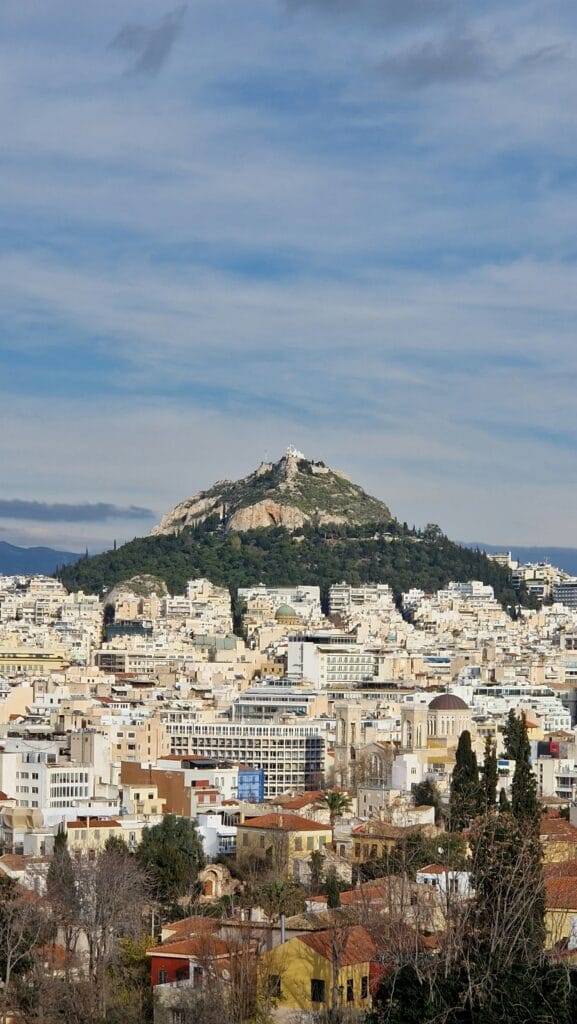
- Lycabettus Hill – highest Athens point (277 m), offering 360° city panorama. To top leads winding path through pine forest or funicular. On top – St. George Chapel (19th century), open-air amphitheater and restaurant. At night hill is illuminated and becomes romantic place. Especially popular among photographers and yoga enthusiasts.
- Anafiotika – small Cycladic style quarter in northern Plaka, on Acropolis slope. In 19th century it was built by Anafi island builders. Narrow streets, white houses and flower-filled courtyards remind of Greek islands. Only few dozen people live here. One of Athens’ most beautiful photo locations.
- Psiri District – arts and nightlife center. During day – artisan workshops and vintage shops, at night – alternative music bars and modern tavernas. District has lots of street art, small galleries and design studios. Popular among youth and creative professionals.
- Byzantine and Christian Museum – located in Villa Ilisia palace, presents Byzantine Empire and later Christian periods art. Exhibited icons, manuscripts, mosaics, church vestments and liturgical vessels. Museum gardens – oasis of peace in city center.
Thessaloniki
Second largest city in Greece, famous for Byzantine period monuments and vibrant cultural scene.
Places to Visit:
- White Tower – city symbol and former Ottoman Empire defensive fortification, now – modern museum with interactive city history exhibition. 34 meters high tower was built in 15th century and previously called “Blood Tower” because of executions carried out here. Upper terrace has observation platform, offering view of Thermaic Gulf and city waterfront. In evenings tower is specially illuminated, and around it – popular walking area.
- Rotunda – 4th century building, architectural masterpiece, reflecting city’s historical turns. Building was emperors’ mausoleum, later Christian church, even later – mosque. 24 meters diameter dome and preserved Byzantine mosaic fragments testify to building’s special significance. UNESCO World Heritage site. Acoustics are so good that classical music concerts often take place here.
- Ano Poli – old city with preserved Byzantine defensive walls, traditional Macedonian houses and narrow stone-paved streets. Here you’ll find:
- Seven Towers Fortress (Eptapirgio)
- Vlatadon Monastery with impressive panorama
- Traditional tavernas with authentic Northern Greece cuisine
- Ottoman period hammams and fountains
- Byzantine churches with frescoes
- Archaeological Museum – one of Greece’s most important museums, having unique ancient collection. Especially valuable exhibits:
- Derveni Papyrus – oldest preserved manuscript in Europe
- Sindos gold treasures
- Macedonian kings’ tomb finds
- Archaic and classical period sculptures
- Roman period mosaics
- St. Demetrius Basilica – basilica built in 5th century, dedicated to city patron. After earthquake and fire restored preserving original mosaics and frescoes. In underground crypt – Roman bath remains and saint’s relics. UNESCO World Heritage site.
- Modiano Market – historic covered market, operating since 1922. Here you can find:
- Fresh fish and seafood
- Local cheeses and olive oil
- Spices and traditional sweet shops
- Cafés offering traditional Greek coffee
- Aristotelous Square – main city square with fountains and neoclassical buildings. Connects old town and modern city parts. Popular meeting place, surrounded by:
- Historic hotels
- Cafés with terraces
- Cinemas
- Bookstores
- Galleries and Museums Arc – contemporary art spaces:
- State Museum of Contemporary Art
- Museum of Macedonia
- Photography Museum
- Museum of Byzantine Culture
- Jewish Museum, reminding of once numerous Jewish community
- Ladadika – historic port district, preserving 19th century warehouse architecture. Now it’s:
- Restaurant and bar quarter
- Nightlife center
- Traditional music (rembetika) place
- Gourmet food shops
- Waterfront – 5 km long coastal promenade, popular among:
- Cyclists and rollerbladers
- Runners and pedestrians
- Amateur fishermen
- Café visitors
Greek Islands
Cycladic Islands
- Santorini – volcanic island with dramatic cliffs and traditional Cycladic architecture:
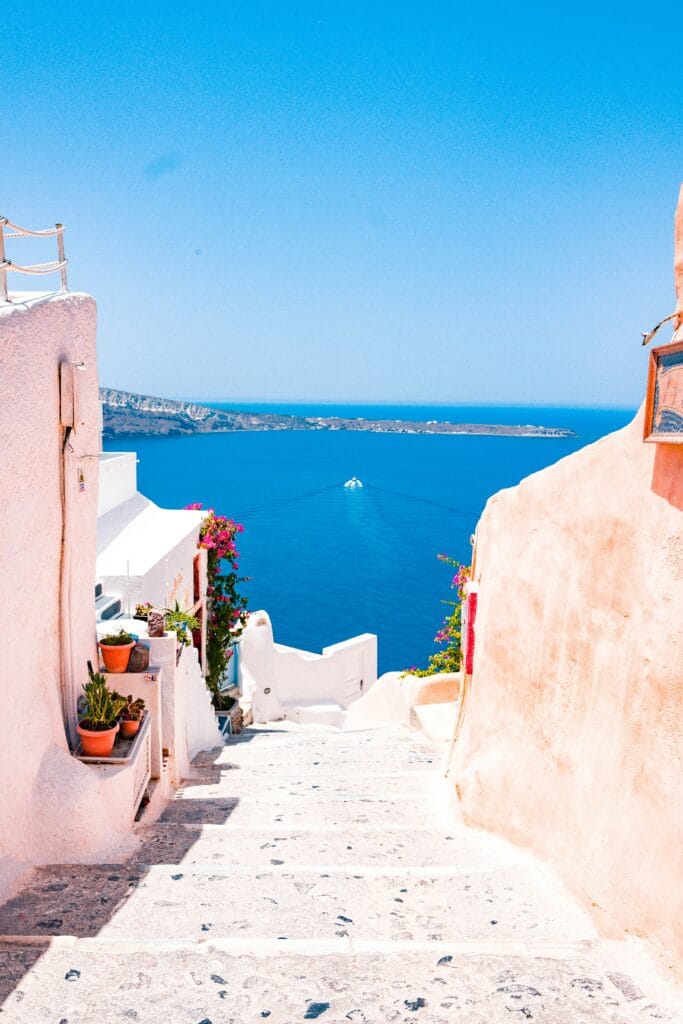
- Oia village: Here every house is a postcard. White walls, blue domes and art galleries, and in evenings – sunset show, attracting romantics from all over the world. Book table with view, but don’t forget – best background for your photos will still be the village itself!
- Fira: Island capital, where you can both dine with view of volcanic caldera and dance until dawn. If you want adrenaline dose, descend to port by elevator or conquer 588 steps – you definitely won’t forget the way down.
- Akrotiri: It’s like Aegean Pompeii – prehistoric city, where frescoes and preserved buildings allow glimpse into everyday life thousands of years ago.
- Volcanic beaches: Red and Black beaches are unique, as if in another world. Swimming and photos here – must do.
- Vineyards: Assyrtiko grapes work miracles. Wine tasting with volcanic rock landscape – experience you’ll want to repeat.
- Mykonos – luxury and crazy entertainment rhythm.
- Mykonos Town (Chora): Getting lost in labyrinth of white streets – almost mandatory. If you find colorful doors or balcony, stop, breathe in and let this place enchant you.
- Little Venice: Houses above water and perfect sunset background. Be prepared – dinner prices here match beauty of view, but it’s worth it!
- Windmills: Kato Mili mills – island stars, and their photos – true Instagram classic.
- Paradise and Super Paradise beaches: This is not just sand and sea – it’s world-class party epicenter. If DJ sets are your element, you hit the spot.
- Delos Island: Just 30 minutes by boat and you’re already at UNESCO heritage site, where myths and history merge.
- Paros – marble island with authentic villages and excellent beaches.
- Naoussa: Picturesque fishing port with Venetian castle and cozy tavernas. Simply hard not to spend evening here.
- Parikia: Island heart with impressive Panagia Ekatontapiliani – church whose history dates back to 4th century.
- Marble quarries: Want to see where marble for Parthenon came from? Here’s your chance.
- Golden Beach: Waves, wind and windsurfing – this beach’s face. If you haven’t surfed yet, this is right place to start.
- Lefkes: Authentic mountain village with incredible views and silence, interrupted only by locals’ shouts – inviting to taverna.
Ionian Islands
- Corfu – green island with Venetian influence architecture and beaches.
- Corfu Old Town – UNESCO heritage site with Venetian and French architecture:
- Liston arcade – elegant promenade with cafés
- St. Spyridon Church – island patron’s sanctuary
- Old and New Fortress – impressive defensive structures
- Achilleion Palace – Austrian Empress Sisi’s summer residence with impressive gardens
- Paleokastritsa – famous resort with six bay beaches and Byzantine monastery
- Sidari – famous for Canal d’Amour and sand beaches
- Mon Repos Villa – Prince Philip (Duke of Edinburgh) was born in this palace
- Kassiopi – traditional fishing village with Byzantine fort
- Corfu Old Town – UNESCO heritage site with Venetian and French architecture:
- Zakynthos – famous for Navagio Beach and Blue Caves.
- Navagio (Shipwreck) Beach – iconic Greek location:
- White sand beach with shipwreck
- Surrounded by high limestone cliffs
- Accessible only by boat
- Blue Caves – natural sea caves:
- Water color changes depending on light
- Can swim with small boats
- Popular diving spot
- Laganas Bay – Caretta caretta turtle nesting site:
- Protected by national marine park
- Turtle watching tours organized
- Long sand beaches
- Bohali – panoramic spot with Venetian castle
- Kryonerida – natural “water park” with springs
- Navagio (Shipwreck) Beach – iconic Greek location:
Dodecanese Islands
- Rhodes – historic medieval city and Colossus of Rhodes site.
- Rhodes Old Town – UNESCO heritage site:
- Palace of Grand Masters – impressive Gothic building
- Street of Knights – best preserved medieval street in Europe
- Knights Hospitaller fortress with defensive walls
- Socrates Square – lively old town center
- Suleiman Mosque – Ottoman architecture example
- Lindos – ancient town:
- Acropolis with Temple of Athena
- Byzantine church with frescoes
- Captains’ houses with traditional architecture
- Colossus of Rhodes site – one of seven wonders of the world:
- Mandraki harbor, where statue stood
- St. Nicholas Fortress and deer statues
- Kalithea – art deco style thermal baths
- Petaloudes (“Butterflies”) valley
- Tsambika beach – one of most beautiful on island
- Kamiros – “Rhodes’ Pompeii”, ancient city
- Rhodes Old Town – UNESCO heritage site:
- Kos – Hippocrates’ birthplace with ancient monuments and beaches.
- Kos Town:
- Hippocrates Plane Tree – legendary place where Hippocrates taught
- Ancient Agora – largest in Greece after Delphi
- Neratzia Castle – Knights Hospitaller fortress
- Roman Forum with mosaics
- Asklepieion:
- Ancient medical center and Hippocrates’ school
- Terraced temple with healing facilities
- Archaeological park with impressive panorama
- Kardamena – popular resort:
- Long sand beaches
- Water sports centers
- Nightlife
- Kefalos:
- Traditional village on hill
- Ancient theater
- Paradise Beach
- Therma – hot springs:
- Volcanic springs
- Healing mud baths
- SPA centers
- Kos Town:
What Does Greece Offer Gourmets?
Most Popular Dishes:
- Moussaka – layered dish of eggplant, ground meat and béchamel sauce. Traditionally made with lamb or beef, spices and topped with thick béchamel sauce.
- Souvlaki – marinated meat (usually pork) skewers, served with pita bread, tzatziki sauce and vegetables.
- Dolmades – rice wrapped in grape leaves with spices and sometimes meat.
- Gyros – rotisserie-cooked meat, served in pita bread with vegetables and tzatziki.
- Horiatiki – traditional Greek salad with tomatoes, cucumbers, olives and feta cheese.
- Spanakopita – spinach and feta cheese pie in phyllo dough.
- Baklava – layered pastry dessert with nuts and honey.
Practical Tips for Travelers
- In summer sun protection and plenty of water essential
- English is spoken in main tourist areas
- Public transport convenient in cities and between them
- Most convenient to travel between islands by ferries or planes
- Siesta tradition – many shops close in afternoon
- Cards widely accepted, but handy to have cash in small places
- Tap water safe in major cities, but on islands bottled water recommended
Events and Festivals
- Apokries (Carnival) – celebrated before Lent, especially festive in Patras city. This festival includes masquerade parades, traditional music, dances and special carnival dishes. Festival culminates with grand parade with colorful costumes and allegorical floats.
- Greek Independence Day (March 25) – independence from Ottoman Empire celebrated with parades and events. On this day military parades, traditional dances and concerts take place. Traditionally families eat cod with skordalia (garlic sauce).
- Athens and Epidaurus Festival (June-September) – classical drama and music performances in ancient theaters. This is one of oldest and most prestigious European arts festivals, whose program includes ancient theater productions, contemporary performances and concerts in historic venues.
- Panigiri – traditional summer celebrations in villages and islands with music, dances and food. Each island and region has its own unique Panigiri traditions, related to local saints and harvest celebration.
Greek Nature
- Meteora Monasteries – monasteries built on impressive rocks in Thessaly. These UNESCO World Heritage sites not only amaze with their architecture, but also offer breathtaking views of surrounding landscape.
- Mount Olympus – highest mountain in Greece (2,917 m), in mythology – home of gods. National park offers various difficulty routes, suitable for both beginners and experienced hikers.
- Samaria Gorge (Crete) – one of longest gorges in Europe, popular among hikers. 16 kilometer long route leads through impressive landscape and ends on Libyan Sea coast.
- Prespa Lakes – national park with rare bird species. Lakes in northern Greece are important ecosystem and excellent place for nature watching.
- Voidomatis River – crystal clear river in Epirus region, famous for its turquoise water and impressive mountain landscapes. It’s one of cleanest rivers in Europe, popular among rafting enthusiasts.
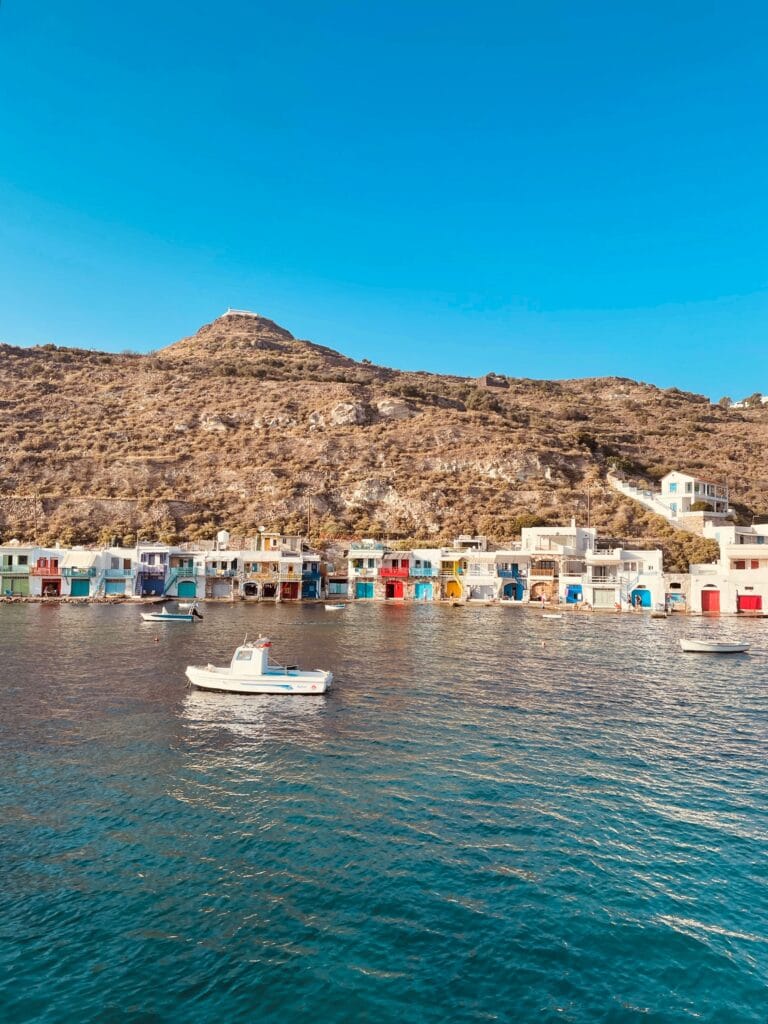
- Milos Island Cliffs – volcanic island with unique white rock formations and colorful coasts. Most famous object – Sarakiniko beach, resembling Moon surface.
- Melissani Lake (Kefalonia) – underground lake in impressive cave, whose water changes colors depending on sunlight. Boat tours through crystal water offered to visitors.
- Vlychada Caves (Diros) – one of largest underground lake systems in Europe, where visitors can sail boats among impressive stalactites and stalagmites.
Route Ideas Around Greece
Weekend Trip:
- Day 1: Athens Acropolis and Old Town
- Day 2: Cape Sounion and Temple of Poseidon
Week-long Trip:
- Days 1-2: Athens
- Days 3-4: Santorini
- Days 5-6: Mykonos
- Day 7: Delphi
Two-week Trip:
- Days 1-3: Athens and surroundings
- Days 4-6: Peloponnese Peninsula
- Days 7-9: Crete
- Days 10-12: Santorini
- Days 13-14: Rhodes Island
Greece – not only cradle of ancient civilization, but also modern country with pulsating energy, which can embrace everyone as its own. Here everyone will find what’s dear to their heart: if you’re history fanatic, temples and archaeological sites transport you thousands of years back. If you’re more drawn to lazy lifestyle – beaches await with soft sand and warm sea. For gourmets Greece is paradise – from fresh seafood to juicy souvlaki. And for adrenaline lovers? Mountain trails and rocky coasts offer adventures.
Hospitality here is not mere politeness – Greeks infect everyone with their love of life, so trip to Greece becomes more than vacation.