 Slovakia
Slovakia: Central Europe’s Gem Between Mountains and Castles
Slovakia is a country where rivers cut through the Carpathians, and medieval castles stand guard on mountains. Gothic masterpieces peacefully neighbor Baroque palaces, while traditional villages with wooden churches preserve age-old customs. Here you can enjoy thermomineral water, climb the High Tatras, or wander through charming Bratislava’s old town. Slovakia is the authentic heart of Central Europe, waiting for you with an open heart and a glass of wine!
Basic Information About Slovakia
- Capital: Bratislava
- Area: 49,035 km²
- Population: ~5.5 million (2024)
- Currency: Euro (EUR)
- Language: Slovak
- Time Zone: CET (GMT+1), summer – CEST (GMT+2)
When is the Best Time to Travel to Slovakia?
Summer (June–August)
The warmest time when thermometer shows 20–30°C – ideal for hiking enthusiasts and nature lovers! In the Tatras you can climb to the very peaks, and cities breathe a festive atmosphere. True, in summer prices jump up a bit, and popular routes are full of travelers.
Autumn (September–November)
Golden time! 15–20°C weather, and nature dressed in carnival color costumes. Ideal time for cultural excursions and peaceful photography without crowds. Tatra peaks are already white from first snows, while valleys are still warm. Prices are friendlier, and local wine festivals invite you to taste the best harvest.
Winter (December–February)
Skiing paradise. Snow in the Tatras is guaranteed, and temperature ranges from -5 to -15°C. Christmas markets in Bratislava and other cities are a real fairy tale! Although some mountain routes close, thermomineral resorts operate year-round. Winter prices are very friendly, and the country’s beauty under snow blanket is indescribable.
Spring (March–May)
Awakening time! Temperature rises from 10 to 20°C, nature blooms, and castles and palaces come alive after winter sleep. Best time to discover Slovakia’s true character without tourist crowds. Mountains may still have snow, but valleys already smell of spring. Prices are pleasant.
Main Cities and Regions
Bratislava
Slovakia’s capital and largest city, located on the Danube, just 60 km from Vienna! The city combines traces of three cultures – Slovak, Hungarian, and Austrian, and the Danube bank invites romantic walks.
Places to Visit:
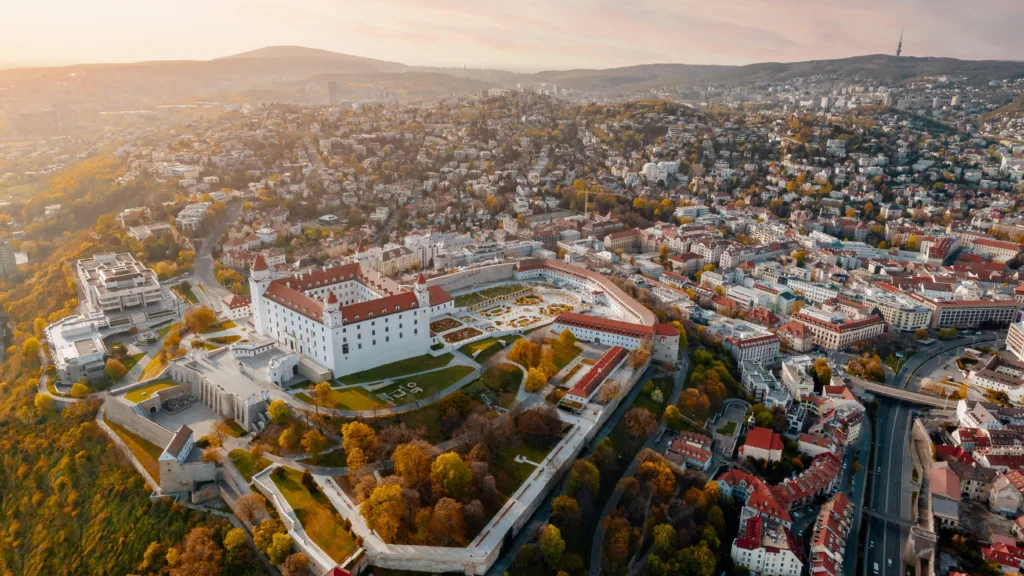
- Bratislava Castle – the city’s symbol, standing 85 meters high above the Danube. The current Baroque form took shape in the 18th century, although a castle stood here as early as the 9th century. After reconstruction in 2008, the Slovak National Museum operates here with rich historical collections. From the castle terraces opens a breathtaking view of the Danube and three connecting countries – Slovakia, Austria, and Hungary.
- St. Martin’s Cathedral – a Gothic masterpiece where Hungarian kings were crowned from 1563 to 1830. The place became symbolic as 19 monarchs received their crowns here, including the famous Emperor Joseph II. The cathedral tower is adorned with a crown imitation, recalling this glorious past. Inside preserved unique stained glass windows and the altar where coronations took place.
- Old Town Square – Bratislava’s heart, girded by colorful Baroque houses. In the center stands Roland or, as locals call it, Maximilian’s Fountain (1572), whose sculpture symbolizes the city’s rights. Around the square – cafes with terraces, souvenir shops, and galleries. In the evening, the square is illuminated and becomes a romantic place.
- Michael’s Gate – the only surviving city defensive wall gate from the 14th century. In the 51-meter-high tower operates a weapons museum with a medieval combat tools collection. At the tower top – an observation platform with panoramic city view. At the gate bottom – bronze “zero,” from which distances to world capitals are counted.
- Modra Ceramics Route – near Bratislava, the town of Modra is famous for unique blue ceramics or majolica art. Here operate several traditional workshops where you can watch how the famous Modra ceramics with white flower ornaments on blue background are born. Can participate in master classes and try this ancient craft yourself.
- Devín Castle – romantic ruins on a 212-meter-high rock where the Morava flows into the Danube. The castle is mentioned as early as the 9th century as a defensive point of Great Moravia. Here meet the borders of Slovakia, Austria, and Hungary, and views open to three countries. Archaeological research revealed that people lived in this place as far back as the Neolithic period.
Košice
Eastern Slovakia’s largest city, 2013 European Capital of Culture.
Don’t Miss:
- St. Elizabeth’s Cathedral – Slovakia’s largest Gothic cathedral and one of Central Europe’s largest. Construction lasted from 1378 to 1508. The cathedral interior features a rare 15th-century wood carving masterpiece – St. Elizabeth’s altar. The tower reaches 59 meters and offers a wonderful city panorama.
- Košice State Theatre – Neo-Baroque building (1899) whose interior is decorated by the famous Viennese artist Gustav Klimt. This is the only theater in the world with authentic Klimt decor on ceilings and walls. The theater hosts opera, ballet, and drama performances.
- Auksikalnis Archaeological Museum – original open-air exhibition, reconstructing medieval city fragments. Here you can see 13th-18th century building remains, Gothic church foundations, and an old cemetery. The museum uses modern technologies to reconstruct the historical city image.
- Spiš Castle – one of Europe’s largest castle complexes (UNESCO list). Occupies 4 hectares on a 200-meter-high mountain. The castle is mentioned in 1209, and its flourishing lasted until the 18th century. The complex has residential palaces, a chapel, defensive walls, and 11 towers. From the castle open views of the Spiš region and High Tatras.
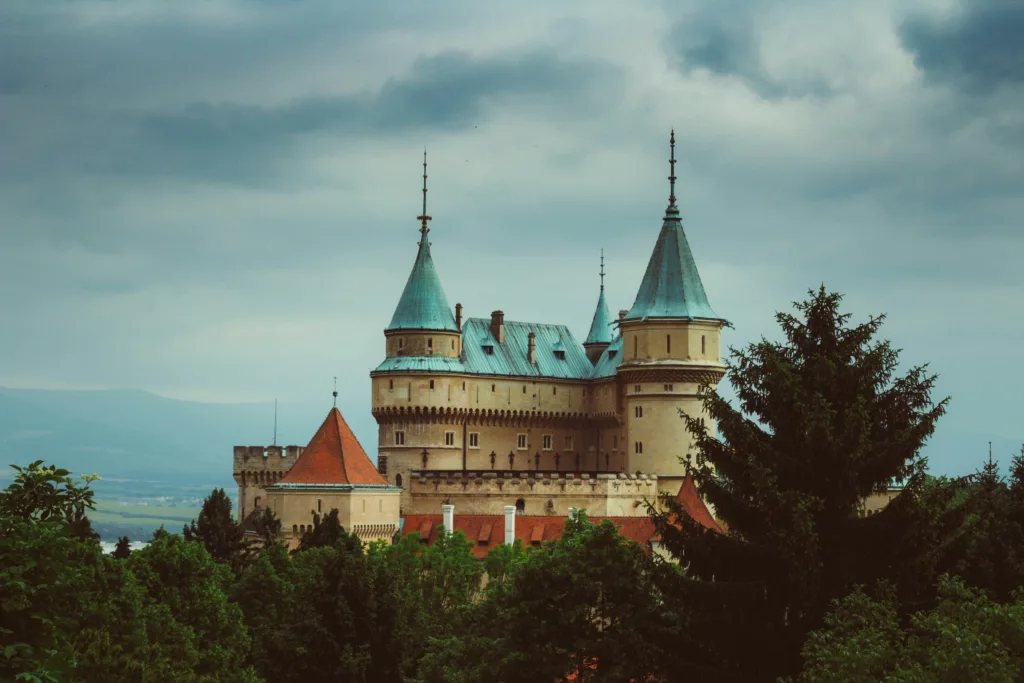
- Bojnice Castle – Slovakia’s most romantic castle, called the “castle of love.” Late 19th century rebuilt in Neo-Gothic style following French Loire Valley castle examples. The castle park grows exotic plants and trees. Scenes from fairy tale films were shot here. Every year “toy and beloved items museum” exhibitions take place.
Banská Bystrica
Historic mining city, surrounded by mountains.
Places to Visit:
- Central Square – one of Slovakia’s most beautiful, surrounded by colorful Renaissance and Baroque houses. In the center stands a clock tower and black obelisk dedicated to Slovak National Uprising victims. At the square edge – historic buildings with arcades and traditional cafes.
- SNP Museum – dedicated to 1944 Slovak National Uprising against Nazi occupation. Museum located in modern building with characteristic military equipment collection outside. Exhibition presents World War II events in Slovakia, insurgents’ struggle, and country’s liberation history.
- Calvary – Baroque pilgrimage site on a hill, built in 18th century. The path to the top leads past 24 chapels with Christ’s passion scenes. At the top – a church with wonderful city view. During Holy Week, traditional processions take place here.
What Does Slovakia Offer Food Lovers?
Traditional Dishes:
- Bryndzové halušky – Slovakia’s unofficial national dish. Possible potato dough gnocchi with bryndza (sheep milk cheese) and sautéed smoked bacon. The dish must have real bryndza, made in Slovak mountains according to traditional recipes. Often drunk with sour milk or buttermilk.
- Kapustnica – traditional sauerkraut soup with sausage, meat, and mushrooms. During Christmas period, this is the main holiday soup, made with dried mushrooms and traditional smoked meat. In different families, the recipe is passed down from generation to generation with its own secrets.
- Lokše – thin potato pancake that can be eaten sweet (with poppy seeds, nuts, jam) or savory (with sour cream, cheese). Traditionally made in autumn when preparing for winter. Lokše are often baked on traditional cast iron flat pans.
- Goulash – although originating from Hungary, became an inseparable part of Slovak cuisine. Slovak goulash’s peculiarity – more vegetables and slightly different spices. Often served with bread pieces or knedlík (bread dumplings).
- Trdelník – sweet dessert from layered dough, wrapped around a wooden cylinder and baked on embers, sprinkled with sugar and cinnamon. Although sometimes considered Slovak tradition, it actually came from Transylvania. Popular in tourist places.
- Borovička – traditional juniper berry distillate, Slovak “national drink.” Clear and very strong (40-70% alcohol), often drunk as aperitif or digestif. Many varieties – from mild to very strong, made in mountain regions.
- Pirozhki – small baked dough with various fillings: baked meat, cabbage, cottage cheese, apples. Popular as fast food option or snacks with beer. In different regions, fillings differ depending on local products.
Travel Itinerary Ideas
Weekend Trip:
- Day 1: Bratislava – old town and castle
- Day 2: Modra and Červený Kameň Castle
Two-Week Trip:
- Days 1–3: Bratislava and surroundings
- Days 4–6: Banská Bystrica and Bojnice
- Days 7–9: High Tatras – Poprad, Štrbské Pleso
- Days 10–12: Košice and Spiš region
- Days 13–14: Bardejovské kúpele and wooden churches
Slovakia’s Nature
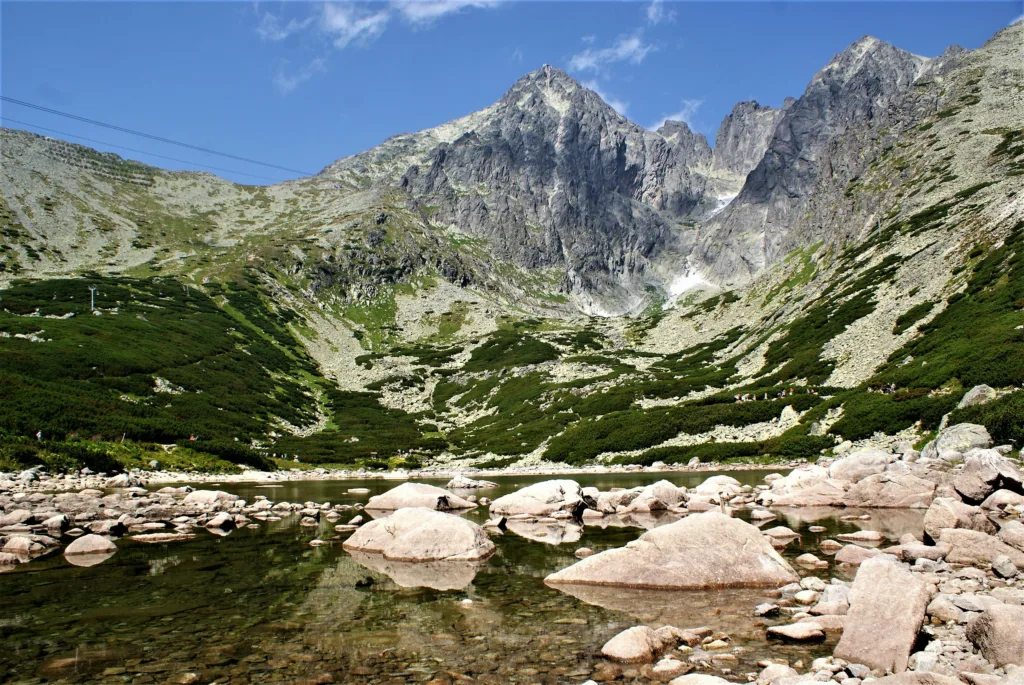
- High Tatras (Tatry Wysokie) – Slovakia’s highest mountain massif with Gerlachovský štít peak (2655 m). This is the world’s smallest high mountain system, but one of the most impressive. Here are more than 100 mountain lakes, waterfalls, and unique alpine flora. Popular hiking routes lead to Zelené pleso, Štrbské pleso, and other glacial lakes. In winter – excellent place for skiing.
- Low Tatras – gentler and more forested, great places for families with children. Here operates Slovakia’s longest cable route (Chopok), which in summer carries hiking enthusiasts, and in winter – skiers. The region is famous for its thermomineral springs and spa resorts Bojnice and Turčianske Teplice.
- Slovenský raj (Slovak Paradise) – unique national park with adventure trails where you need to climb metal ladders and chains through waterfalls and canyons. Over 350 waterfalls and dramatic rock formations. Popular trails – Suchá Belá, Piecky canyon. The park is ideal for adventure seekers and nature photographers.
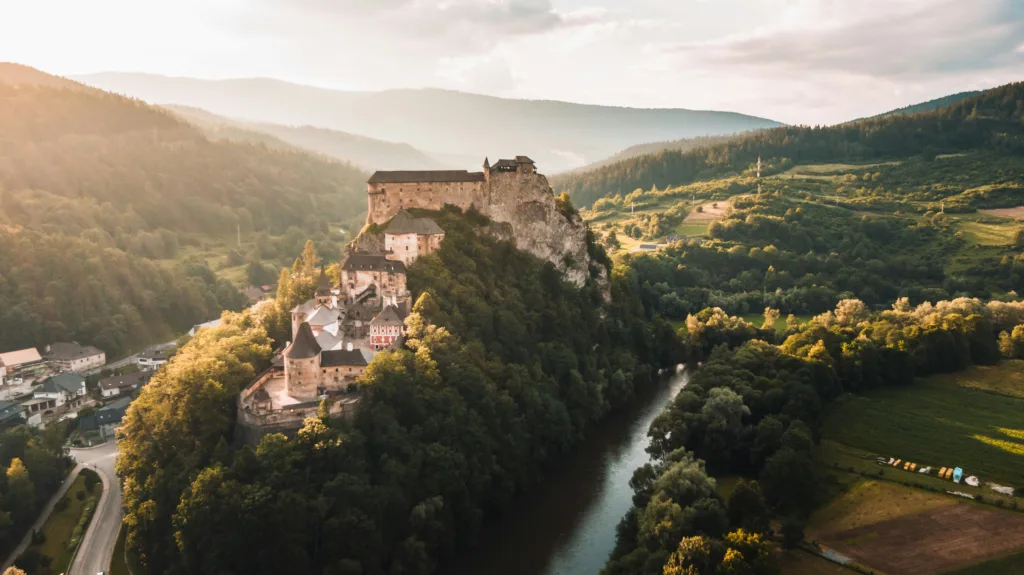
- Oravský zámok – not just a castle, but also surrounding reserve on artificial Orava reservoir. The castle built on a 112-meter-high rock dramatically rises above the water. The surroundings are covered with traditional wooden villages and characteristic architecture. Scenes from the classic film “Nosferatu” were filmed here.
- Bojnice Zoo – Slovakia’s largest and oldest (1955) zoological garden. Unique in that animals are kept in natural habitat conditions. Specializes in exotic animal breeding and conservation programs. The zoo combined with romantic Bojnice Castle makes an ideal family visit object.
Practical Tips
- Transportation: well-developed public transport network, trains connect main cities, regional buses serve villages.
- Internet: excellent WiFi coverage in cities and tourist places, mobile internet plans available
- Payment: euro accepted everywhere, cards can be used everywhere, cash needed only in small rural places
- Electricity: European standards (230V, 50Hz) with C and E type sockets
- Insurance: EU health insurance card valid, but travel insurance recommended for outdoor activities.
Toll Roads
| Category | Vehicle Type | Fee | Notes |
|---|---|---|---|
| Highways and motorways | Light vehicles (up to 3.5 t) | Electronic vignette required | 10 days, 30 days, or 365 days validity |
| Highways and motorways | Heavy vehicles (>3.5 t) | Kilometer fee | Calculated by distance and road |
| Regional roads / city streets | All vehicle types | Free | Vignette not required |
Vignette (e-známka) can be purchased at eznamka.sk website. Also at gas stations or at the border.
Main Events
- Bratislava Coronation Festival: June. Recreates historical coronation ceremonies with period costumes, medieval crafts, and authentic food. During the festival, Bratislava Castle and old town are transformed into a living history museum.
- Východná Folklore Festival: July. Central Europe’s largest traditional folklore event. Attracts folklore groups and craftsmen from across the Carpathian region. Shows traditional dances, music, national costumes, and traditional craft demonstrations such as wood carving and ceramics.
- Bojnice Castle Ghost Tour: August. Interactive theatrical event on castle grounds with professional actors playing historical characters. Night tours combine history, legends, and some supernatural elements. Very popular among families and romantic couples.
- Wine Harvest Festival: September. Various places throughout wine regions, especially near Bratislava. Celebrates new wine harvest with grape stomping, wine tasting, traditional music, and harvest feasts. Small villages and vineyards open doors to visitors.
- Christmas Markets: December. Bratislava’s traditional Christmas market is one of Central Europe’s most atmospheric. Handmade crafts, traditional holiday food (especially trdelník), mulled wine, and Christmas decorations. Similar markets are held in Košice, Banská Bystrica, and other major cities.
Slovakia – from mountain adventures to romantic castle visits, from traditional spa relaxation to vibrant urban culture – here is the authentic heart of Central Europe.