 Spain
Spain 
Spain: Passionate Culture and Unique Contrasts
Spain is a country where flamenco rhythms make even modern life dance. Mediterranean beaches invite you to relax, while magnificent mountains call you to breathe fresh air and look around. Traditional tapas snacks are like tiny flavor miracles that amazingly harmonize with modern cuisine’s ambitions. Historic city walls whisper ancient secrets, while contemporary architecture seems to already gaze into coming centuries.
Basic Information about Spain
- Capital: Madrid
- Area: 505,990 km²
- Population: ~48 million (2024)
- Currency: Euro (EUR)
- Language: Spanish (Castilian), Catalan, Basque, Galician
- Time Zone: Central European Time (CET, GMT+1), summer – CEST (GMT+2)
When to Travel to Spain?
Spring (March-May)
Mild weather (15–25°C) and blooming gardens make this period ideal for city tours and cultural events. Particularly worth seeing are the Semana Santa (Holy Week) processions.
What Spain Offers in Summer (June-August)
Hot and lively – temperatures reach 25–35°C. It’s a great time to enjoy beaches, nightlife and various festivals, such as the famous La Tomatina.
Autumn (September-November)
In autumn, weather pleasantly cools (15–25°C), tourists decrease, and the landscape attracts with colors. Great time to visit wine regions and participate in fiestas.
Spain’s Winter Charm (December-February)
In southern Spain, the climate remains mild (5–15°C), while in the north you can enjoy skiing at Sierra Nevada resorts or festive Christmas atmosphere.
What Places to Visit Does Spain Offer Tourists?
Madrid
The country’s capital and cultural center, famous for art museums and vibrant squares.
Worth Visiting:
- Prado Museum – a true paradise for art lovers, founded in 1819 and considered one of the world’s most important. It displays more than 8,000 paintings and 700 sculptures, including Spanish painting masterpieces. Velázquez’s “Las Meninas” invites you to dive into painting’s depth, Goya’s “Black Paintings” – into the artist’s soul’s darkness, while El Greco’s works simply enchant with their mysticism. But that’s not all – Italian Renaissance, Flemish and Dutch painting, including Rubens and Bosch, complement this magnificent art ensemble.
- Royal Palace – Palacio Real – the largest palace in Western Europe, having 3,418 rooms. Although the king no longer lives here, the palace is still the venue for the most important state ceremonies. Tourists can view luxurious interiors, the royal porcelain and armory collection, as well as visit the throne room and unique royal pharmacy. Music lovers won’t be disappointed – a Stradivarius instrument collection is kept here, which is a true honor to see.
- Plaza Mayor – Madrid’s heart, living history located in a magnificent 16th-century square. Surrounded by three-story buildings with 237 balconies, the square witnessed various historical events – from markets to bullfights or even inquisition events. Today the square is a great place to taste traditional Spanish dishes in one of the cozy cafes. During Christmas time, Plaza Mayor becomes a bustling market, whose atmosphere warms even the coldest winter days.
- Retiro Park – 125 hectares of recreation space that once belonged to the royal family. An artificial lake with boat rental, elegant rose garden and impressive Crystal Palace – places that invite you to catch your breath and admire nature. The Crystal Palace – a glass art pavilion hosting exhibitions and itself a work of art. On weekends, the park is flooded with street music sounds, and various events attract both locals and tourists.
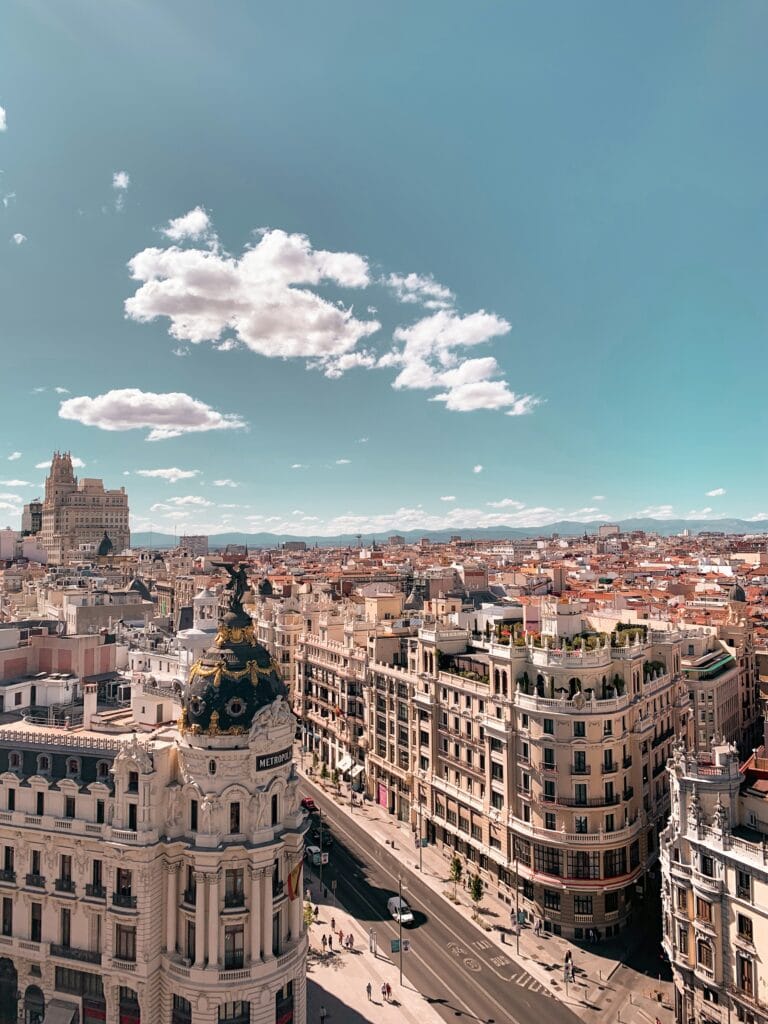
- Gran Via – a street that never sleeps. Designed in the early 20th century as a symbol of modernity, today it’s a vibrant shopping, entertainment and cultural center. Art deco and art nouveau style buildings, such as Metropolis or Telefonica headquarters, are true architectural masterpieces. On this street you’ll find everything – from luxury boutiques to cozy cafes, from theaters to vibrant nightclubs.
- Reina Sofia Museum – the museum invites you on a journey through 20th and 21st century art spaces. Pablo Picasso’s “Guernica” – one of the most famous works reflecting war’s horrors and becoming a symbol of protest against violence. Salvador Dalí, Joan Miró and other artists’ works reveal the diversity of Spanish modernism geniuses. The former hospital building housing the museum combines history with modernity, while the glass elevator allows you to admire the city panorama.
Barcelona
Catalonia’s capital, where Gaudí’s architecture creates magical city atmosphere.
Worth Visiting:
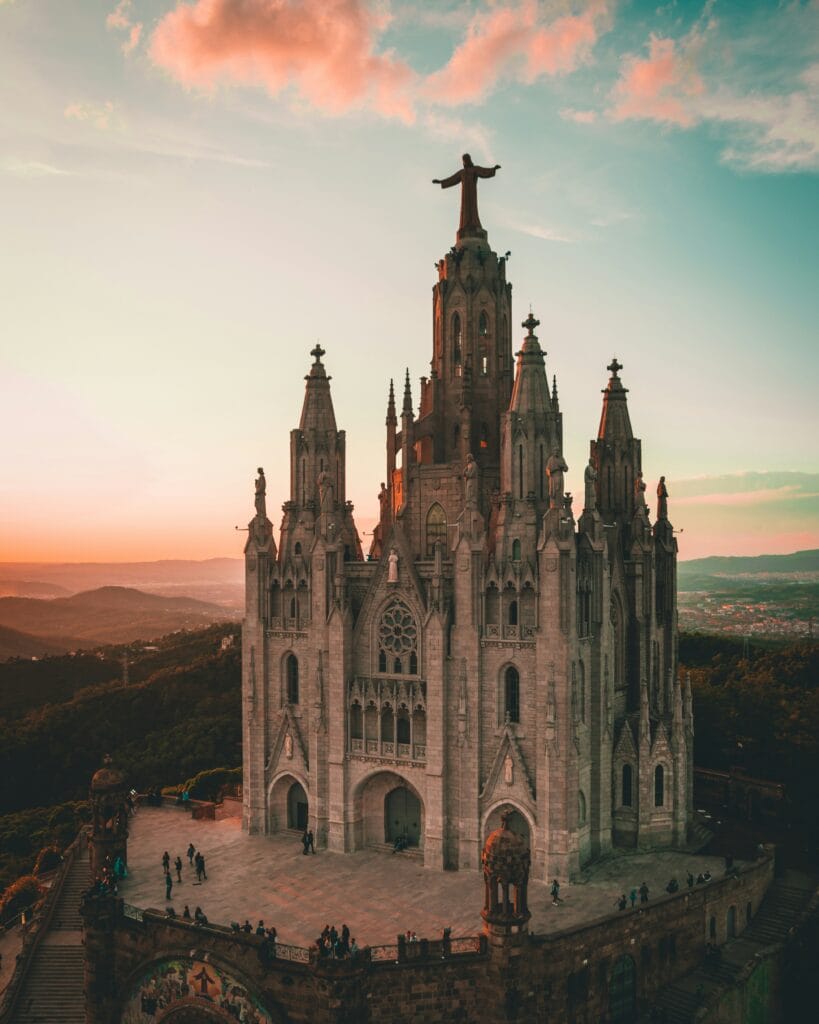
- Sagrada Familia – Antoni Gaudí’s masterpiece that looks alive. Construction began in 1882, and the basilica is still unfinished – it’s planned that its towers will see final form in 2026. Inside you’ll be greeted by columns resembling trees whose branches intertwine in ceiling vaults, while stained glass windows flood the space with colorful light. Climbing by elevator to one of the towers, you can admire Barcelona from above – an experience you won’t forget.
- Park Güell – an example of Gaudí magic. Once it was planned as a luxury residential area, but turned into a wonderful park. Here awaits you a colorful mosaic lizard, wavy benches and a “tree” columns hall whose ceiling is decorated with ceramic ornaments. From the park opens an enchanting Barcelona panorama, while Gaudí’s house-museum reveals this genius’s life details.
- La Rambla – a boulevard that never sleeps. This 1.2 km long pedestrian path connects Catalonia Square with the port and always amazes with its bustle. Street artists, flower shops, cafes – it’s a place where you can feel like a true Barcelonian. Visit La Boqueria market where you’ll find the freshest local products, or stop by Gran Teatre del Liceu, the famous opera house. In the evening, La Rambla becomes a lively entertainment alley, ideally suited for walks.
- Gothic Quarter – the city’s oldest part where medieval atmosphere simply enchants. Narrow streets, ancient Roman walls, Barcelona Cathedral and royal palace – that’s just part of what you can discover here. Stop by Sant Jaume square where city political matters are decided, or dive into a labyrinth of small shops, restaurants and bars. It’s a place where past merges with present.
- Casa Batlló – one of Gaudí’s most outstanding works, often called the “house of bones”. The building’s facade looks like a colorful stained glass window, while balconies resemble skulls. Inside you won’t find a single straight line – everything is wavy, organic and full of unexpected details. Climbing to the roof, you’ll see the “dragon’s back” – an architectural marvel decorated with colorful tiles.
- Camp Nou Stadium – even if you’re not interested in football, Camp Nou stadium is a place that will inspire anyone. Europe’s largest stadium, holding almost 100,000 people, is FC Barcelona’s home. Here you can visit the club’s museum, see an impressive trophy collection and learn more about Messi, Cruyff and other football gods. During the tour you’ll walk through the players’ tunnel, visit VIP boxes and perhaps even imagine yourself preparing to defeat opponents on the field.
Seville
Andalusia’s capital, flamenco’s heart and Spain’s historic cultural capital.
Don’t Miss:
- Alcazar Palace – Spain’s mudéjar architecture star, whose brilliance doesn’t fade even in the sun! If you’ve ever wondered what an architectural love story between Moors and Christians would look like, this palace is its living proof. Imagine: an 8th-century Moorish fortress, later “redesigned” by Christian rulers so that even the palace walls seem soaked in tales from a thousand and one nights. And those gardens! Seven hectares of pure paradise, where orange trees and fountains flirt with visitors, while Patio de las Doncellas (Maidens’ Courtyard) and Patio de las Muñecas (Dolls’ Courtyard) remind that miracles lie in details.
- Seville Cathedral – here the talk is serious. The world’s largest Gothic cathedral! Try walking past its largest golden altarpiece without a gasp – mission impossible. And, of course, Christopher Columbus rests here. As if saying: “I discovered America, and you at least discovered this cathedral?” And Giralda tower – a former minaret – now invites you to enjoy city panorama. You climb to the top not by stairs but by sloping paths – a great choice if you want to feel like a king on a horse.
- Plaza de España – Seville’s pride and every Instagram user’s dream. A semicircular square with bridges, fountains and colorful mosaics looks like from a fairy tale. If Venice had a Spanish cousin, it would look exactly like this. By the way, “Star Wars” was filmed here too. If this place suits Jedi, you’ll definitely like it too.
- Santa Cruz Quarter – Seville’s soul and romance mecca. Winding streets, white houses with blooming flowers and courtyards that look as if stolen from an old poem. Add tapas bars, flamenco theaters and small squares that in summer become vibrant centers of lively conversations and laughter – and you have a great plan for an evening walk.
- Torre del Oro – a tower whose name sounds like a promise. Once it shone with gold, and now tells the city’s maritime history. It’s not just a military tower, but also an excellent museum.
What Does Spain Offer Gourmets?
Spanish cuisine is a harmony of flavors based on fresh ingredients and regional traditions.
Traditional Dishes:
- Paella: originating from Valencia region and is one of Spain’s best-known dishes. Traditional Valencia paella is made with chicken, rabbit and vegetables, though in coastal regions the seafood version with shrimp, mussels and squid is more popular. The most important ingredients are special short-grain rice and saffron, giving the dish its characteristic yellow color. Paella is cooked in a special flat pan, and the crispy rice layer formed at the bottom (socarrat) is considered a delicacy.
- Jamón ibérico: considered one of the world’s best hams. It’s made from black Iberian pigs that feed on acorns (bellota). The ham is aged for 24-48 months in special facilities where temperature and humidity are carefully controlled. The result – red-colored, marbled ham with intense, nutty flavor.
- Gazpacho: traditional Andalusian cuisine soup, ideal for hot summer. It’s made from fresh tomatoes, cucumbers, peppers, garlic and olive oil. All ingredients are ground to a smooth consistency and served cold. Often additionally served chopped vegetables that can be added to the soup.
- Tortilla española: classic Spanish cuisine dish made from potatoes, eggs and onions. Potatoes and onions are slowly fried in olive oil, then mixed with beaten eggs and fried on both sides. Can be eaten hot or cold, often served in tapas bars.
- Patatas bravas: popular tapas dish – fried potatoes served with spicy tomato sauce (salsa brava) and aioli (garlic mayonnaise). Each region has its own sauce version, from milder to very spicy.
- Churros: traditional breakfast or snack pastries made from simple dough that’s squeezed into hot oil through a special nozzle giving the characteristic ridged shape. Fried churros are sprinkled with sugar and usually dipped in thick hot chocolate.
- Sangria: refreshing summery drink made from red wine, fruits (usually citrus), a small amount of brandy and carbonated beverage. Traditionally sangria was a way to use lower quality wine, but today it has become a popular drink, especially among tourists.
Itinerary Ideas
Weekend Trip:
- Day 1: Madrid center and museums
- Day 2: Toledo city tour
Week Trip:
- Days 1–2: Madrid
- Days 3–4: Barcelona
- Day 5: Valencia
- Days 6–7: Seville and Granada
Where Does Spain Amaze with Nature?
- Sierra Nevada Mountains – the highest mountain massif of the Iberian Peninsula, whose highest peak Mulhacén reaches 3,479 meters. In winter it’s Spain’s most popular ski resort, having more than 100 km of trails and modern infrastructure. In summer the mountains become a paradise for hikers and climbers, offering various difficulty routes and the opportunity to see rare plant species adapted to highland climate.
- Teide National Park – at whose center rises Teide volcano (3,718 m), is a UNESCO World Heritage site. It’s Spain’s highest point and the world’s third-largest volcano from its base on the ocean floor. The park’s landscape resembles the Moon’s surface – frozen lava fields, colorful rock formations and unique plants adapted to live in extreme conditions.
- Costa Brava – stretches from Barcelona to the French border. It’s formed by dramatic rocky coasts, mysterious coves (calas) and traditional fishing villages. Medieval towns like Tossa de Mar or Cadaqués have preserved authentic charm. The coastal water is characterized by exceptional clarity, making it excellent conditions for diving and snorkeling.
- Picos de Europa National Park – Spain’s first national park, founded in 1918. Limestone mountains here rise steeply upward, forming dramatic peaks and deep gorges. In the park you can see rare animals – Cantabrian brown bears and Iberian wolves. Fuente Dé cable car lifts visitors to 1,823 meters height, from where incomparable views open up.
- Doñana National Park – located in Andalusia, is one of Europe’s most important nature reserves. The park brings together different ecosystems: dunes, wetlands and Mediterranean forests. It’s the most important stopover for migratory birds between Europe and Africa – here you can see flamingos, imperial eagles and many other species. The park is also one of the last habitats of Iberian lynx and Spanish red deer.
Practical Tips
- Siesta time (14:00–17:00) – many shops are closed
- Dinner usually starts only at 21:00–22:00
- Public transport is reliable, and high-speed trains (AVE) connect major cities
- English is not widely spoken, so it’s useful to know a few Spanish phrases
- Card payments are accepted almost everywhere, but it’s worth having cash for small expenses
- Popular attractions in summer should be booked in advance
Main Events
- La Tomatina: festival taking place on the last Wednesday of August in Buñol town. During the hour-long “battle”, participants throw about 150,000 kg of tomatoes. The celebration began in 1945 as spontaneous food throwing in the town square, and now attracts thousands of participants from around the world. Before the battle, participants try to climb a soap-covered pole to reach the ham hanging on it.
- San Fermín: known as “Running of the Bulls in Pamplona”, takes place July 6-14. Every morning at 8 o’clock, six bulls and hundreds of runners race along an 875-meter route through the old town to the arena. The festival begins with the traditional “chupinazo” ceremony, when a rocket is launched from the town hall balcony. Besides bull running, there are parades, concerts and traditional dances.
- Semana Santa: (March-April). One of Spain’s most important religious holidays. Particularly impressive processions take place in Seville and Malaga, where brotherhood members carry heavy religious sculptures (pasos) through the city. Procession participants wear traditional capirotes (pointed hats with face covers), and processions are accompanied by drum and trumpet music.
- La Feria de Abril: (April). A huge two-week event taking place after Easter. More than 1,000 casetas (special tents) are set up at the festival grounds, where people dance flamenco, eat tapas and drink manzanilla (specific sherry wine). Women wear traditional flamenco dresses, and horse-drawn carriages ride through the streets.
- Las Fallas: (March). Valencia city festival during which giant artistic sculptures (fallas) are built and burned. These sculptures, often satirical in nature, are created throughout the year. The festival ends with “La Cremà” night, when all sculptures are ceremoniously burned. The festival is also famous for its daily fireworks and “mascletà” – special pyrotechnic shows that are more oriented toward sound than visual effect.
Spain is a country where each region has its own unique character, flavors and charm. Whether you dream of lazily lying on the beach, skiing down mountains, admiring art masterpieces in museums or dancing until dawn at a noisy fiesta – Spain will ensure your vacation is unforgettable. Here everyone will find their “ole” moment!