 Tunisia
Tunisia: North Africa: History, Nature, Places to Visit, Cuisine
Basic Information about Tunisia
- Area: 163,610 km²
- Population: ~12,000,000 (2024)
- Currency: Tunisian Dinar (TND)
- Language: Arabic (official), French (widely spoken)
- Time Zone: CET (GMT+1)
When to Travel to Tunisia?
| Season | Temperature | Number of Tourists | Nature and Entertainment | Prices |
|---|---|---|---|---|
| Spring (March-May) | 15–25°C | Moderate | Blooming gardens, desert treks, historical sites | Moderate |
| Summer (June-August) | 25–40°C | Many | Beaches, water activities, festivals | Highest |
| Autumn (September-November) | 15–30°C | Few | Grape harvest, date festivals | Lower |
| Winter (December-February) | 8–18°C | Few (except holidays) | Desert treks, thermal springs, cultural events | Lowest |
April in Tunisia – just perfect: days gently warm, about 22 °C, nights cool like a perfect ice cream bowl. The whole wardrobe drama solved simply – a light jacket, thin sweater and you’re ready for all adventures. Spring here has its tricks: blooming olive trees, empty archaeological wonders.
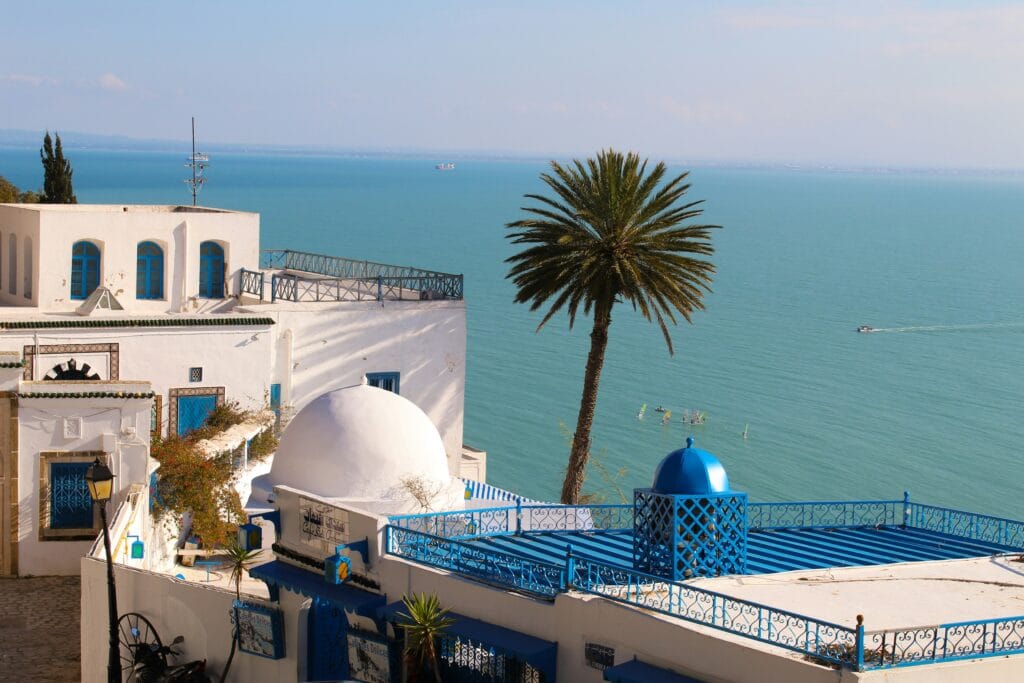
One of the brightest frames in my memory – morning in Sidi Bou Said town. Eyes barely open, and the window is already full of white-blue fairy tales: lemon tree blossoms smell like a flower shop, and the Mediterranean Sea shines like a new coin. The local café owner smiled and said: “In spring, the town breathes easier.” And truly – here time doesn’t run, it just gently flows.
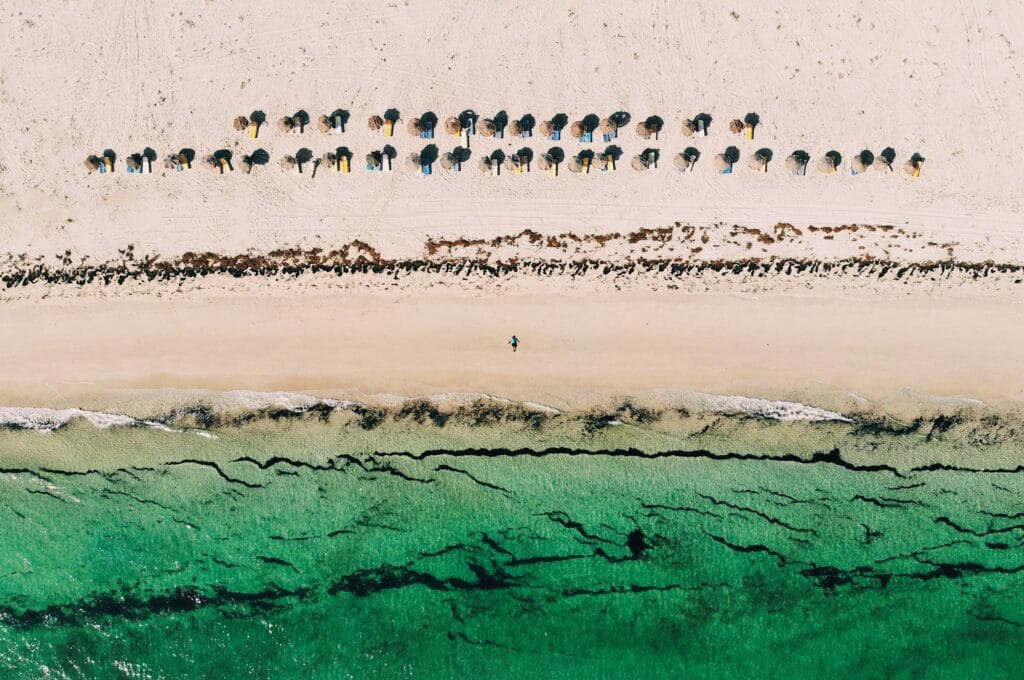
If your heart desires a burst of sun, summer in Tunisia is ideal – just don’t forget that +35 °C and more doesn’t seem too hot to anyone here. Fortunately, beaches like Hammamet or Djerba become real life rafts from the heat. Of course, the crowds of tourists create the feeling that you’ve ended up at a festival without a ticket, but there’s plenty of positivity and smiles here.
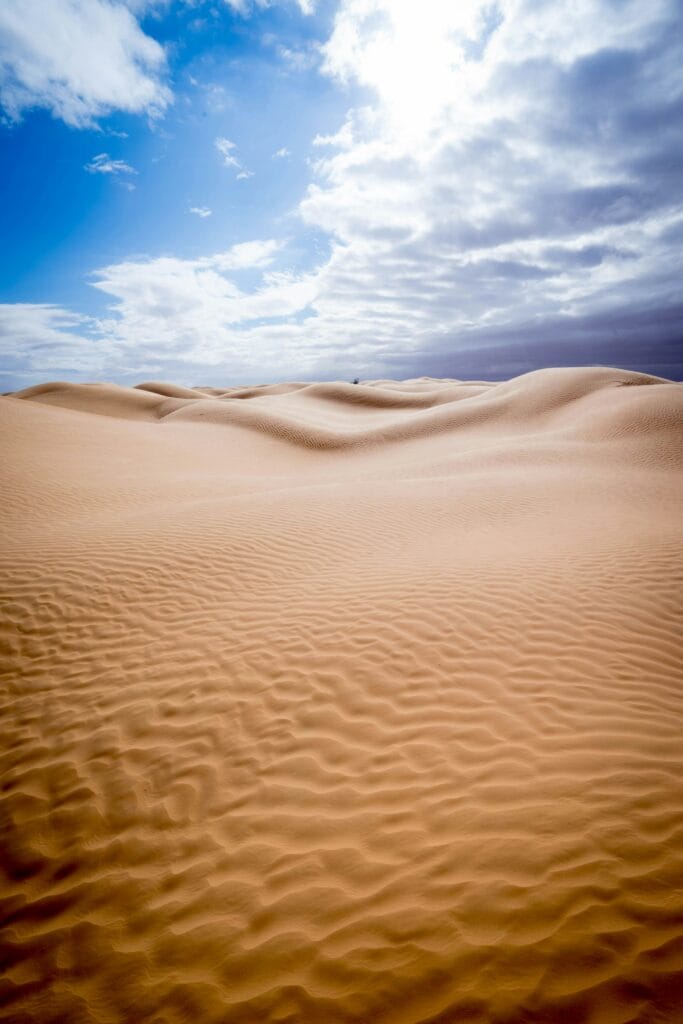
In autumn, the weather cools to a cozier 15–30 °C, the date palm explodes with sweetness, and the desert invites you to walk without the danger of melting. In Tozeur or the south, autumn is a real celebration.
And if you unexpectedly find yourself in Tunisia in winter – don’t be disappointed. On the coast, the thermometer rarely drops below +8 °C, it rains a bit in the north, but in the south the days remain sunny, like in a chocolate commercial. Fewer tourists, friendlier prices, and hot springs, for example in El Hamma, invite you to winter spa therapy.
Main Cities and Regions
Tunis: Capital Between Traditions and Modernity
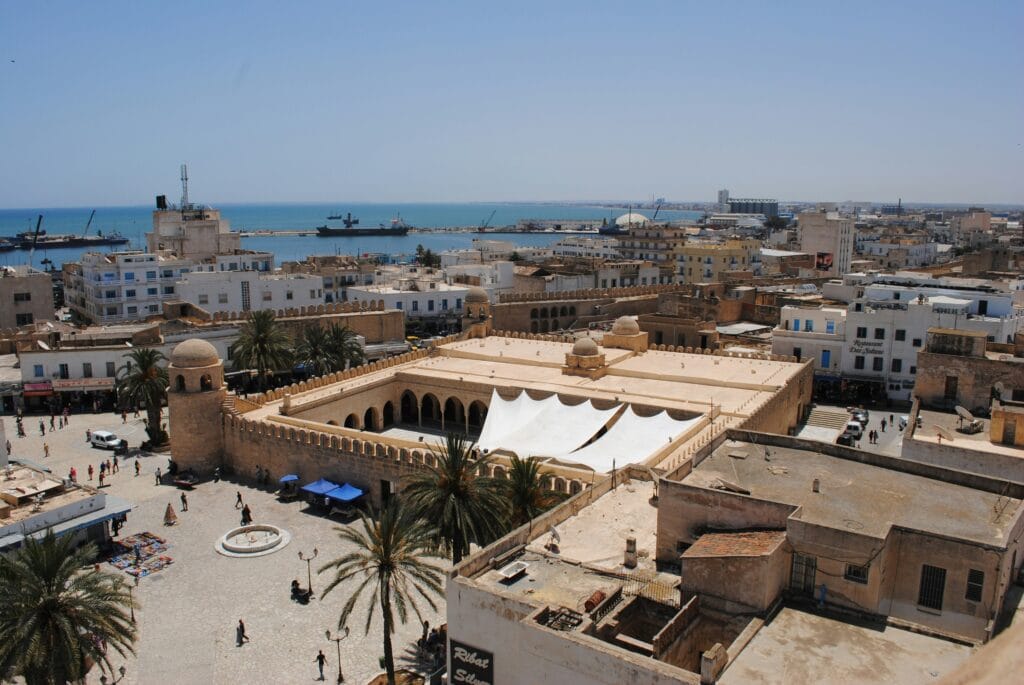
Tunis – a real cultural cocktail, where French colonial charm friendly nudges the shoulder of Arab world traditions. In the heart of the city – the UNESCO-protected medina, resembling a giant, living labyrinth where every alley quietly whispers its old secrets.
One unwritten rule quickly became clear to me here: if you want to feel the city’s spirit, sit down at “Café M’Rabet“. This place is so old that it seems its tables saw both Napoleon and the last dinosaur. I would sit there with mint tea in hand, feeling like the official morning guardian of Tunis.
Places to Visit in Tunis City:
- Medina – the old town where you can get lost. Ez-Zitouna Mosque, noisy markets, craftsmen’s workshops and perfume masters.
- Bardo Museum – the most impressive mosaic collection in the world, exhibited in former royal palaces. Here Roman mosaics tell stories better than any textbook. I recommend spending at least 2-3 hours.
- Carthage Ruins – remains of the legendary city that challenged Rome. Standing on Byrsa Hill, a strange feeling comes over you – here Hannibal planned his campaigns, and now you see modern buildings on the horizon and the sea where mighty fleets sailed.
- Sidi Bou Said – a white-blue village on a hill overlooking the Mediterranean Sea. It’s a paradise for artists, poets and musicians.
Djerba: Island of a Thousand and One Nights
Djerba – a true Tunisian miracle, an island where cultures mix so naturally, as if making some mysterious stew: Berber, Arab, Jewish and French influences intertwined into one delicious everyday recipe. No wonder this place once tempted Odysseus’s sailors themselves – having tasted the local “lotus,” they forgot where home was.
Getting to Djerba – an hour’s flight or several hours driving by car and taking the ferry.
Places to Visit in Djerba:
- Houmt Souk – the island’s main town with a market where you can bargain for silver jewelry, ceramics and traditional fabrics. Here I met a local fisherman who offered to show how traditional “charfiya” fishing works – a unique system used only on this island.
- El Ghriba Synagogue – the oldest synagogue in Africa and one of the oldest in the world. Every year a Jewish pilgrimage takes place here. Blue ceramic tiles and ornaments testify to the peaceful coexistence of cultures through the ages.
- Guellala – a pottery town where craftsmen use millennia-old traditions.
- Flamingo Island – a small island in the lagoon where you can observe wild flamingos.
Tozeur: Gateway to the Desert
Tozeur – an oasis town in the south, on the edge of the Sahara Desert. Here palm groves, sand dunes and oases create an unrepeatable landscape. Many Hollywood films like “Star Wars” were filmed in this location.
Places to Visit in Tozeur:
- Chebika Oasis – “mountain of the desert” with a waterfall and palm groves. When you see water flowing between red rocks in the desert, you understand why in ancient civilizations’ mythology oases were considered sacred places.
- Chott el Jerid – a huge salt lake that changes colors from white to pink and violet, depending on the time of day.
- Medusa Film Sets – abandoned “Star Wars” decorations. Standing in the place where favorite scenes were filmed, I felt like in a childhood fantasy world.
- Date Plantations – Tozeur is famous for the best dates in the world.
Tunisian Cuisine: Culinary Heritage
Tunisian cuisine – is a combination of Arab, Berber, Turkish, French and Mediterranean traditions.
What Tunisia Offers Gourmets:
- Couscous – the national dish, based on grains, braised meat (usually lamb) and vegetables. Each region has its own version. I ate it at a family restaurant in Sfax, where the hostess explained that couscous is not just food, but a symbol of family gathering.
- Brik – a crispy pastry with egg, tuna and capers.
- Harissa – spicy red pepper sauce, the heart of Tunisian cuisine. Everyone makes it according to their own recipe.
- Makroudh – date pastries soaked in honey.
- Mint Tea – not just a drink, but a ritual. Tea is poured from high up so that a foam “cap” forms.
Practical Travel Tips
Transportation Around Tunisia:
In Tunisia you can travel in various ways:
- Louage – collective taxi. Cheap and popular among locals, but you have to wait as it leaves only when full.
- Trains – a convenient way to travel between major cities. The Tunis-Sousse-Monastir-Mahdia line is especially popular.
- Car Rental – the best way to visit more remote places. Roads are in good condition, but driving culture is different than in Europe.
Budget Planning: How to Travel Economically
Tunisia – a relatively inexpensive country for visitors, but there are ways to save even more:
- Accommodation: Look for “dars” and “maisons d’hôtes” – traditional houses turned into guesthouses. They are not only cheaper than hotels, but also provide a more authentic experience.
- Food: Eat where the locals eat.
- Water: Always buy bottled or use water filters.
More tips – here.
Communicating with Locals: Cultural Nuances
Tunisians are famous for their hospitality and friendliness to tourists. Arabic is the official language, but many speak French, and in tourist areas – English.
A Few Useful Phrases:
- “As-salamu alaykum” (Hello)
- “Shukran” (Thank you)
- “B’saha” (Cheers!)
- “Tkallem bil ingliziya?” (Do you speak English?)
Always respect local traditions: during Ramadan don’t eat publicly during the day, dress modestly (especially women), always ask permission before photographing.
Traditional Tunisian Holidays
National Holidays
- January 14 – Revolution and Youth Day
- March 20 – Independence Day
- April 9 – Martyrs’ Day
- July 25 – Republic Day
Main Religious and Seasonal Holidays
- Eid al-Fitr (End of Ramadan) – date changes according to Islamic calendar
- Eid al-Adha (Feast of Sacrifice) – date changes according to Islamic calendar
- Islamic New Year – date changes according to Islamic calendar
- Moulid (Prophet’s Birthday) – date changes according to Islamic calendar
Significant Regional Holidays
- Tar Festival in Djerba (March) – Berber spring celebration
- Carthage International Festival (July-August) – The most important cultural festival
- Douz Sahara Festival (December) – Traditional dances, music and camel races
- Djerba El Ghriba Pilgrimage (May) – The oldest Jewish pilgrimage tradition in Africa
- Date Festival in Tozeur (October-November) – Celebrating the date harvest
Final Thoughts
Tunisia – is a country where around every corner awaits a new discovery: a Roman amphitheater in the middle of an olive grove, a mysterious mosque in a narrow medina alley, or simply the smile on the face of a local merchant offering a cup of tea to a guest from afar.