Content
How the Inuit Survive the Coldest Times of the Year and a Journey to the Edge of the World
Winter in Greenland
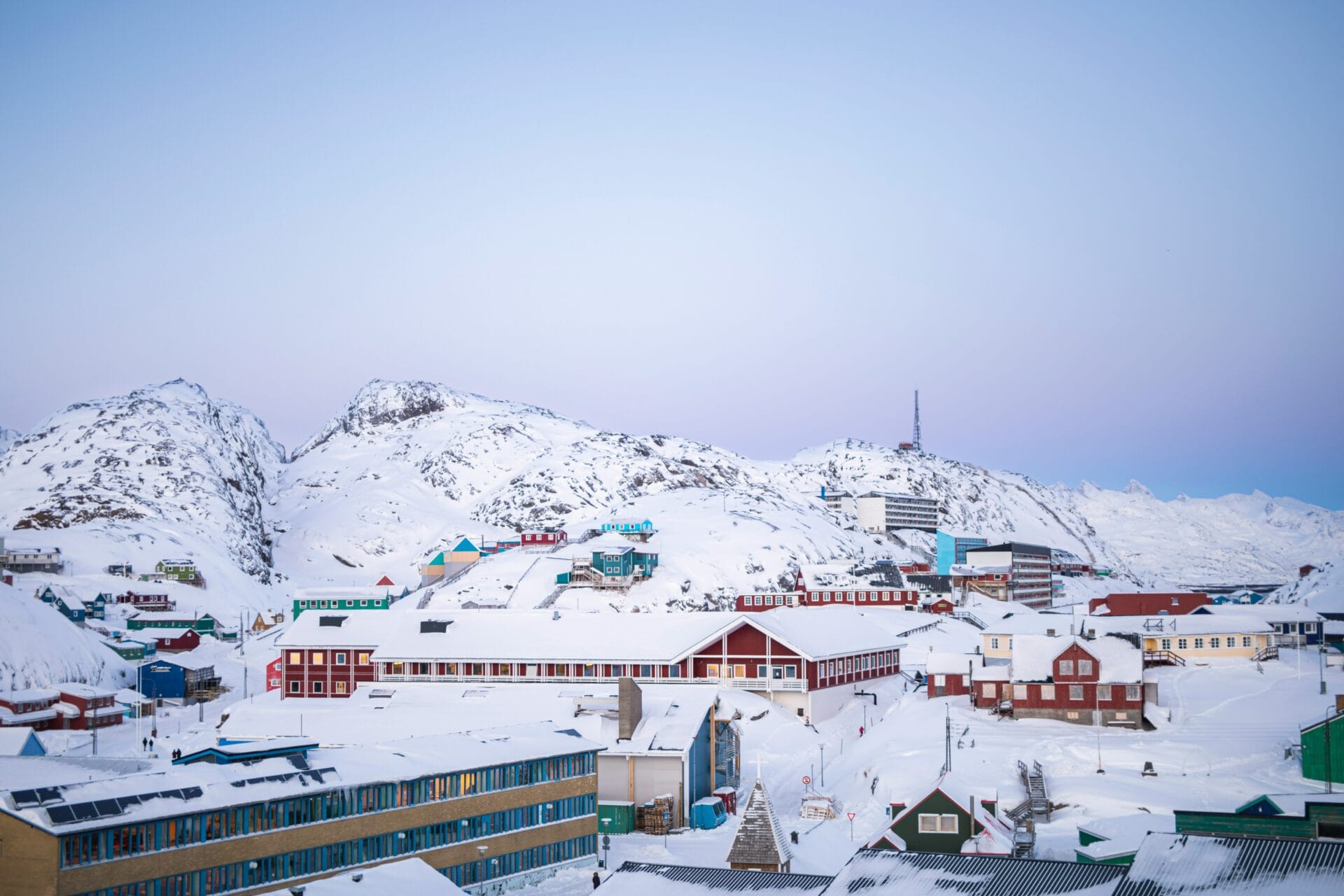
Greenland – the world’s largest island, with over 80% of its surface covered by eternal ice. However, on the edges of this ice desert, in small settlements, live people whose way of life has remained almost unchanged for centuries. In this article, we will share a unique experience of how local communities survive the winter when temperatures drop to -30°C and sea ice transforms their world.
Greenland’s Geography and Climate
Key Facts
| Parameter | Data |
|---|---|
| Total Area | 2,166,086 km² |
| Population | ~56,000 |
| Capital | Nuuk (20,000 residents) |
| Lowest Winter Temperatures | down to -50°C |
| Ice Cover Percentage | ~80% |
| Distance from the Arctic Circle | Most settlements 450+ km to the north |
Unique Climate
In Greenland, winter begins in October and lasts until May-June. In the northernmost settlements, there is a polar night – a period when the sun does not rise even during the day. This phenomenon can last from several weeks to several months, depending on geographical latitude.
Saattut Village: Life on an Ice Island
How to Reach a Remote Settlement
Saattut – a small settlement with only 200 residents, located in the Uummannaq fjord system. The journey to this village is a true adventure, requiring:
- A small plane flight over Greenland’s mountains
- Helicopter transport to the nearest island
- Dog sled travel across sea ice
Living Conditions in Winter
During winter, Saattut becomes completely isolated from the outside world:
- Ships cannot reach the port due to ice
- Temperature ranges from -15°C to -30°C
- Limited daylight
- No regular goods deliveries
Inuit Culture: Traditional Hunting Method – Seal Hunting
Why Are Seals So Important?
Seals in Greenland’s Inuit culture are not only a food source but also the basis for many other things:
| Use | Description |
|---|---|
| Food | Meat used for daily nutrition |
| Clothing | Skin becomes warm pants and mittens |
| Fat | Used for food and energy |
| Tradition | Hunting skills passed down from generation to generation |
Hunting Techniques on Ice
Local hunters, such as Nikolajus, use centuries-old methods:
- Setting net traps near huge icebergs
- Checking ice thickness with a special chisel
- Tracking seal movement under ice
- Checking traps by dog sled
Interestingly, hunters can “read” the ice – they can determine what’s happening under the ice simply by listening to sounds and checking the surface.
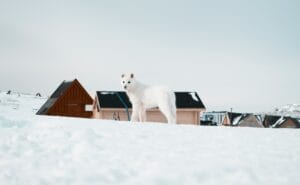
Greenland Dog
Dog Sleds: A Vitally Important Means of Transport
Greenland Dogs
Greenlandic sled dogs are a unique breed that has lived here for thousands of years. These dogs are characterized by several unique features:
- They are the only dog breed allowed in northern Greenland
- Can pull heavy sleds for tens of kilometers
- Perfectly adapted to -30°C cold
- Work as a team, obeying the hunter’s commands
Why Are Sled Dogs Still Used?
Although modern snow vehicles exist, locals still choose dogs for several reasons:
- Reliability in extreme cold conditions
- Ability to move across uneven ice
- Low environmental impact
- Cultural significance and traditions
The Language of Ice: More Than 100 Words to Describe Ice
Why So Many Words?
Greenland’s Inuit have an incredibly developed ice vocabulary. Each type of ice has its own name:
| Ice Type | Greenlandic Term | Use |
|---|---|---|
| Thin sea ice | Sikuaq | Dangerous to walk on |
| Thick sea ice | Siku | Safe for travel |
| Ice around icebergs | Qanniq | For seal hunting |
| Newly formed ice | Sikuliaq | For observation |
| Old ice | Sikuliarnaq | For stability |
| Ice well | Allu | For seal hunting |
The Importance of Ice Knowledge
The ability to “read” ice is a vitally important skill for several reasons:
- Helps find the best hunting spots
- Protects from danger due to thin ice
- Allows navigation without maps
- Helps predict weather conditions
Other Food Sources: Narwhals and Rock Ptarmigans
Narwhal Hunting
Narwhals – Arctic whales with a unique long tusk – are a highly valued food in Greenland:
- Meat is very nutritious and fatty
- Skin with fat is considered a delicacy
- Tusk used as a trophy
- Historically valued as an ivory substitute
How it’s eaten: Narwhal skin and fat are cut into cubes and eaten raw, sometimes with soy sauce. This is called “mattak” and is one of the traditional Inuit dishes.
Rock Ptarmigan Hunting
Rock ptarmigan (Lagopus muta) – an Arctic bird species characterized by unique features:
- Becomes completely white in winter for camouflage
- Lives in mountains and tundras
- Hunted with rifles
- Provides light, tasty meat
Modernization Challenges and Cultural Preservation
The Legacy of Danish Colonialism
Greenland was a Danish colony from 1721 to 1953. This period left a deep mark:
| Problem | Impact |
|---|---|
| Forced relocation | People forced to leave small settlements |
| Cultural destruction | Attempts to eradicate Inuit tradition |
| Alcoholism | Highest rates in the world |
| Suicide | Highest rate in the world |
| Trauma | Passed through generations |
Cultural Revival
However, positive changes have been occurring in recent decades:
- Self-governance: Greenland now has significant autonomy
- Language revival: Greenlandic language taught in schools
- Preserving traditions: Younger generation learning to hunt
- Growing pride: People proud of Inuit identity
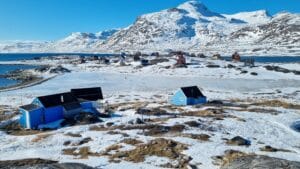
Nuuk
Nuuk: The Capital
Rapid Urbanization Pace
Nuuk – Greenland’s capital with 20,000 residents – is growing rapidly:
- Many construction cranes visible throughout the city
- New apartment blocks every few years
- Modern shopping centers and supermarkets
- Growing number of cars
Tradition in a Modern City
Surprisingly, even in Nuuk, traditional culture thrives:
- Markets with seal meat: Locals still buy fresh seal meat
- Hunting from the city: People go hunting on weekends
- Greenlandic language: Many families speak only Greenlandic at home
- Traditional dishes: Families prepare traditional foods
Both Sides at Once: An Example of a Modern Greenlander
Many modern Greenlanders perfectly illustrate the balance between modernity and tradition:
- Work modern jobs with technology
- Hunt with family on weekends
- Teach their children Greenlandic language
- Share culture through social media
- Nurture traditions alongside modernity
Climate Change: A Growing Challenge
How the Ice is Changing
Local hunters notice obvious changes over recent decades:
15-20 years ago:
- Ice formed in October
- Remained until the end of June
- Was much thicker
Now:
- Ice forms only in February
- Melts earlier
- Much thinner and more fragile
Impact on Communities
| Aspect | How Affected |
|---|---|
| Hunting season | Shorter period on ice |
| Safety | More dangerous movement across ice |
| Food gathering | Harder to reach hunting areas |
| Isolation | Shorter winter isolation |
What Lies Ahead?
The Younger Generation Chooses
Many Greenlandic families’ children face a difficult choice between traditional life in small settlements and modern life in cities. One family’s example perfectly illustrates these trends:
19-year-old daughter:
- Wants to stay in her native settlement
- Plans to become a fisher like her father
- Loves traditional activities
Younger sister:
- Wants to leave for Nuuk
- Plans to study nursing
- Seeks a more modern life
Future Perspectives
Greenland’s future depends on the balance between several important aspects:
- Economic development and environmental protection
- Modernization and preservation of traditions
- Urbanization and support of small communities
- Global trends and local identity
Conclusions: Lessons from Greenland
What Can Be Learned?
A journey through Greenland in winter reveals several important lessons:
Traditions can exist alongside modernity – you don’t have to choose one or the other. Many Greenlanders perfectly demonstrate that you can work modern jobs, use technology, and at the same time maintain connection with traditional practices.
Cultural identity is irreplaceable – money and conveniences don’t replace it. Even with access to modern shopping centers, Greenlanders still choose to hunt and prepare traditional dishes because it gives them meaning and connection to their culture.
Community connection to the land is vitally important – it gives meaning to life. Hunting and other traditional activities are not just a way to obtain food, but also what defines people, their identity.
Forced assimilation is harmful – cultural erasure leaves long-term trauma. The legacy of Danish colonialism is still felt today, with high rates of alcoholism and suicide.
Climate change really affects people – it’s not an abstract problem. Local hunters face thinning ice and shorter seasons every day.
Why Is This Important to Us All?
The experience of Greenland’s Inuit is important to the entire world in several areas:
- It shows how to preserve culture in a modernizing world
- It demonstrates the real impact of climate change
- It teaches about human connection with nature
- It proves community resilience in difficult conditions
Practical Information for Tourists
How to Visit Greenland
| From where to fly | Route | Airline | Duration | Price (round trip) | Notes |
|---|---|---|---|---|---|
| 🇩🇰 Denmark (Copenhagen) | Copenhagen → Kangerlussuaq / Nuuk / Ilulissat | Air Greenland | ~4.5 hrs | €700–€1200 | Main route to Greenland; most flights |
| 🇮🇸 Iceland (Reykjavik) | Reykjavik → Nuuk / Ilulissat / Kulusuk / Narsarsuaq | Air Iceland Connect (new name: Icelandair) | ~3 hrs | €500–€1000 | Popular when traveling through Iceland or combining with Reykjavik |
| 🇳🇴 Norway | Via Copenhagen (no direct flights) | Norwegian / SAS + Air Greenland | ~7–10 hrs with transfer | €700–€1200 | Convenient option from Oslo or Bergen |
| 🇨🇦 Canada | Goose Bay / Iqaluit → Nuuk (seasonal flights) | Air Greenland | ~3 hrs | €600–€1000 | Limited, operates only in summer |
What You Need to Know
Important tips for travelers to Greenland:
- Temperatures can be extreme, especially during winter
- Bring appropriate warm clothing
- Respect local traditions and customs
- Ask permission before photographing people
- Be prepared for high costs for accommodation and food
- Plan your trip in advance, as transport is limited
Summary
Greenland’s winter life is a unique phenomenon that demonstrates human ability to adapt to extreme conditions while maintaining cultural identity. Local communities survive -30°C cold using traditional hunting techniques, dog sleds, and centuries-old knowledge about ice.
Seal hunting on sea ice remains an important tradition and food source, even though modern alternatives exist. Greenlandic sled dogs are still used as primary transport during winter months due to their reliability and cultural significance.
The Inuit language has more than 100 words to describe ice, which shows how important ice is to these communities. The ability to “read” ice is a vitally important skill that is passed down from generation to generation.
Although the capital Nuuk shows that it’s possible to have both worlds – modernity and tradition together, climate change poses a serious threat to the traditional way of life. Ice is thinning, seasons are shortening, and communities have to adapt.
After the colonial period, when attempts were made to eradicate Inuit culture, a cultural revival is taking place today. Greenlanders are reclaiming their identity, speaking Greenlandic, and passing traditions to the younger generation, proving community resilience and cultural value in the modern world.
Read more

March 12, 2025
Thailand: how much do vacations or living there really cost?
Thailand in 2025: Expenses, Experiences, Life So how much does life in Thailand really cost? Without any lyrical digressions and…

January 1, 2025
What documents are required for travel in 2025?
Planning a Trip? Time to Take Care of Documents! Before you start dreaming about sunny beaches or mountain peaks, check…

April 3, 2025
Israel: Skies and Deserts. Part 2
Journey to Israel. Skies and Deserts. Part 2. Mini Preface (start from here, saving time) Maybe from this moment my…