 Netherlands
Netherlands: Land of Windmills, Tulips, and Bicycles
The Netherlands is a charming Western European country where traditions harmoniously merge with innovations. This place is famous for picturesque windmills, tulip fields, and distinctive bicycle culture. A large part of the country is below sea level, so the Netherlands amazes with its advanced engineering systems, while rich art history and progressive cities add special charm to journeys.
Basic Information About the Netherlands
- Capital: Amsterdam
- Area: 41,543 km²
- Population: ~17.8 million (2024)
- Currency: Euro (EUR)
- Language: Dutch
- Time Zone: Central European Time (CET, GMT+1), in summer changes to Central European Summer Time (CEST, GMT+2)
When to Travel to the Netherlands?
Spring (March-May)
This is the best time to visit when the country is adorned with blooming tulip fields. Temperature ranges from 8 to 17°C. Keukenhof flower gardens attract thousands of visitors, and city cafes come alive with warmer weather.
Summer (June-August)
Pleasant warmth (17–23°C) makes summer the ideal time for bicycle trips, canal cruising, and participating in outdoor events and festivals. This is the most popular tourist season.
Autumn (September-November)
Colorful trees and calmer atmosphere invite city exploration. Although temperature ranges between 10 and 15°C, it often rains, but museums and cozy cafes offer warm refuge.
Winter (December-February)
Colder but romantic winter (2–6°C) charms with Christmas markets, ice rinks, and cozy cafe atmosphere. On rare occasions, you can skate on frozen canals.
Main Cities and Regions
Amsterdam
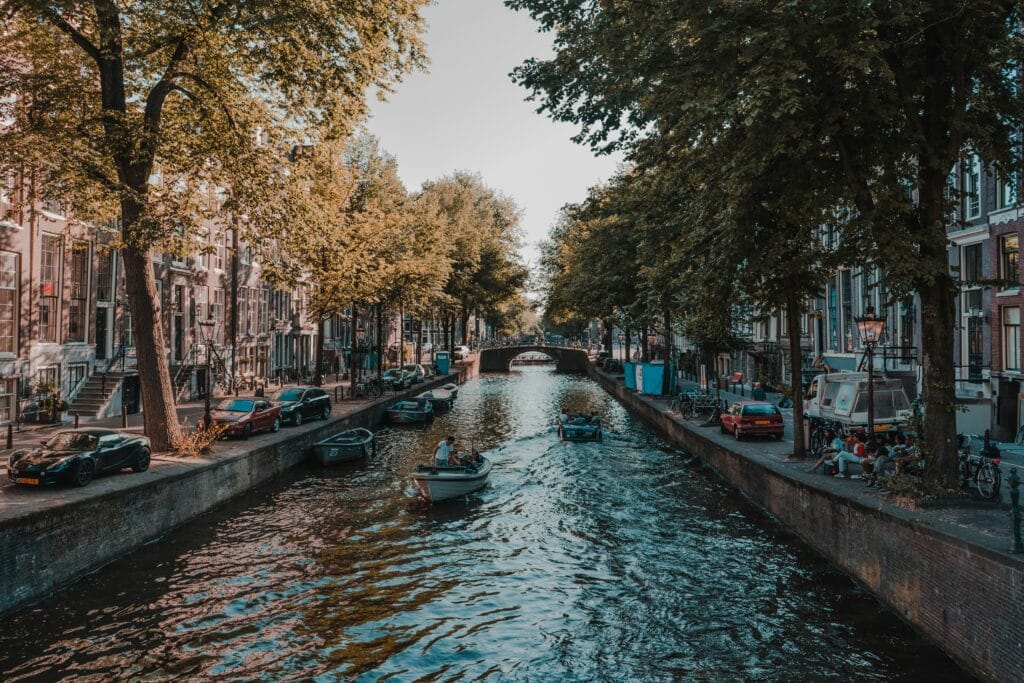
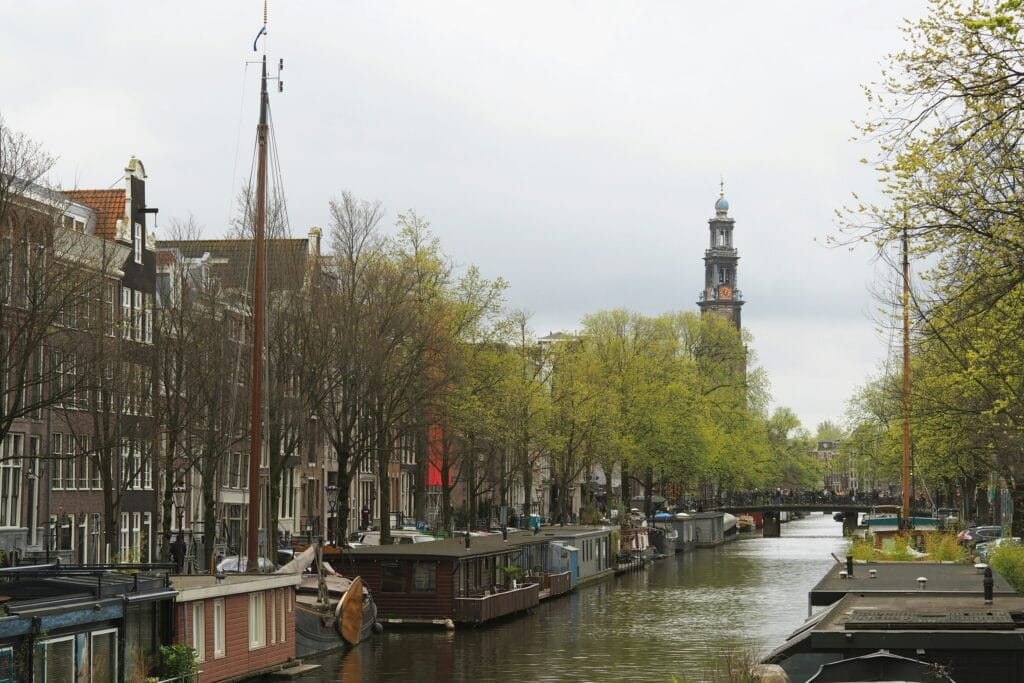
The Dutch capital is famous for its canals, historic districts, and cultural heritage.
Places to Visit:
- Rijksmuseum – the national Netherlands museum is a true treasure for art and history lovers. About 8,000 works are exhibited, but the collection’s true size is one million objects stored in the museum’s funds. Among them – the famous Rembrandt’s “Night Watch,” Vermeer’s “The Milkmaid,” and other Golden Age gems. After a decade-long renovation, the museum shines with new colors – modernly equipped halls, interactive education, and impeccable exhibit presentation ensure an unforgettable experience. Here every brushstroke seems alive, and history is within reach.
- Van Gogh Museum – this museum is like a journey through Van Gogh’s life, his colors and feelings. More than 200 paintings, including the famous “Sunflowers,” “The Potato Eaters,” and “Almond Blossoms,” allow you to know the artist’s creative path. The museum offers not just art but context – visitors can explore Van Gogh’s relationships with family and friends, and modern technologies allow a closer look at painting technique. This is not just a museum but a sensitive story about a genius’s life, his struggle with himself and the world.
- Anne Frank House – more than a building, it’s a memorial to all who fought for life in history’s darkest times. The original hiding place where Anne Frank wrote her famous diary allows you to feel like a witness to history. The museum returns to times when hope was brightest and tolerance was vital. Visitors can view not only the hiding place interior but also authentic diary pages and Anne’s family belongings. This is a place that encourages reflection on human rights, tolerance, and history’s lessons.
- Vondelpark – 47 hectares of greenery, historic rose garden, and free summer concerts – Vondelpark is a true city oasis. The park, founded in 1865, became a favorite recreation spot for both locals and tourists. Here you can rent a bicycle, enjoy a picnic under century-old trees, or simply sip coffee in one of the cozy cafes surrounding the park. Open-air theater, children’s playgrounds, and impressive sculptures – all make this place special.
- Royal Palace – one of the most impressive 17th-century architectural examples, built as the city hall and later became royal residence. Inside, visitors can admire luxurious interiors, marble floors, and frescoes depicting Netherlands’ grandeur. The Citizens’ Hall is one of the palace’s largest and most impressive rooms where history simply breathes in every corner.
- Jordaan – formerly a workers’ quarter, now turned into hipsters’ and creators’ paradise, Jordaan charms with its network of narrow streets, traditional houses, and hidden courtyards (hofjes). Here you’ll find small art galleries, vintage shops, and cozy cafes where coffee with fresh pastry is simply mandatory. On Saturdays, Lindengracht market abounds with fresh products and local delicacies, while on Mondays, Westerstraat antique market attracts collectors and curious. Jordaan is a place where modern life rhythm harmonizes with old Amsterdam charm.
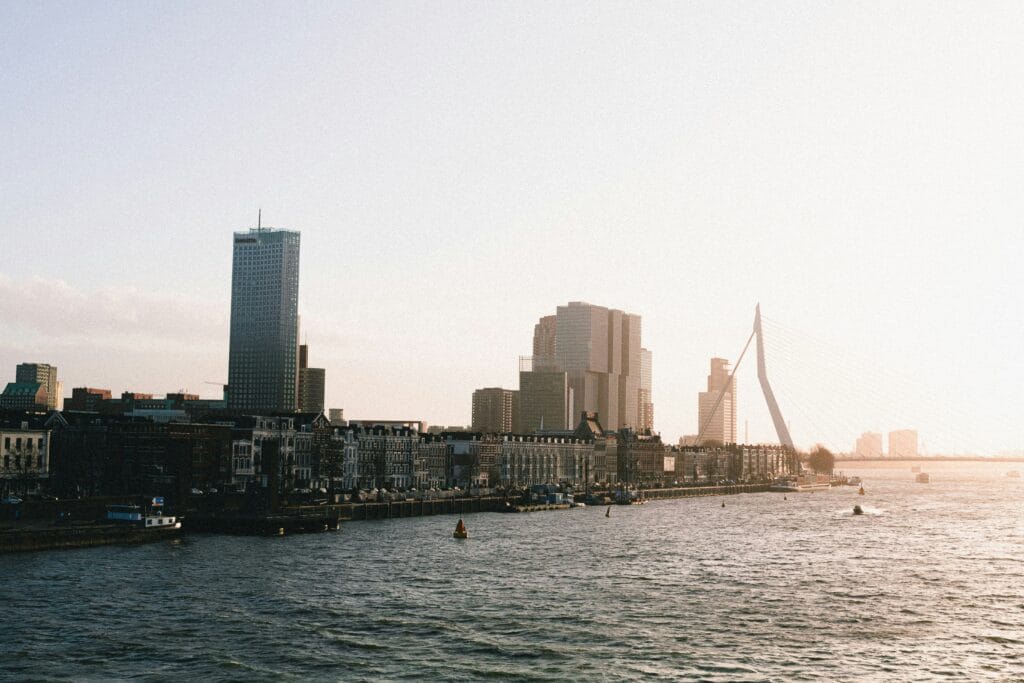
Rotterdam
A port city of modern art and architecture distinguished by unique atmosphere.
Worth Visiting:
- Cube Houses – architect Piet Blom’s 1984 project is a true architectural wonder where each house symbolizes an abstract tree, and the entire complex a forest. For visitors’ convenience, one of the houses has a demonstration apartment-museum where you can learn what it’s really like to live in this unusual space. The cubes’ interior amazes not only with uniqueness but also with clever layout that makes you feel like walking in an artwork.
- Euromast Tower – Rotterdam’s tallest building (185 m) inviting a bird’s-eye view of the city. The first observation platform at 100 meters height is a great place for romantic dinner at the restaurant or cozy evening in hotel room with view of city lights. For those wanting more adrenaline – “Space Tower” at the very top, or even “abseiling” – rope descent from the tower sides! From here opens not only Rotterdam panorama but also distant Hague and Antwerp city lines.
- Market Hall – a place where food and art merge into unique experience. The giant arch-shaped hall, opened in 2014, hides more than 100 food stalls, restaurants, and shops where you can taste everything – from fresh fish to exotic desserts. The hall ceiling is adorned with “Cornucopia” – a huge fresco with colorful fruits, vegetables, and flowers that will inspire not only eyes but also taste receptors. Under the hall floor – underground parking, and above – residential apartments. This is a place where modernity and traditions meet daily.
- Erasmus Bridge – built in 1996, the bridge is a true symphony of engineering and design. The 802-meter-long structure with asymmetric pylon resembles a swan and became one of Rotterdam’s most famous symbols. During the day, the bridge is a popular photography spot with modern city panorama in background, and at night it becomes a light show scene. Erasmusbrug connects the city’s northern and southern parts, symbolizing Rotterdam’s ability to connect past with future.
- Old Harbor – this is a place where a time machine seems unnecessary. Restored historic ships and modern buildings harmonize perfectly side by side. Here you can see “Het Witte Huis” (White House) – the Netherlands’ first skyscraper, built in 1898. The harbor waterfront has numerous restaurants and bars with outdoor terraces where you can enjoy excellent food or drinks while watching sunset over water. On summer evenings, this place simply pulses with life, inviting locals and tourists to enjoy unique atmosphere.
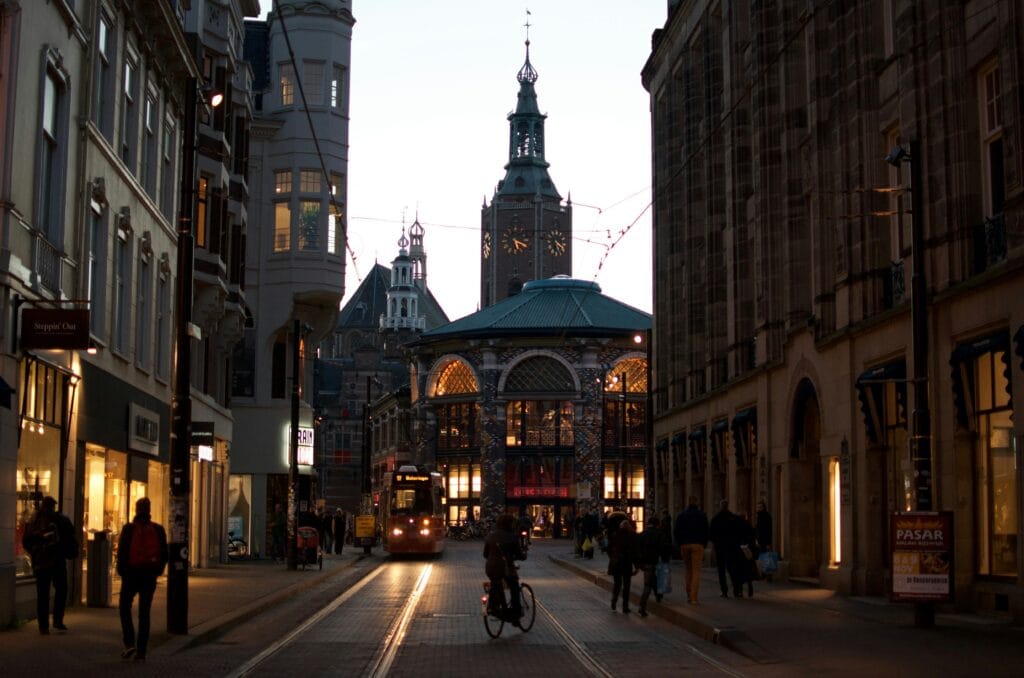
The Hague
Government and international law center, also a city of distinctive elegance.
Places to Visit:
- Binnenhof – the government complex center and Netherlands’ political heart since the 13th century. Here sit both chambers of parliament, and the Prime Minister has his office. The complex consists of several buildings surrounding an inner courtyard. The most impressive is the Knights’ Hall (Ridderzaal), where the King delivers the annual throne speech. Visitors can join guided tours to learn about Dutch politics and history.
- Mauritshuis – an art museum housed in a 17th-century palace, famous for its collection of Dutch Golden Age masters. The museum exhibits Vermeer’s “Girl with a Pearl Earring,” Rembrandt’s “The Anatomy Lesson of Dr. Nicolaes Tulp,” and other masterpieces. The intimate size of the museum allows viewing works in a cozy atmosphere, and the modern renovation preserved historic character while adding modern conveniences.
- Peace Palace – an impressive building housing the International Court of Justice and the Permanent Court of Arbitration. Built in 1913, the palace symbolizes the pursuit of international peace and cooperation. The building amazes with architectural splendor – donations from various countries are integrated into the interior. Guided tours reveal the building’s history and the international courts’ work.
- Scheveningen – the most famous Dutch seaside resort, part of The Hague. The wide sandy beach attracts both locals and tourists throughout the year. In summer, the beach is full of sun worshippers, surfers, and beach bar visitors. The Scheveningen pier with restaurants, observation platform, and bungee jumping tower offers additional entertainment. The promenade with numerous restaurants, cafes, and the historic Kurhaus hotel makes this place special.
- Madurodam – a miniature park where you can see the entire Netherlands in one place. Here are replicated famous Dutch buildings, canals, windmills, and airports in 1:25 scale. The park is not just a tourist attraction but also an interactive educational center where visitors can learn about Dutch culture, history, and innovations. Especially impressive at night when all miniatures are illuminated.
What Does Dutch Cuisine Offer?
Traditional Dishes:
- Bitterballen: crispy fried balls with ragout filling, often served as snacks with beer. The filling is made from beef and beef broth thickened with roux, seasoned with various spices. Traditional Dutch bars and cafes serve them with mustard. These are especially popular during borrel – the Dutch social drinking tradition.
- Haring: raw herring is a true Dutch specialty, especially popular in spring when “nieuwe haring” (new herring) season begins. The herring is eaten in a special way – holding it by the tail and lowering it into the mouth, or in a sandwich (broodje haring) with pickles and onions. This is a street food tradition dating back to the Middle Ages when Dutch fishermen invented a special herring salting method.
- Stamppot: a traditional winter dish, mashed potatoes with various vegetables. Most popular variations – boerenkool stamppot (with kale), hutspot (with carrots and onions), and zuurkool stamppot (with sauerkraut). Usually served with smoked sausage (rookworst) and gravy. This simple but hearty dish reflects Dutch cuisine traditions focused on local products.
- Stroopwafel: famous Dutch sweet – two thin waffles glued together with caramel syrup. Best enjoyed placed on top of a hot tea or coffee cup so the caramel softens. This sweet was created in Gouda in the 19th century and became popular worldwide.
- Poffertjes: tiny, fluffy pancakes made in special pan with indentations. They’re made from buckwheat and wheat flour batter, making them especially soft and fluffy. Traditionally served with butter and powdered sugar, sometimes with syrup or chocolate. Especially popular at winter markets and festivals.
- Erwtensoep: also called “snert,” is thick pea soup with pork, vegetables, and smoked sausage. Traditionally the soup is cooked until it becomes so thick that a spoon stands upright in it. This is a true winter dish, especially popular after ice skating or other winter activities. Often served with rye bread slice.
What Itinerary Ideas Does the Netherlands Offer?
Weekend Trip:
- Day 1: Canal tour in Amsterdam and main museums
- Day 2: Zaanse Schans windmills and Volendam fishing village
Week-long Trip:
- Days 1–2: Amsterdam
- Day 3: Rotterdam
- Day 4: The Hague and Scheveningen seaside
- Day 5: Utrecht historic center
- Days 6–7: Tulip fields and Keukenhof (in spring)
Nature and Culture
- Kinderdijk Windmills – UNESCO World Heritage Site located near Rotterdam. Here stand 19 authentic 18th-century windmills that were used for water level regulation in the polder system. These windmills represent the Dutch struggle with water and their engineering achievements. Visitors can view a working windmill from inside, walk or cycle among the windmills.
- Keukenhof Flower Gardens – the world’s largest flower garden, opening its doors annually in spring (March-May). The garden grows more than 7 million bulb flowers, mostly tulips, hyacinths, and daffodils. The garden is planned so that blooming continues throughout the season, creating wonderful color combinations and compositions. This is not only a tourist attraction but also a showcase of the Netherlands’ floriculture industry.
- De Hoge Veluwe National Park – the national park is a unique combination of nature and culture. This is the largest private nature reserve in the Netherlands where you can find sand dunes, heathlands, and forests. The park houses the famous Kröller-Müller Museum with the largest Van Gogh works collection outside Amsterdam and an impressive sculpture garden. Visitors can use the park’s bicycles for free.
- Giethoorn – often called the Netherlands’ “Venice” due to its canal network that replaces regular streets. In this charming village, houses are located on small islands connected by more than 170 wooden bridges. Traditional thatched-roof houses and flower gardens create an idyllic atmosphere. The main mode of transport here is boats, which visitors can use to cruise around the village.
- Wadden Sea Islands – a chain of islands in the Wadden Sea included in the UNESCO World Heritage list. This unique tidal region is an important habitat for birds and marine animals. The islands feature beaches, dunes, historic lighthouses, and charming fishing villages. The most popular activity is mudflat hiking during low tide.
- Zaanse Schans – an open-air museum near Amsterdam where you can see a traditional 18th-19th century Dutch village. Here stand authentic green wooden houses, working windmills, traditional craft workshops (cheese, clog making). Visitors can watch how traditional Dutch products are made and participate in educational programs about Netherlands’ industrial history.
Practical Tips
- Transportation: trains are fast and reliable, suitable for traveling around the country
- Bicycles: must try, as it’s the main mode of transport
- Weather: often changes, so a raincoat or umbrella will always come in handy
- Language: most locals speak English perfectly
- Cards: widely accepted, but worth having cash in rural areas
- Accommodation: book in advance, especially in Amsterdam and in spring
What Events Does the Netherlands Offer?
- King’s Day: national holiday celebrated on April 27, King Willem-Alexander’s birthday. The entire country is adorned in orange, symbolizing the royal House of Orange. In Amsterdam and other cities, street markets, concerts, and canal parades take place. This is the country’s biggest street party when residents organize “vrijmarkt” – free markets where they can trade anything.
- Tulip Season: begins in March and continues until May. This is when millions of tulips bloom in fields and the famous Keukenhof garden. Special excursions to tulip farms are organized for visitors, flower parades take place. The most impressive part of this season is “Bloemencorso” – flower parades when impressive flower sculptures travel through streets.
- North Sea Jazz Festival: one of the world’s largest jazz festivals, held in Rotterdam in July. The three-day festival features hundreds of performers from around the world representing various jazz styles – from traditional to contemporary. The festival attracts thousands of music lovers and famous performers.
- Amsterdam Dance Event: the world’s largest electronic music festival and conference. In October, for five days, Amsterdam becomes the capital of electronic music. During the day, conferences and music industry events take place, and at night – hundreds of concerts at various city locations. The festival attracts more than 400,000 visitors.
- Christmas Markets: in the Netherlands begin in late November and continue until Christmas. The largest and most impressive market takes place in Valkenburg town where stalls are arranged in unique underground galleries. Ice rinks are set up in city squares, traditional dishes and hot drinks are sold, concerts and other events take place.
- Amsterdam Light Festival: illuminates the city’s canals and streets from November to January. Artists from around the world create light installations that reflect in water and on historic buildings. Visitors can view installations by taking special evening canal cruises or walking specially created routes.
The Netherlands is a country where history and modernity merge into an incomparable whole. This place suits both peaceful countryside lovers and big city culture enthusiasts. Here you can experience the pleasures of bicycle travel, admire art masterpieces, or simply enjoy a cozy visit to a windmill-surrounded village.